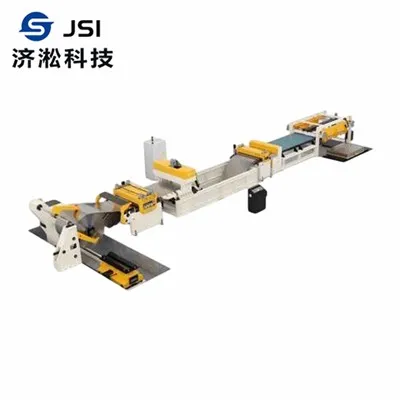
As a provider of Independent Manipulators, I am often asked about the various communication interfaces these sophisticated devices support. In this blog post, I'll delve into the details of these interfaces, explaining their functions, advantages, and how they contribute to the overall efficiency and performance of the Independent Manipulator.
Understanding Independent Manipulators
Before we explore the communication interfaces, let's briefly understand what an Independent Manipulator is. An Independent Manipulator is a highly flexible and precise robotic device used in industrial applications, such as manufacturing, assembly, and material handling. It can perform a wide range of tasks with high accuracy and repeatability, making it an essential tool in modern production lines.
Common Communication Interfaces
Ethernet
Ethernet is one of the most widely used communication interfaces in industrial automation, and Independent Manipulators are no exception. Ethernet offers high-speed data transfer rates, allowing for real-time communication between the manipulator and other devices in the production line. This enables seamless integration with programmable logic controllers (PLCs), human-machine interfaces (HMIs), and other automation equipment.
The advantages of using Ethernet include:
- High Speed: Ethernet can support data transfer rates of up to 1 Gbps or even higher, ensuring fast and efficient communication.
- Long Distance: Ethernet cables can be used over long distances without significant signal degradation, making it suitable for large production facilities.
- Compatibility: Ethernet is a widely adopted standard, which means that it can easily interface with a variety of devices and systems.
For example, in a 3D Transfer System, Ethernet can be used to connect the Independent Manipulator to the central control system, allowing for coordinated movement and operation of multiple manipulators.
Profibus
Profibus is another popular communication interface in the industrial automation field. It is a serial communication protocol that is specifically designed for use in industrial environments. Profibus offers a reliable and cost-effective solution for connecting the Independent Manipulator to other devices, such as sensors, actuators, and controllers.
The benefits of Profibus include:
- Reliability: Profibus uses a redundant communication mechanism to ensure reliable data transfer, even in harsh industrial environments.
- Flexibility: Profibus can support different types of network topologies, such as linear, star, and tree, making it suitable for a variety of applications.
- Cost-Effectiveness: Profibus is a relatively inexpensive communication interface, which makes it a popular choice for small and medium-sized enterprises.
In an Integrated Loading and Unloading Transfer Press, Profibus can be used to connect the Independent Manipulator to the press control system, enabling precise control of the loading and unloading processes.
CANopen
CANopen is a communication protocol based on the Controller Area Network (CAN) bus. It is widely used in industrial automation, automotive, and other applications. CANopen offers a simple and flexible way to connect the Independent Manipulator to other devices, allowing for easy configuration and operation.
The features of CANopen include:
- Simple Configuration: CANopen uses a standardized object dictionary, which makes it easy to configure and parameterize the devices on the network.
- Distributed Control: CANopen supports distributed control, which means that the control functions can be distributed among multiple devices on the network.
- Fault Tolerance: CANopen has built-in fault tolerance mechanisms, which ensure reliable operation even in the presence of network errors.
For instance, in a robotic assembly line, CANopen can be used to connect the Independent Manipulator to the other robots and devices, enabling coordinated movement and operation.
Modbus
Modbus is a serial communication protocol that is widely used in industrial automation. It is a simple and easy-to-use protocol that allows for communication between the Independent Manipulator and other devices, such as sensors, meters, and controllers.


The advantages of Modbus include:
- Simplicity: Modbus is a straightforward protocol that is easy to implement and understand.
- Compatibility: Modbus can be used with a variety of devices and systems, making it a versatile communication interface.
- Low Cost: Modbus is a relatively inexpensive communication interface, which makes it a popular choice for small and medium-sized enterprises.
In a material handling system, Modbus can be used to connect the Independent Manipulator to the conveyor system, allowing for seamless integration and operation.
Choosing the Right Communication Interface
When choosing a communication interface for an Independent Manipulator, several factors need to be considered, including:
- Application Requirements: The specific requirements of the application, such as data transfer rate, communication distance, and reliability, will determine the most suitable communication interface.
- Compatibility: The communication interface should be compatible with the other devices and systems in the production line to ensure seamless integration.
- Cost: The cost of the communication interface, including the hardware and software, should be taken into account.
- Scalability: The communication interface should be scalable to accommodate future expansion and changes in the production line.
By carefully considering these factors, you can choose the right communication interface for your Independent Manipulator, ensuring optimal performance and efficiency.
Importance of Communication Interfaces in Independent Manipulators
The communication interfaces play a crucial role in the operation of Independent Manipulators. They enable the manipulator to communicate with other devices and systems in the production line, allowing for coordinated movement, operation, and control.
Here are some of the key benefits of having reliable communication interfaces in Independent Manipulators:
- Enhanced Efficiency: By enabling real-time communication and data transfer, the communication interfaces can improve the efficiency of the production process. The manipulator can receive instructions and feedback from other devices quickly, allowing for faster and more accurate operation.
- Improved Accuracy: The communication interfaces ensure that the manipulator receives precise instructions and feedback, which can improve the accuracy of its movements and operations. This is particularly important in applications where high precision is required, such as in the manufacturing of electronic components.
- Flexibility and Adaptability: The ability to communicate with different devices and systems makes the Independent Manipulator more flexible and adaptable. It can be easily integrated into existing production lines or used in new applications, providing greater versatility and value.
- Remote Monitoring and Control: With the right communication interfaces, the Independent Manipulator can be remotely monitored and controlled. This allows operators to monitor the status of the manipulator, adjust its settings, and troubleshoot problems from a remote location, improving productivity and reducing downtime.
Conclusion
In conclusion, the communication interfaces of an Independent Manipulator are essential for its efficient and reliable operation. Ethernet, Profibus, CANopen, and Modbus are some of the common communication interfaces used in these devices, each with its own advantages and applications. By choosing the right communication interface based on the specific requirements of the application, you can ensure optimal performance and integration of the Independent Manipulator in your production line.
If you are interested in learning more about our Independent Manipulators or have any questions regarding the communication interfaces, please feel free to contact us for procurement and further discussion. We are committed to providing high-quality products and excellent service to meet your industrial automation needs.
References
- "Industrial Communication Networks: Principles and Applications" by Thomas A. Trappe and Alfred W. Strube.
- "Automation Technology Handbook" edited by Helmut Tempelmeier.