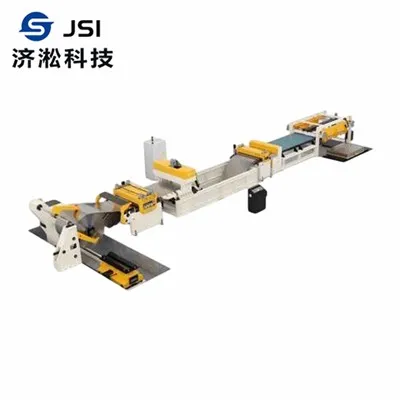
As a supplier of cut to length lines, I've often been asked about the accuracy of the cutting length on these machines. It's a crucial aspect that directly impacts the quality and efficiency of metal processing. In this blog, I'll delve into the factors that affect the accuracy of cutting length on a cut to length line and how we, as a supplier, ensure high - precision results.
Understanding the Basics of Cut to Length Lines
A cut to length line is a specialized piece of equipment used in the metalworking industry to cut metal sheets or coils into precise lengths. These lines are widely used in various applications, from automotive manufacturing to construction. The basic components of a cut to length line typically include an uncoiler, a leveler, a feeder, a shear, and a stacker. Each component plays a vital role in the overall process, and any malfunction or inefficiency in one part can affect the cutting length accuracy.
Factors Affecting Cutting Length Accuracy
Mechanical Precision
The mechanical design and construction of the cut to length line are fundamental to achieving accurate cutting lengths. For example, the quality of the shear blades is crucial. Dull or misaligned blades can cause uneven cuts, leading to variations in the length of the cut pieces. The precision of the feeder mechanism also matters. A feeder that doesn't move the metal sheet or coil at a consistent speed can result in inaccurate lengths. At our company, we use high - quality materials and advanced manufacturing techniques to ensure the mechanical precision of our High Speed Steel Cut To Length Machine Line. Our shear blades are made from high - grade steel and are carefully ground and sharpened to ensure clean and accurate cuts.
Control Systems
Modern cut to length lines are equipped with sophisticated control systems that play a significant role in determining cutting length accuracy. These control systems use sensors and actuators to monitor and adjust the speed, position, and cutting process. For instance, encoder sensors can measure the movement of the metal sheet or coil and send signals to the control system. The control system then uses this information to precisely control the shear's operation. Our Fully Automatic Cutting Machine Production Line is equipped with state - of - the - art control systems that can achieve high levels of accuracy. The control systems are programmed to compensate for any minor variations in the feeding speed or material thickness, ensuring that each cut piece meets the specified length requirements.
Material Properties
The properties of the metal being processed can also affect the cutting length accuracy. Different metals have different hardness, ductility, and thermal expansion coefficients. Harder metals may require more force to cut, which can potentially cause the material to deform slightly during the cutting process. Additionally, if the metal has uneven thickness or surface irregularities, it can pose challenges to achieving accurate cuts. We have extensive experience in dealing with various types of metals, and our engineers can adjust the settings of the cut to length line according to the specific material properties. For example, when processing metals with high thermal expansion coefficients, we may need to consider the temperature changes during the cutting process and make appropriate adjustments to the control system.
Measuring and Ensuring Accuracy
To ensure the cutting length accuracy of our cut to length lines, we use a combination of in - process and post - process measurement techniques. During the cutting process, we use sensors to continuously monitor the movement of the metal sheet or coil and the operation of the shear. These sensors can detect any deviations from the set parameters and trigger immediate adjustments. After the cutting process, we use precision measuring tools such as calipers and laser measuring devices to verify the length of the cut pieces. We also conduct regular quality control checks to ensure that the overall accuracy of the cut to length line meets our high standards.
Industry Standards and Customer Requirements
In the metalworking industry, there are specific standards for cutting length accuracy. These standards vary depending on the application and the type of metal being processed. For example, in the automotive industry, where high - precision parts are required, the tolerance for cutting length may be very tight, often within a few millimeters. Our 1500mm Cut To Length Lines are designed to meet or exceed these industry standards. We also work closely with our customers to understand their specific requirements. Some customers may have unique applications that demand even higher levels of accuracy, and we are committed to customizing our cut to length lines to meet these special needs.
The Impact of Accuracy on Productivity and Cost
High cutting length accuracy not only ensures the quality of the final product but also has a significant impact on productivity and cost. When the cutting length is accurate, there is less waste of material. This means that more usable parts can be produced from the same amount of metal, reducing the overall material cost. Additionally, accurate cuts reduce the need for secondary processing, such as trimming or re - cutting, which saves time and labor costs. On the other hand, if the cutting length is inaccurate, it can lead to production delays, increased scrap rates, and higher costs.
Conclusion
The accuracy of the cutting length on a cut to length line is a complex issue that is influenced by multiple factors, including mechanical precision, control systems, and material properties. As a supplier, we are committed to providing our customers with cut to length lines that offer high - precision cutting. Our High Speed Steel Cut To Length Machine Line, Fully Automatic Cutting Machine Production Line, and 1500mm Cut To Length Lines are designed to meet the diverse needs of the metalworking industry.


If you are in the market for a cut to length line and are looking for high - accuracy equipment, we would be more than happy to discuss your requirements. Our team of experts can provide you with detailed information about our products and help you choose the most suitable cut to length line for your business. Contact us today to start the procurement negotiation process and take your metal processing operations to the next level.
References
- "Metalworking Handbook", Industrial Press Inc.
- "Automation in the Metal Industry", Springer Publishing