


Precision Leveler
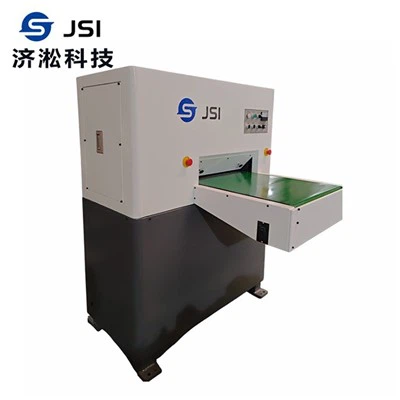
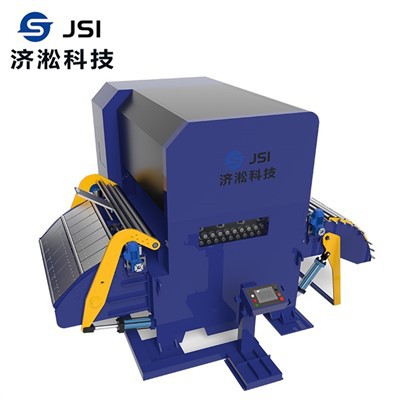
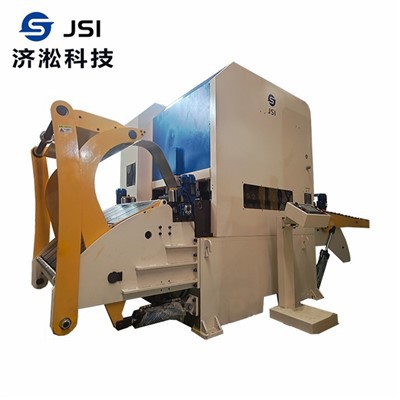
JS Tech:Your Professional Precision Leveler Manufacturer!
Dongguan JS Tech Limited is a stamping automation equipment manufacturer integrating R&D, manufacturing, sales and service. JS Tech originated in 2009. It takes the optimal stamping automation solution planning as the guide, combines the entire line control system with each automation equipment unit, and superimposes MES data connection ports to provide one-stop overall solutions for auto parts, household appliances, motors and other hardware stamping manufacturing companies.


Why Choose Us
Professional Team
Our company has a technical R&D team from well-known foreign companies, more than half of the staff have college degrees or above, using high technology to help customers achieve the best solution, customized automation equipment and the most efficient whole-line control. At the same time, it opens up the digital management channel for enterprise content for customers and connects the data of automated production lines to customers' all-round MES systems.
Our Products
15 years of in-depth research in the field of stamping automation has refined an efficient large-scale three-dimensional(3D) transfer system whole lines, an efficient and economical large-scale stamping press manipulator series line; robot tandem press series line; high-strength high-precision leveling blanking line; magnetic stacking blanking line; cutting line; swing shear line; zigzag blanking line; new and efficient big wind generator stator and rotor press line in the motor industry; continuous stacking and riveting high-speed stator and rotor stamping line; large 3-in-1 coil blanking line and other types of stamping automation unit equipment such as uncoiler, straightener, feeders and various types of manipulators.
Patented Technology
After 15 years of training, JS Tech's series of technologies are at the forefront of the industry, and have obtained invention patents and utility model patents for various production lines and excellent equipment in each unit. It also won the title of National High-tech Enterprise in 2024. JS Tech's exports a large number of products to Europe, and all products exported to Europe have obtained CE certification.
Product Application
JS Tech's products are widely used in Fortune 500 companies, various international listed companies, and well-known foreign companies; and it cooperates with large domestic and international stamping equipment manufacturers, including Yadon, YANGLI, Heduan(HFM), MINSTER, AIDA, etc.
Advantages of Precision Leveler

Consistency
Precision levelers provide consistent leveling across various thicknesses and sizes of metal sheets and plates. This uniformity is essential for achieving high-quality results in the final product.

Minimized Waste
By correcting distortions and imperfections before further processing, precision levelers help reduce the amount of scrap material generated. This not only saves money but also contributes to more sustainable manufacturing practices.

Enhanced Quality
Materials that have been properly leveled are less likely to cause issues during subsequent fabrication steps. This leads to a higher-quality final product with fewer defects and rework requirements.

Increased Production Speed
With leveled materials, the fabrication process is more streamlined, allowing for faster production times and quicker turnaround on projects.
Technical Parameters
|
Model |
MAL-20-600-23 |
|
Material Max width |
600mm |
|
Leveling roller diameter |
φ20mm |
|
Thickness |
0.1-1.2mm |
|
Min. work-piece size |
10*25mm |
|
Straightening speed |
0-10m/min |
|
Backup roller quantity |
Upper three/Lower three |
|
Straightening roller quantity |
Standard 23 pcs (upper 11 pcs/lower 12pcs) |
|
Straightening gap adjust method |
Four-point manual adjustment |
|
Voltage |
3 Phase 380V 50Hz (Can be customized) |
Application of Precision Leveler
Industrial assembly
Precision levelers are widely used in industrial assembly applications where precise alignment and leveling of heavy machinery and equipment are required to ensure proper functioning and prevent equipment malfunction.
Construction and fabrication
In the construction and fabrication industry, precision levelers are used to level and align structural components such as beams, columns, and frames to ensure the stability and integrity of structures.
Heavy machinery maintenance
Precision levelers are used in the maintenance of heavy machinery in various industries such as manufacturing, mining, and construction to level and align machine components that may have shifted or worn out over time.
Marine and offshore
Precision levelers are used in marine and offshore applications such as shipbuilding, platform construction, and rig maintenance to level and align heavy equipment and structures in challenging environmental conditions.
Aerospace and aviation
In the aerospace and aviation industry, precision levelers are used to align and level critical components of aircraft and spacecraft to ensure their safety, reliability, and performance.
Energy and power generation
Precision levelers are used in the energy and power generation industry to level and align turbines, generators, and other heavy equipment used in power plants, wind farms, and other energy facilities.
Automotive manufacturing
In the automotive industry, precision levelers are used in automotive manufacturing processes to level and align assembly lines, presses, jigs, and other heavy equipment to ensure the quality and precision of automotive products.
Medical devices and cleanroom
Precision levelers are used in the medical device industry to level and align equipment and fixtures used in cleanroom environments to ensure product quality, compliance, and regulatory standards.
Leveling Process of Precision Leveler
Preparing for Precision Leveling
Before beginning the leveling process, it’s crucial to prepare the machine and material. Here are the steps to ensure optimal performance:
Measure Material Thickness: Always measure the thickness of the sheet to be leveled to confirm it falls within the machine’s applicable range (0.05-0.3mm). If the material is suitable, cut a section of the coil, typically 1 meter in length, for testing purposes.
Adjust the Leveling Rollers: Loosen the machine’s fixed handle and rotate the leveling adjustment handwheel. Adjust the dial indicator to reflect the material thickness plus 5.0 on the gauge. For example, if the sheet is 0.3mm thick, set the dial to 5.3. It’s essential to ensure the dial indicators at both the entry and exit points of the machine display consistent values.
Feed the Material into the Machine: Curve the sheet into a slight arc (⌒ shape) and feed it between the leveling rollers. This step ensures the material is properly aligned for leveling.
Step-by-Step Precision Leveling Process
Once the material and machine are prepared, follow these steps to achieve accurate leveling results:
Begin Material Feeding: Use the forward function on the control panel to feed the material through the rollers. If the material maintains its original arc (⌒ shape), this indicates that the top rollers aren’t applying sufficient pressure. In this case, continue rotating the handwheel in the same direction and run the material through the machine again.
Adjust for Over-Pressure: If the material reverses its arc into a (╰ shape), it indicates that the top rollers are applying too much pressure. To correct this, rotate the handwheel in the opposite direction and test a new strip. The goal is to balance the pressure so that the material passes through the machine leveled without distortion.
Final Adjustments and Automation: Once the desired leveling effect is achieved, adjust the “L”-shaped sensor at the machine’s exit to the appropriate position. Set the knob to “automatic mode,” allowing the precision leveler to operate automatically. The machine will continue feeding and leveling material as it touches the sensor, ensuring a seamless and efficient leveling process.
Maintenance of Precision Leveler
Regular inspection and maintenance: It is crucial to conduct regular inspections of leveling machines. Users should inspect various parts of the machine for any signs of damage, loosening, or abnormal wear. They should also regularly carry out maintenance procedures such as lubrication and cleaning to ensure proper functioning of the machine.
Keep the driving platform clean: The driving platform of a precision leveler is the part that contacts the object to be leveled. Dirt and debris on the platform can affect the leveling accuracy and quality. Therefore, it is essential to clean the platform regularly to ensure it is clean and tidy.
Use appropriate lubricants: Lubricating oil helps to reduce friction and wear between parts of the machine. Users should use suitable lubricating oil and follow the manufacturer's instructions to apply it to the appropriate parts.
Pay attention to operating skills and safety: Whenever possible, users should pay attention to operating skills and safety practices. They should familiarize themselves with the machine's operating instructions, master the correct operating methods, and ensure proper safety protection during operation.
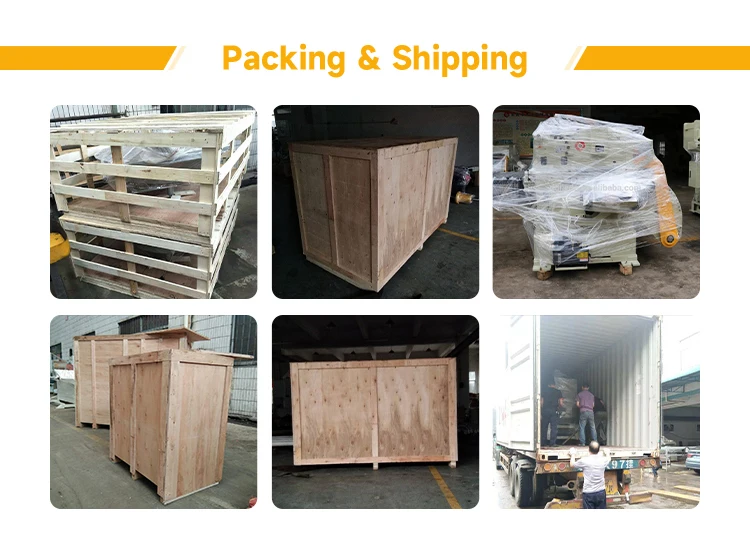
Packaging and Shipping
Our Certificates


FAQ