


Feeder Machine
JS Tech:Your Professional Feeder Machine Manufacturer!
Dongguan JS Tech Limited is a stamping automation equipment manufacturer integrating R&D, manufacturing, sales and service. JS Tech originated in 2009. It takes the optimal stamping automation solution planning as the guide, combines the entire line control system with each automation equipment unit, and superimposes MES data connection ports to provide one-stop overall solutions for auto parts, household appliances, motors and other hardware stamping manufacturing companies.


Why Choose Us
Professional Team
Our company has a technical R&D team from well-known foreign companies, more than half of the staff have college degrees or above, using high technology to help customers achieve the best solution, customized automation equipment and the most efficient whole-line control. At the same time, it opens up the digital management channel for enterprise content for customers and connects the data of automated production lines to customers' all-round MES systems.
Our Products
15 years of in-depth research in the field of stamping automation has refined an efficient large-scale three-dimensional(3D) transfer system whole lines, an efficient and economical large-scale stamping press manipulator series line; robot tandem press series line; high-strength high-precision leveling blanking line; magnetic stacking blanking line; cutting line; swing shear line; zigzag blanking line; new and efficient big wind generator stator and rotor press line in the motor industry; continuous stacking and riveting high-speed stator and rotor stamping line; large 3-in-1 coil blanking line and other types of stamping automation unit equipment such as uncoiler, straightener, feeders and various types of manipulators.
Patented Technology
After 15 years of training, JS Tech's series of technologies are at the forefront of the industry, and have obtained invention patents and utility model patents for various production lines and excellent equipment in each unit. It also won the title of National High-tech Enterprise in 2024. JS Tech's exports a large number of products to Europe, and all products exported to Europe have obtained CE certification.
Product Application
JS Tech's products are widely used in Fortune 500 companies, various international listed companies, and well-known foreign companies; and it cooperates with large domestic and international stamping equipment manufacturers, including Yadon, YANGLI, Heduan(HFM), MINSTER, AIDA, etc.
Advantages of Feeder Machine


Increased Productivity
By eliminating manual labor from repetitive tasks, the use of a feeder machine can help increase productivity significantly. The machine is able to work faster and more efficiently, leading to increased production speeds while also reducing costs associated with manual labor.
Improved Accuracy
With a feeder machine, the accuracy of the feed is greatly improved due to the precision of the machine and its ability to make small adjustments in order to guarantee a consistent product size. It ensures that each product or material is precisely fed into an assembly line or other processing machinery.
Reduced Material Waste
As the feeder can make precise adjustments to ensure consistent product size and uniformity, it helps reduce material waste that would otherwise occur from manual feeding operations. This helps companies to save on costs associated with wasted materials and can help increase overall profitability.
Improved Safety
The use of a feeder machine ensures that employees are not exposed to potentially hazardous conditions during manual feeding tasks, as the machine does all of the work for them. This helps keep workers safe and healthy while also minimizing the risk of injury or illness.
Versatile
Feeder machines can be used in a variety of settings, ranging from small assembly lines to large manufacturing plants. They can also handle different types of materials, such as plastics, metals, and more. This allows companies to customize their feeding operations according to their specific needs.
Easy to Maintain
Feeder machines are easy to maintain and can be kept in good working order with regular cleaning and lubrication. This helps companies save on repairs and maintenance and reduce any downtime that could occur due to unexpected machine failures.
Easy integration
Industrial feeder machines are designed to integrate seamlessly into existing production systems. It helps companies save on time and money associated with customizing their assembly lines or purchasing additional equipment for the installation process. In addition, the machines can also be modified to fit specific applications, making them even more versatile and cost-effective.
Technical Parameter
|
Specification and model |
SNCF-150 |
SNCF-200 |
SNCF-300 |
SNCF-400 |
SNCF-500 |
SNCF-600 |
SNCF-700 |
|
Maximum material width(mm) |
150 |
200 |
300 |
400 |
500 |
600 |
700 |
|
Material thickness(mm) |
0.1~1.6 |
0.1~1.6 |
0.1~1.6 |
0.1~1.6 |
0.1~1.6 |
0.1~1.6 |
0.1~1.6 |
|
Feeding length(mm) |
9999.99 |
9999.99 |
9999.99 |
9999.99 |
9999.99 |
9999.99 |
9999.99 |
|
Feeding speed(M/min) |
60 |
60 |
60 |
60 |
60~70 |
60~80 |
60~90 |
|
Feeding accuracy(mm) |
±0.03 |
±0.03 |
±0.03 |
±0.03 |
±0.03 |
±0.03 |
±0.03 |
We can also customize according to your requirements.
Application of Feeder Machine
Industrial Automation: Feeder machines are widely used in industrial automation processes where a continuous and controlled supply of materials is required. They are used to feed components, parts, or raw materials to machines or assembly lines, ensuring a consistent flow and reducing the need for manual handling.
Packaging and Filling Systems: Feeder machines are utilized in packaging and filling systems to deliver precise quantities of materials into containers, bags, or packaging machinery. They help automate the process and ensure accurate and efficient filling without the need for manual intervention.
Conveying Systems: Feeder machines are integrated into conveyor systems to facilitate the movement and controlled feeding of bulk materials, such as grains, powders, or small parts. They ensure a steady flow of materials along the conveyor, preventing jams and optimizing productivity.
Printing and Labeling Machines: Feeder machines are used in printing and labeling machines to feed sheets, labels, or other media into the printing or labeling mechanism. They ensure a consistent and accurate supply of materials, enabling precise printing or labeling on the desired surface.
Material Handling Equipment: Feeder machine find application in various material handling equipment, such as vibratory feeders or screw feeders. These devices use motorized mechanisms to control the movement and flow of materials, allowing for smooth and controlled handling in processes such as sorting, mixing, or transporting.
Food Processing Industry: In the food processing industry, Feeder machines are used for automated feeding of ingredients or raw materials into processing equipment. They ensure a regulated flow of materials, maintaining consistency in recipes and enhancing production efficiency.
Pharmaceutical and Medical Applications: Feeder machines are utilized in pharmaceutical and medical applications for the precise feeding and handling of medications, capsules, or medical devices. They play a crucial role in maintaining accuracy and hygiene in dosage preparation or assembly processes.
Assembly and Manufacturing Processes: Feeder machines are employed in assembly and manufacturing processes to automate the feeding of components or parts onto assembly lines. They contribute to increased production rates, improved efficiency, and reduced human error in repetitive tasks.
Types of Feeder Machine
Apron Feeders
Apron Feeders are robust feeders used for handling many types of materials, such as aggregates, minerals and recycled materials. Used for both small and large capacities, they can withstand extreme impact loading.
Belt Feeders
Belt Feeders are generally used for fine material applications, typically for handling material 6” or less. They feature a flat belt that is supported by closely spaced idlers and driven at the head pulley.
Drag and Reclaim Feeders
Both Drag Feeders and Reclaim Feeders consist of strands of chain with connecting flight bars designed to pull material. They are typically tied into the operation of a downstream conveyor, so they do not require an operator. Drag Feeders are well suited for moving free-flowing materials, such as coal, lignite, salt, copper and other minerals, while Reclaim Feeders are typically used for moving stockpiled materials.
Reciprocating/Plate Feeders
Reciprocating/Plate Feeders are a reciprocating tray type feeder. Mechanical models feature a crank or eccentric and connecting rod to produce the reciprocating motion needed to move the material toward the discharge end. Hydraulically operated designs use a hydraulic cylinder to produce this motion. The feeder discharges on the backstroke of the plate; no material is discharged in the forward stroke.
Vibrating Grizzly Feeders
Vibrating Grizzly Feeders provide the functions of feeding and scalping. Used in many types of applications to supply a continuous feed rate, Vibrating Grizzly Feeders feature a pan section at the feed end and a grizzly section at the discharge end that allows undersized material to bypass the crusher.
Vibrating Pan Feeders
Vibrating Pan Feeders are generally used to feed primary crushers in aggregate, mining and recycling applications, but they can also be used to feed grizzly feeders for removing material ahead of a crusher. These types of feeders feature pan sections along the deck of the feeder. As the feeder vibrates, the material moves forward along the pan sections toward the discharge end.
Wobbler Feeders
Wobbler Feeders offer the dual benefits of feeding material at a controlled rate and scalping fines from the feed. Rotating elliptical bars on the deck of the feeder cause the lumps of material to move up and down, scrubbing against each other as they advance toward the discharge end. This removes sticky material, such as clay, from the lumps and allows it to pass through the openings between the bars.
Components of Feeder Machine
Hoppers
Hoppers are containers designed to hold materials while they are waiting to be transferred to the next station. These containers have a large capacity and are usually made of heavy-duty plastic or metal. Hoppers can also be used to store excess material until it is needed.
Feeders
Feeders are devices designed to transfer materials from one station to another. They come in many different shapes and sizes and can accommodate a variety of materials, including liquids, powders, and granules. Feeders typically use mechanical or pneumatic systems to move the material from one station to another.
Conveyor Belts
Conveyor belts are used to transport materials from one station to another within the production line. They come in a variety of sizes and shapes depending on the specific application. The belt is made up of two or more pulleys, with a continuous loop of material that travels around them.
Pushers
Pushers are machines designed to push materials along the production line. They are usually powered by hydraulic or electric motors and can quickly move large amounts of material. Pushers are typically used to continuously transfer materials from one station to another, making them an essential part of the feeding machine.
Sensors
Sensors are devices designed to detect and record changes in the environment. In a feeding machine, sensors are used to measure the speed and pressure of material moving along the production line. Sensors can also detect blockages or other irregularities that may affect the production process.
Control systems
Feeding machines are often equipped with control systems that regulate the transfer speed and quantity of material. These systems use a variety of sensors, timers, and other components to monitor the production process and adjust the rate of material transfer as needed. The control system is an integral part of the feeding machine and ensures that materials are moved accurately and efficiently from one station to another.
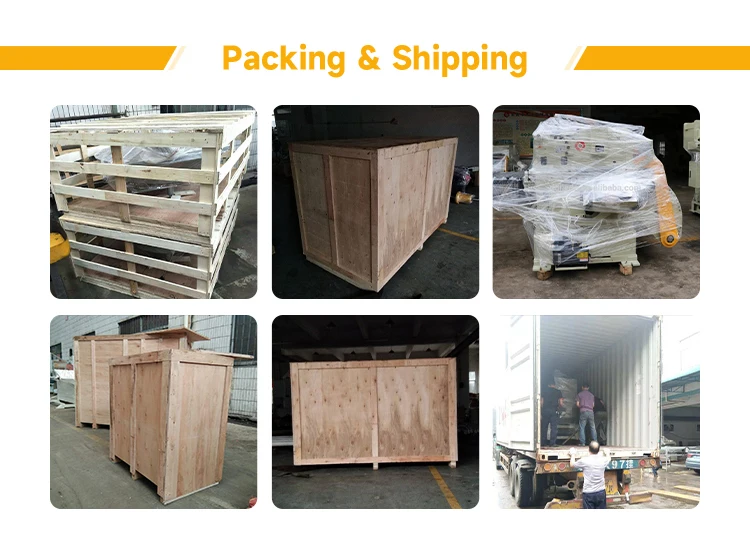
Packaging and Shipping
Our Certificates


FAQ