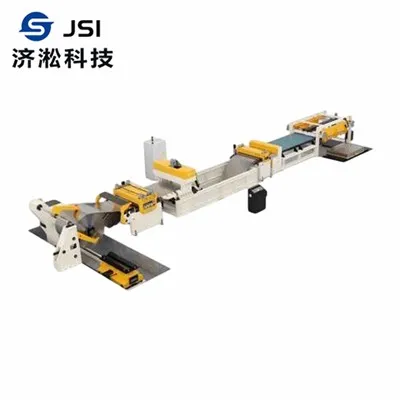
As a supplier of thin sheet straighteners, I've encountered numerous challenges and questions from our customers over the years. One of the most frequent concerns is how to control the straightening temperature rise of a thin sheet straightener. In this blog, I'll share some insights and practical solutions based on our experiences and industry knowledge.
Understanding the Causes of Temperature Rise
Before we delve into the control methods, it's essential to understand why temperature rises occur during the straightening process. When a thin sheet passes through the straightener, the rollers exert pressure on the sheet to correct its shape. This mechanical deformation generates friction between the rollers and the sheet, which in turn produces heat. Additionally, the internal stress within the sheet also contributes to the temperature increase.
Excessive temperature rise can have several negative impacts. It can cause thermal expansion of the rollers and the sheet, leading to dimensional inaccuracies in the straightened product. High temperatures can also accelerate the wear and tear of the rollers and other components, reducing the lifespan of the straightener. Moreover, the heat can affect the mechanical properties of the sheet, such as its hardness and ductility, potentially compromising the quality of the final product.
Cooling Systems
One of the most effective ways to control the straightening temperature rise is by implementing a proper cooling system. There are several types of cooling systems available, each with its own advantages and applications.
Water Cooling
Water cooling is a widely used method in the metalworking industry. It involves circulating water around the rollers or through internal channels within the rollers to absorb the heat generated during the straightening process. Water has a high specific heat capacity, which means it can absorb a large amount of heat without a significant increase in temperature.
To ensure efficient water cooling, it's important to maintain a proper flow rate and temperature of the cooling water. A flow meter can be used to monitor the water flow, and a temperature sensor can be installed to control the water temperature. Additionally, the cooling water should be clean and free of contaminants to prevent clogging of the cooling channels.
Air Cooling
Air cooling is another option for controlling the temperature rise. It works by blowing compressed air over the rollers or the sheet to dissipate the heat. Air cooling is relatively simple and cost-effective, but it may not be as efficient as water cooling, especially in high-speed or high-load straightening operations.
To enhance the cooling effect of air cooling, the air can be chilled using a refrigeration unit. This can significantly reduce the temperature of the air and improve its heat dissipation capacity. However, chilled air cooling systems are more complex and expensive than regular air cooling systems.
Oil Cooling
Oil cooling is commonly used in applications where water or air cooling is not suitable. Oil has good lubricating properties, which can reduce the friction between the rollers and the sheet, thereby reducing the heat generation. It also has a high boiling point, which allows it to operate at higher temperatures without vaporizing.
Oil cooling systems typically involve circulating oil through a heat exchanger to remove the heat. The cooled oil is then pumped back to the rollers to continue the cooling process. Similar to water cooling, it's important to maintain the proper flow rate and temperature of the oil to ensure efficient cooling.
Lubrication
Proper lubrication is another crucial factor in controlling the straightening temperature rise. Lubricants can reduce the friction between the rollers and the sheet, which in turn reduces the heat generation. They can also prevent the adhesion of metal particles to the rollers, which can cause additional friction and heat.
There are several types of lubricants available for thin sheet straightening, including mineral oils, synthetic oils, and water-based lubricants. The choice of lubricant depends on several factors, such as the type of metal being straightened, the straightening speed, and the environmental conditions.
When using a lubricant, it's important to apply it evenly and in the right amount. Too little lubricant may not provide sufficient lubrication, while too much lubricant can cause problems such as oil dripping and contamination of the product. A lubrication system can be used to ensure precise application of the lubricant.


Process Optimization
In addition to cooling systems and lubrication, process optimization can also help control the straightening temperature rise. Here are some tips for optimizing the straightening process:
Adjusting the Roller Pressure
The roller pressure has a significant impact on the heat generation during the straightening process. Higher roller pressure can increase the friction between the rollers and the sheet, leading to more heat generation. Therefore, it's important to adjust the roller pressure to the minimum level required to achieve the desired straightening effect.
Reducing the Straightening Speed
The straightening speed also affects the temperature rise. Higher straightening speeds can generate more heat due to the increased friction and deformation. By reducing the straightening speed, the heat generation can be reduced. However, this may also reduce the productivity of the straightening process, so a balance needs to be struck between speed and temperature control.
Using Proper Roller Materials
The choice of roller materials can also influence the temperature rise. Some roller materials have better heat dissipation properties than others. For example, rollers made of materials with high thermal conductivity, such as copper or aluminum, can transfer the heat more efficiently to the cooling system.
Monitoring and Control
To ensure effective temperature control, it's important to monitor the temperature during the straightening process. Temperature sensors can be installed on the rollers or the sheet to measure the temperature in real-time. The data collected by the sensors can be used to adjust the cooling system, lubrication system, or process parameters to maintain the temperature within the desired range.
Automated control systems can also be used to optimize the temperature control process. These systems can automatically adjust the cooling water flow rate, lubricant application, and roller pressure based on the temperature readings. This can improve the accuracy and efficiency of the temperature control, as well as reduce the need for manual intervention.
Conclusion
Controlling the straightening temperature rise of a thin sheet straightener is crucial for ensuring the quality and productivity of the straightening process. By implementing a proper cooling system, using the right lubricant, optimizing the process, and monitoring the temperature, the temperature rise can be effectively controlled.
If you're in the market for a thin sheet straightener or need more information on temperature control solutions, we're here to help. We offer a wide range of Coil Stock Straightener, Thick Sheet Straightener, and Middle Sheet Straightener to meet your specific needs. Contact us today to discuss your requirements and explore the best solutions for your business.
References
- ASM Handbook, Volume 14A: Metalworking: Bulk Forming. ASM International.
- Kalpakjian, S., & Schmid, S. R. (2009). Manufacturing Engineering and Technology. Pearson.
- Tool and Manufacturing Engineers Handbook, Volume 4: Metal Forming. Society of Manufacturing Engineers.