


NC Feeder
JS Tech:Your Professional NC Feeder Manufacturer!
Dongguan JS Tech Limited is a stamping automation equipment manufacturer integrating R&D, manufacturing, sales and service. JS Tech originated in 2009. It takes the optimal stamping automation solution planning as the guide, combines the entire line control system with each automation equipment unit, and superimposes MES data connection ports to provide one-stop overall solutions for auto parts, household appliances, motors and other hardware stamping manufacturing companies.


Why Choose Us
Professional Team
Our company has a technical R&D team from well-known foreign companies, more than half of the staff have college degrees or above, using high technology to help customers achieve the best solution, customized automation equipment and the most efficient whole-line control. At the same time, it opens up the digital management channel for enterprise content for customers and connects the data of automated production lines to customers' all-round MES systems.
Our Products
15 years of in-depth research in the field of stamping automation has refined an efficient large-scale three-dimensional(3D) transfer system whole lines, an efficient and economical large-scale stamping press manipulator series line; robot tandem press series line; high-strength high-precision leveling blanking line; magnetic stacking blanking line; cutting line; swing shear line; zigzag blanking line; new and efficient big wind generator stator and rotor press line in the motor industry; continuous stacking and riveting high-speed stator and rotor stamping line; large 3-in-1 coil blanking line and other types of stamping automation unit equipment such as uncoiler, straightener, feeders and various types of manipulators.
Patented Technology
After 15 years of training, JS Tech's series of technologies are at the forefront of the industry, and have obtained invention patents and utility model patents for various production lines and excellent equipment in each unit. It also won the title of National High-tech Enterprise in 2024. JS Tech's exports a large number of products to Europe, and all products exported to Europe have obtained CE certification.
Product Application
JS Tech's products are widely used in Fortune 500 companies, various international listed companies, and well-known foreign companies; and it cooperates with large domestic and international stamping equipment manufacturers, including Yadon, YANGLI, Heduan(HFM), MINSTER, AIDA, etc.
Advantages of NC Feeder


The NC servo feeder offers a high degree of precision and reliable quality. It is a model that incorporates a numerical control system into the feeding apparatus and enables precise PLC and servo motor control of the feeding roller to enable stamping feeding. The feeding precision can typically exceed 0.02mm. Other feeding apparatus cannot even begin to touch it.
A larger range of applications is possible. The NC servo feeder is powered by a vertical motor and has two modes of relaxation: mechanical and pneumatic, allowing it to operate independently of the installation tools. It can be used with shearing machines in addition to punches. the range of applications for hydraulic presses is greater.
The process is straightforward and highly automated. The NC servo feeder has a 7-inch touch screen with point controls, making it simple and quick to change parameters like feeding step distance and feeding speed. Additionally, it has a handle for testing the punching mold, which significantly cuts down on commissioning time during stamping manufacturing.
Multiple-stage feeding to accommodate unique processing requirements. The feeding step is frequently inconsistent when using a multi-engineering progressive die for stamping manufacturing. Currently, NC servo and standard feeders cannot be utilized together. The feeder has a 10-stage feeding function that can fully satisfy customers' demands for multi-station molds.
High dependability and energy efficiency. The servo motor's need to run constantly and store energy throughout the NC servo feeder's relaxation phase results in a significant reduction in energy usage. Additionally, it offers a safe and dependable automatic diagnosis feature for when something goes wrong.
Technical Parameter
|
Item and model |
NCF-100B |
NCF-200B |
NCF-300B |
NCF-400B |
NCF-500B |
NCF-600B |
NCF-800B |
NCF-1000B |
NCF-1300B |
|
Material width |
100 |
200 |
300 |
400 |
500 |
600 |
800 |
1000 |
1300 |
|
Material thickness |
0.2-3.2 |
0.2-3.2 |
0.2-3.2 |
0.2-3.2 |
0.2-3.2 |
0.2-3.2 |
0.2-3.2 |
0.2-3.2 |
0.2-3.2 |
|
Max feeding length |
9999.99mm |
||||||||
|
Max. feed speed |
20m/min |
||||||||
|
Release method |
Mechanical/ pneumatic |
||||||||
|
HMI main page language |
Can be switched between Chinese and English(it also can be made of buyer's local language) |
||||||||
|
Voltage |
3 phase 380v 50hz (or local voltage) |
||||||||
We can also customize according to your requirements.

Automobiles and Parts Manufacturing
In the automotive industry, there is a need for large quantities of precision metal parts, such as body panels, brackets, and structural components. NC feeders can provide consistent feeding of metal strips for stamping, cutting, and forming operations. They ensure that these complex and high-volume stamping operations are accurate.
Home Appliance Production
For manufacturers of appliances, things like refrigerators, washing machines, and air conditioners use metal components. As a result, they need NC feeders to ensure that the metal strips are cut, stamped, and shaped precisely according to the design.
Electronics Industry
The precise positioning and feeding of small metal parts such as brackets, housings, and connectors in the electronics industry is also accomplished by NC feeders.
Tool and Die Making
In Tool and Die Making, precision machinery is required. This includes the creation of stamping dies as well as tools. Here again, an NC feeder will be able to precisely feed the machining of complex and high-precision parts.
Aerospace and Aviation Industry
The NC feeder is a component that can be used to make more precise metal parts by operating the aviation and aerospace industries. This offers options for complex stamping and shaping operations.
Key Components of NC Feeder
Servo Motor
The heart of the feeder, the servo motor, drives the feeding mechanism with high precision. Think of it as the engine of a car; without it, nothing moves!
Control System
This system manages the operation of the servo motor, allowing for adjustments in speed and feed length. It’s like the brain of the operation, making sure everything runs smoothly.
Feeding Mechanism
This is the physical part that moves the material, which can include rollers, belts, or other mechanisms. It’s the hands that do the work, moving materials from point A to point B.
Sensors
These provide feedback to the control system, ensuring accurate positioning and operation. They’re like the eyes of the system, constantly checking to make sure everything is in place.
Operational Guide for Mechanical NC Feeders
Starting the Front-End Machine
Typically, this involves starting a leveling machine or a material rack if leveling is not necessary. Allow the machine to slowly release the material.
Material Feeding and Thickness Adjustment
Lift the relaxation handle of the feeder and insert the material head between the upper and lower rollers. Allow the material to pass through the rollers, then lower the relaxation handle. Adjust the material thickness handle to ensure the relaxation bracket can swing with a 5mm gap. Secure the adjustment by tightening the fastening screw.
Adjusting Feeding Start Time
Set the feeding start time according to the stamping process requirements. This involves adjusting the feeding angle, corresponding to the crankshaft angle of the press machine at which feeding begins. Input the desired feeding time angle on the press machine’s touchscreen.
Adjusting the Feeder Relaxation Device
Adjust the feeder’s relaxation device based on the stamping process needs. When the mold’s guide pin inserts into the guide hole, adjust the relaxation screw until it touches the bearing on the feeder body. This should allow the upper roller to relax the material with a gap within 0.5mm. Secure the adjustment by locking the fixing nut.
Setting Basic Parameters
On the control panel of the electrical control box, set the feeding length and number of feeds. Adjust the feeding speed to match the actual production requirements.
Trial Stamping Using the Feeder Handle
Manually operate a single stroke in manual mode to confirm the actual feeding length, as there might be slight discrepancies due to rounding. Ensure the feeding length meets the requirements before proceeding to continuous stamping.
Starting Automatic Feeding
Once the trial confirms the correct feeding length, activate the feeder’s automatic function for continuous feeding and stamping production.
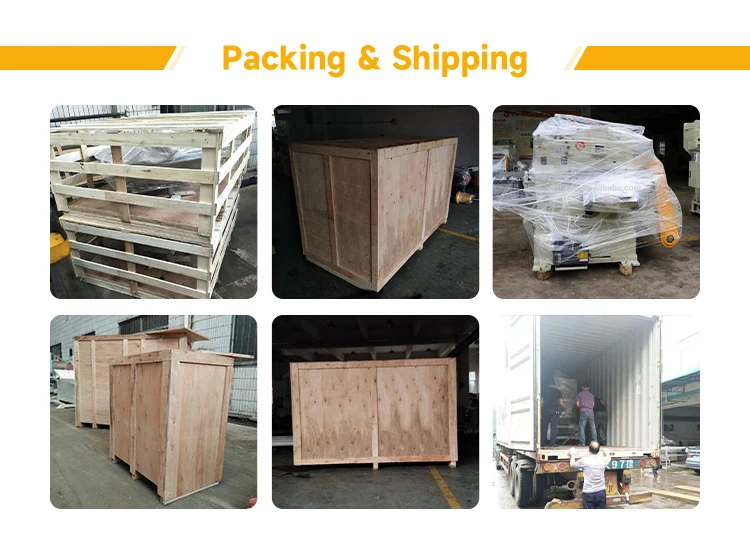
Packaging and Shipping
Our Certificates


FAQ