

Automatic Multi-Press Transfer System for Metal Stamping
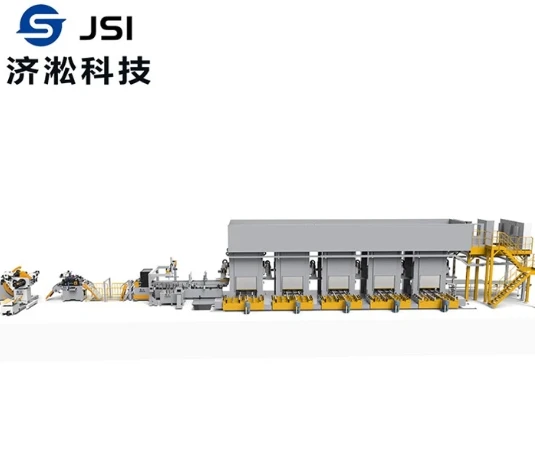
Product Introduction
A Multi-Press Transfer System is an automated solution that links multiple stamping presses into a continuous production line. It transfers metal workpieces from one press to the next, enabling sequential stamping operations to run without manual handling.
In conventional production, operators typically move parts between presses by hand. This approach increases labor demand, slows cycle times, and creates process interruptions. An automatic Multi-Press Transfer System addresses these limitations by coordinating workpiece movement across stations with consistent timing and accuracy.
JS Tech develops customized Multi-Press Transfer Systems based on press models, factory layout, workpiece characteristics, production speed, and process requirements. Depending on the application, the system may use robotic or mechanical transfer technology to achieve reliable and precise handling.
The solution is applied across automotive components, home appliances, electrical equipment, hardware, and general metal stamping.
1. Product Features
1.1 Automatic Transfer Between Multiple Presses
The system moves workpieces automatically from one press to the next according to the production sequence. It eliminates manual loading and unloading, connecting individual stamping operations into a continuous automated line. This capability is particularly valuable for parts that require multiple forming stages.
1.2 Flexible Multi-Press Connection
Stamping lines differ in press quantity, spacing, working height, and layout. Transfer systems are engineered to match these variables, making them suitable for both new installations and upgrades of existing production lines.
1.3 Stable Workpiece Handling
Consistent positioning is essential for continuous stamping. Transfer devices and grippers are selected according to the workpiece's geometry, dimensions, and weight, ensuring accurate placement and stable production quality.
1.4 Customized Transfer Structure
Transfer distance, motion range, gripper design, and overall structure are tailored to the specific process requirements and available floor space.
1.5 Reduced Manual Handling
Automatic transfer significantly reduces the need for operators to move parts between presses. This lowers labor requirements and, when integrated with appropriate safety systems, reduces worker exposure to moving equipment.
1.6 Improved Production Flow
By synchronizing workpiece transfer with press cycles, the system minimizes idle time and supports a smoother, more continuous production flow. Individual machines are transformed into a coordinated stamping line.
2. Technical Parameters
Specifications are determined by the customer's presses, workpieces, process, and factory layout.
Note: Final technical specifications are confirmed during the engineering design phase.
To determine the most suitable system configuration, customers are requested to provide press models and capacity, workpiece dimensions and weight, required production speed, and factory layout information.
3. Customized Multi-Press Transfer Solutions
Every stamping facility operates under unique equipment conditions, product requirements, and production targets. Standardized solutions rarely deliver optimal performance. JS Tech develops fully customized Multi-Press Transfer Systems based on actual operating conditions.
3.1 Press Layout and Connection
Systems are designed according to the number, models, spacing, and arrangement of presses to ensure proper integration and efficient use of available space.
3.2 Workpiece Size and Weight
Material, shape, dimensions, and weight directly influence transfer structure and handling methods. Product drawings or physical samples are used to define the appropriate design.
3.3 Transfer Speed
Transfer cycle times are matched to the operating cycles of the presses to maintain the required production rate.
3.4 Customized Grippers
Grippers are engineered for the specific geometry, material, and handling characteristics of each workpiece to ensure secure and accurate transfer.
3.5 Control System Integration
The transfer system is coordinated with the connected presses and related automation equipment. Control interfaces and communication protocols are defined during the technical design stage.
3.6 Complete Stamping Line Integration
For both new automated lines and existing line upgrades, transfer solutions are developed with consideration of the overall process sequence, press arrangement, and production objectives.
4. Application Scenarios
Multi-Press Transfer Systems are applied in industries where metal parts undergo multiple sequential stamping operations:
Automotive Parts Manufacturing - Brackets, reinforcement components, structural parts, and other multi-stage stamped components
Home Appliance Manufacturing - Housings and internal components for refrigerators, washing machines, air conditioners, and related products
Electrical Equipment Manufacturing - Cabinets, distribution boxes, and metal enclosures
Hardware Manufacturing - Brackets, connectors, and other multi-process hardware products
General Metal Stamping - Metal parts requiring continuous processing through multiple presses
5. Frequently Asked Questions
Q1: What is a Multi-Press Transfer System?
It is an automated handling solution that transfers workpieces between multiple stamping presses, reducing manual intervention and linking sequential stamping processes.
Q2: How does the system operate?
After each stamping operation, the transfer device picks up the workpiece and moves it to the next press according to the programmed production sequence.
Q3: Can the system be integrated with existing presses?
In most cases, yes. Integration depends on press specifications, working heights, spacing, control systems, and factory layout. A technical assessment is required prior to design.
Q4: How many presses can one system connect?
The number is determined by process sequence, press arrangement, transfer distances, and system design. Each project is evaluated individually.
Q5: Can the system handle different workpiece sizes and shapes?
Yes. Both the transfer structure and grippers are customized based on workpiece drawings, dimensions, weight, and geometry.
Q6: Does the system help reduce labor costs?
Yes. By eliminating manual transfer between presses, it reduces labor requirements and improves overall production efficiency.
6. Why Choose JS Tech?
Selecting a Multi-Press Transfer System requires more than choosing a standard machine. The system must be matched to the presses, workpieces, process sequence, and factory layout.
JS Tech specializes in stamping automation and customized production line solutions. We work closely with customers to understand equipment conditions and production objectives before developing a tailored transfer solution.
From initial technical consultation and system design through manufacturing and commissioning, each project is engineered according to the specific requirements of the application.
To discuss your multi-press automation requirements, please contact JS Tech with your press specifications, workpiece drawings, and factory layout. We will prepare a customized Multi-Press Transfer System solution suited to your production needs.


