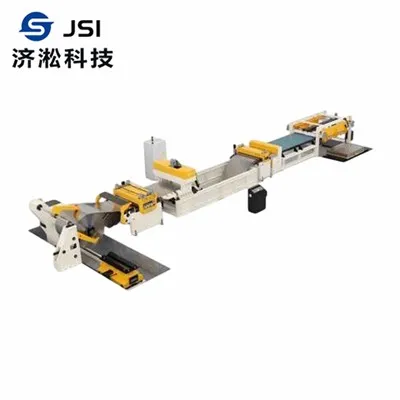
Hey there! As a transfer press supplier, I often get asked a bunch of questions about what our machines can and can't do. One of the most common queries I hear is, "Can a transfer press be used for punching holes?" Well, let's dive right into this topic and find out.
First off, let's understand what a transfer press is. A transfer press is a type of machine tool that's used in metalworking. It's designed to transfer a workpiece from one station to another for various operations. These operations can include forming, bending, and yes, even punching holes.


Now, the ability of a transfer press to punch holes depends on a few factors. One of the main factors is the type of transfer system it uses. There are different types of transfer systems available, each with its own set of features and capabilities.
Let's start with the Independent Transfer System. This system allows for a high degree of flexibility. Each transfer arm can move independently, which means that the timing and positioning of the workpiece can be adjusted precisely. When it comes to punching holes, this flexibility is a huge advantage. You can position the workpiece exactly where you need it for the punching operation, ensuring accurate hole placement. This is especially useful when you're working on complex parts that require multiple holes in specific locations.
The Multi Press Transfer System is another option. This system consists of multiple presses working together. Each press can perform a different operation, and the workpiece is transferred between them. When it comes to punching holes, the multi - press transfer system can be really efficient. You can have one press dedicated solely to the punching operation. This way, you can optimize the punching process, using the right tools and settings for the best results. It also allows for high - volume production, as multiple parts can be processed simultaneously.
Then there's the 3D Transfer System. This is a more advanced system that can move the workpiece in three dimensions. It's great for parts that have complex geometries. When punching holes in such parts, the 3D transfer system can position the workpiece in the most optimal way. It can tilt, rotate, and move the part to ensure that the punching operation is carried out accurately, even on curved or angled surfaces.
But it's not just about the transfer system. The punching tool itself is also crucial. You need to choose the right type of punch and die for the job. The punch is the tool that actually creates the hole, while the die supports the workpiece and provides the shape of the hole. The size, shape, and material of the punch and die will depend on the requirements of the part. For example, if you're punching small holes in thin sheet metal, you'll need a different punch and die set compared to punching large holes in thick steel.
Another important aspect is the control system of the transfer press. A modern transfer press is usually equipped with a sophisticated control system that allows you to program the punching operation. You can set the speed, force, and position of the punch. This level of control ensures that the holes are punched with the right quality and consistency. You can also make adjustments on the fly if you notice any issues during the production process.
Now, let's talk about some of the benefits of using a transfer press for punching holes. One of the biggest advantages is the efficiency. Since the transfer press can transfer the workpiece automatically between stations, you can complete the punching operation as part of a larger manufacturing process. This reduces the time and labor required compared to using a separate punching machine.
Accuracy is another key benefit. As I mentioned earlier, with the right transfer system and control, you can achieve very high levels of accuracy in hole placement. This is essential for parts that need to fit together precisely, such as in automotive or aerospace applications.
Consistency is also important. Once you've programmed the transfer press for a particular punching operation, it will repeat the process with the same level of quality every time. This ensures that all the parts produced have the same hole characteristics, which is crucial for mass production.
However, there are also some challenges. One of the challenges is the initial setup. Setting up a transfer press for punching holes can be a complex process. You need to ensure that the transfer system, punching tool, and control system are all configured correctly. This may require some technical expertise and time.
Another challenge is the maintenance. A transfer press is a complex machine, and regular maintenance is required to keep it in good working condition. This includes checking the transfer system, the punching tool, and the control system. If any part of the machine fails, it can affect the quality of the punched holes.
In conclusion, a transfer press can definitely be used for punching holes. With the right transfer system, punching tool, and control, you can achieve efficient, accurate, and consistent hole punching. Whether you're working on small - scale production or high - volume manufacturing, a transfer press can be a valuable addition to your manufacturing setup.
If you're interested in learning more about using a transfer press for punching holes or if you're thinking about purchasing a transfer press for your business, I'd love to have a chat with you. We can discuss your specific requirements and see how our transfer presses can meet your needs. Contact us to start a discussion about your punching hole needs and how our transfer presses can fit into your production process.
References
- Metalworking Handbook: A comprehensive guide to metalworking processes and tools.
- Transfer Press Manufacturer's Manuals: Information provided by transfer press manufacturers on the capabilities and operation of their machines.