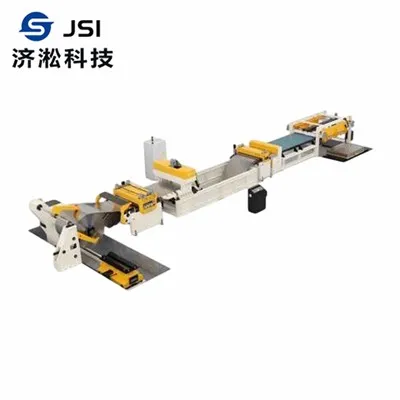
As a seasoned supplier of slitting lines, I've often encountered inquiries from clients about the feasibility of using our equipment for coated materials. This question is not only relevant but also crucial for industries that deal with coated products, such as the packaging, automotive, and electronics sectors. In this blog, I'll delve into the technical aspects, advantages, and considerations of using a slitting line for coated materials.
Understanding Coated Materials
Coated materials are substrates that have been covered with a thin layer of a different material to enhance their properties. These coatings can serve various purposes, including improving durability, providing a barrier against moisture or chemicals, or adding aesthetic appeal. Common types of coated materials include coated papers, coated plastics, and coated metals.
The coatings can be applied using different methods, such as spraying, dipping, or laminating. Each method results in a unique coating thickness and quality, which can affect the slitting process. For instance, a thick or uneven coating may require different slitting parameters compared to a thin and uniform one.
Technical Feasibility of Slitting Coated Materials
From a technical perspective, a well - designed slitting line can indeed be used for coated materials. However, it requires careful consideration of several factors.
Blade Selection
The choice of slitting blades is critical when working with coated materials. The blade must be sharp enough to cut through the substrate and the coating without causing damage to the coating. For softer coatings, a high - quality, fine - edged blade may be sufficient. In contrast, harder coatings may require a more robust blade with a special coating or treatment to prevent wear and tear.
Tension Control
Maintaining proper tension during the slitting process is essential to avoid issues such as wrinkling, stretching, or delamination of the coating. Coated materials are often more sensitive to tension variations than uncoated ones. Our slitting lines are equipped with advanced tension control systems that can be adjusted to accommodate the specific requirements of different coated materials. These systems ensure a consistent and smooth slitting operation, resulting in high - quality finished products.
Dust and Debris Management
Slitting coated materials can generate dust and debris, especially if the coating is brittle or has a tendency to flake off. This dust can accumulate on the blades and other components of the slitting line, affecting the cutting quality and potentially causing damage to the equipment. To address this issue, our slitting lines are designed with effective dust collection systems. These systems capture the dust and debris during the slitting process, keeping the working environment clean and ensuring the longevity of the equipment.
Advantages of Using a Slitting Line for Coated Materials
There are several advantages to using a slitting line for coated materials.
Precision and Consistency
A slitting line can provide precise and consistent cuts, ensuring that the coated materials meet the required specifications. This is particularly important for industries where accuracy is crucial, such as the electronics and automotive sectors. Our Coating Material Slitting Line is designed to achieve high - precision cuts, with tolerances as low as a few micrometers.


Efficiency and Productivity
Slitting lines are highly efficient machines that can process large volumes of coated materials in a relatively short period. This can significantly increase the productivity of a manufacturing operation, reducing production costs and lead times. Our High Speed Slitting Line is capable of operating at high speeds without compromising on the quality of the cuts, making it an ideal choice for high - volume production.
Customization
Slitting lines can be customized to meet the specific needs of different coated materials and applications. Whether you need to slit narrow strips, wide rolls, or have special requirements for the coating finish, our team of experts can work with you to design a slitting line that is tailored to your needs. Our Fully Automatic Slitting Line offers a high degree of automation, allowing for easy operation and adjustment, and can be configured to handle a wide range of coated materials.
Considerations for Coated Material Slitting
While a slitting line can be used for coated materials, there are some considerations that need to be taken into account.
Coating Compatibility
It's important to ensure that the slitting process is compatible with the type of coating used on the material. Some coatings may be sensitive to heat, pressure, or friction generated during the slitting process, which can cause damage to the coating. Before starting the slitting operation, it's advisable to conduct some tests to determine the best slitting parameters for the specific coated material.
Quality Control
Quality control is crucial when slitting coated materials. Regular inspections should be carried out to ensure that the cuts are clean, the coating is intact, and the finished products meet the required quality standards. Our slitting lines are equipped with quality control sensors and monitoring systems that can detect any issues during the slitting process, allowing for immediate corrective action.
Conclusion
In conclusion, a slitting line can be effectively used for coated materials, provided that the appropriate technical measures are taken. As a leading supplier of slitting lines, we have the expertise and experience to help you select the right equipment and optimize the slitting process for your specific coated materials.
If you're in the market for a slitting line for coated materials, we invite you to contact us for a consultation. Our team of experts will work closely with you to understand your requirements and recommend the most suitable solution for your business. Whether you need a standard Coating Material Slitting Line, a High Speed Slitting Line, or a Fully Automatic Slitting Line, we have the products and services to meet your needs.
References
- "Slitting Technology Handbook" - A comprehensive guide on slitting processes and equipment.
- Industry research reports on coated materials and their manufacturing processes.