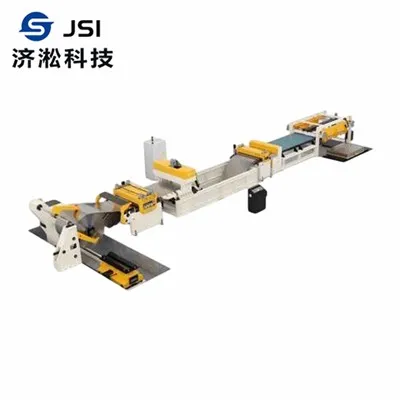
Hey there! As a supplier of precision levelers, I often get asked about the installation dimensions of these machines. It's a crucial topic because getting the dimensions right is key to ensuring the proper functioning and efficiency of the precision leveler. In this blog, I'll break down everything you need to know about the installation dimensions of a precision leveler.
First off, let's understand what a precision leveler is. A precision leveler is a machine used to flatten and straighten metal sheets or coils. There are different types, like the Sheet Material Precision Leveling Machine and the Coil Material Precision Leveling Machine. We also have the High Precision Roller Leveler, which is known for its high - accuracy leveling.
General Factors Affecting Installation Dimensions
The installation dimensions of a precision leveler depend on several factors. One of the main factors is the type of material it's designed to handle. If it's for sheet materials, the dimensions will be different compared to a leveler for coil materials. Sheet material levelers usually need to have enough space to accommodate the length and width of the sheets. For example, if you're dealing with large - sized sheets, the leveler needs to be wide enough to cover the full width of the sheet during the leveling process.
The capacity of the leveler also plays a huge role. A high - capacity leveler that can handle thick and wide materials will generally be larger in size. This means it will require more floor space for installation. You need to make sure that there's enough room around the machine for easy access for maintenance, loading, and unloading of materials.
Another factor is the number of leveling rollers. A leveler with more rollers, like our High Precision Roller Leveler, might be longer in length. The additional rollers are used to achieve a higher level of precision in leveling, but they also increase the overall size of the machine.
Specific Installation Dimensions
Length
The length of a precision leveler is mainly determined by the number of leveling rollers and the type of leveling process. In a multi - roller leveler, each roller adds a certain amount of length to the machine. For example, a basic leveler with a few rollers might be around 2 - 3 meters in length. However, a high - end precision leveler with a large number of rollers for extremely accurate leveling could be 5 - 6 meters long or even more.
The length also needs to account for the in - feed and out - feed areas. The in - feed area is where the material enters the leveler, and the out - feed area is where the leveled material exits. You need to have enough space in these areas to allow for smooth movement of the material. Usually, an additional 1 - 2 meters of space is required for each of the in - feed and out - feed areas.
Width
The width of the precision leveler is directly related to the maximum width of the material it can handle. If you're leveling narrow strips of metal, the leveler can be relatively narrow. But for wide sheets or coils, the width of the leveler needs to be at least as wide as the material. For example, if you're leveling sheets that are 2 meters wide, the leveler should have a width of at least 2 meters. In addition to the width of the material, you also need to consider some extra space on the sides for the machine's structural components and for easy access during operation. So, in total, you might need an extra 0.5 - 1 meter of width on each side of the material width.


Height
The height of the precision leveler is determined by the design of the machine and the type of leveling mechanism. Some levelers have a low - profile design, which is suitable for installations where headroom is limited. These low - profile levelers might be around 1 - 1.5 meters in height. On the other hand, more complex levelers with advanced hydraulic or mechanical systems can be 2 - 3 meters tall.
You also need to consider the height of the in - feed and out - feed conveyors. If you're using conveyors to move the material in and out of the leveler, their height needs to be compatible with the height of the leveler. This ensures a smooth transition of the material between the conveyors and the leveler.
Floor Space Requirements
When it comes to installing a precision leveler, floor space is a crucial consideration. You need to have a flat and stable floor to support the weight of the machine. The floor should also be able to withstand the vibrations generated during the operation of the leveler.
In addition to the actual size of the leveler, you need to leave some clearance around the machine. A clearance of at least 1 - 1.5 meters on all sides is recommended. This clearance is important for several reasons. It allows for easy access to the machine for maintenance and repairs. It also provides a safe working area for the operators. If there's not enough clearance, it can be difficult to perform tasks like replacing rollers or adjusting the leveling settings.
Considerations for Different Types of Levelers
Sheet Material Precision Leveling Machine
As mentioned earlier, a sheet material precision leveler needs to be sized according to the dimensions of the sheets. The length of the leveler should be sufficient to ensure that the sheet is properly leveled from one end to the other. The width should match the maximum width of the sheets. And don't forget about the in - feed and out - feed areas. You need to have enough space to stack the sheets before and after leveling.
Coil Material Precision Leveling Machine
For a coil material precision leveler, the installation dimensions are a bit different. In addition to the length and width, you need to consider the space for the coil handling equipment. This includes the decoiler, which unwinds the coil, and the recoiler, which rewinds the leveled coil. The decoiler and recoiler need to be placed at the in - feed and out - feed ends of the leveler respectively. This means that you need to have additional floor space for these components.
High Precision Roller Leveler
Our High Precision Roller Leveler is designed for the most accurate leveling. It usually has a larger number of rollers, which makes it longer in length. The installation of this leveler requires careful planning. You need to make sure that the floor is extremely flat and stable because any unevenness can affect the precision of the leveling. Also, due to its high - end nature, it might require more space for advanced control systems and monitoring equipment.
Importance of Getting the Installation Dimensions Right
Getting the installation dimensions right is not just about fitting the machine into your workspace. It's also about ensuring the optimal performance of the precision leveler. If the machine is too large for the available space, it can cause overcrowding, which makes it difficult to operate and maintain. On the other hand, if the machine is too small for the material you're handling, it won't be able to level the material properly.
Proper installation dimensions also contribute to the safety of the operators. With enough space around the machine, there's less risk of accidents during operation. It also allows for easy evacuation in case of an emergency.
Contact Us for Your Precision Leveler Needs
If you're in the market for a precision leveler and need more information about the installation dimensions or any other aspect of our products, don't hesitate to reach out. We're here to help you choose the right precision leveler for your specific needs and ensure a smooth installation process. Whether you need a Sheet Material Precision Leveling Machine, a Coil Material Precision Leveling Machine, or a High Precision Roller Leveler, we've got you covered.
References
- Metalworking Machinery Handbook
- Precision Leveling Technology Manuals