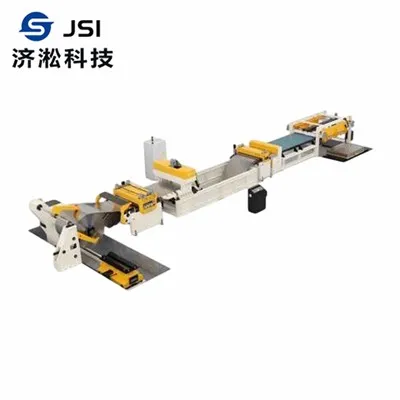
In the realm of modern manufacturing, the demand for precision and versatility in metal cutting has reached new heights. One of the key technologies at the forefront of this evolution is the Laser Blanking Line. As a leading supplier of Laser Blanking Lines, I often encounter a common question: Can a Laser Blanking Line cut complex shapes? In this blog post, I will delve into the capabilities of Laser Blanking Lines, exploring their potential to handle intricate geometries and the benefits they offer in various industries.
Understanding Laser Blanking Lines
Before we address the question of cutting complex shapes, let's first understand what a Laser Blanking Line is. A Laser Blanking Line is a sophisticated manufacturing system that combines laser cutting technology with automated material handling. It is designed to cut flat metal sheets into individual blanks with high precision and efficiency. The system typically consists of a decoiler, a leveling unit, a laser cutting machine, and a stacking device.
The laser cutting machine is the heart of the Laser Blanking Line. It uses a high-powered laser beam to melt, burn, or vaporize the metal, creating a clean and precise cut. The laser beam can be controlled with extreme accuracy, allowing for the creation of complex shapes and patterns. The automated material handling system ensures that the metal sheets are fed into the laser cutting machine smoothly and precisely, minimizing downtime and maximizing productivity.
The Capability to Cut Complex Shapes
The short answer to the question "Can a Laser Blanking Line cut complex shapes?" is yes. Laser Blanking Lines are highly versatile and can cut a wide range of complex shapes, including curves, angles, holes, and intricate patterns. The precision and flexibility of laser cutting technology make it ideal for producing parts with complex geometries that would be difficult or impossible to achieve with traditional cutting methods.
One of the key advantages of laser cutting is its ability to cut with high precision. The laser beam can be focused to a very small spot size, allowing for cuts as narrow as a few thousandths of an inch. This level of precision is essential for producing parts with tight tolerances and complex shapes. Additionally, laser cutting produces a clean and smooth cut edge, eliminating the need for secondary finishing operations.
Another advantage of laser cutting is its flexibility. The laser cutting machine can be programmed to cut any shape or pattern, making it easy to produce custom parts and prototypes. This flexibility is particularly useful in industries such as automotive, aerospace, and electronics, where the demand for custom parts is high.
Applications in Various Industries
The ability to cut complex shapes makes Laser Blanking Lines suitable for a wide range of applications in various industries. Here are some examples:
- Automotive Industry: In the automotive industry, Laser Blanking Lines are used to produce a variety of parts, including body panels, chassis components, and engine parts. The ability to cut complex shapes allows manufacturers to optimize the design of these parts, reducing weight and improving performance. For example, laser cutting can be used to create intricate patterns in body panels, which can improve aerodynamics and reduce drag.
- Aerospace Industry: The aerospace industry has strict requirements for precision and quality. Laser Blanking Lines are used to produce critical components such as turbine blades, wing spars, and fuselage panels. The ability to cut complex shapes with high precision ensures that these components meet the exacting standards of the aerospace industry.
- Electronics Industry: In the electronics industry, Laser Blanking Lines are used to produce printed circuit boards (PCBs) and other electronic components. The ability to cut fine traces and holes with high precision is essential for the production of high-density PCBs. Laser cutting also allows for the creation of complex shapes and patterns, which can improve the functionality and performance of electronic devices.
- Medical Industry: The medical industry requires high-precision components for a variety of applications, including surgical instruments, implants, and diagnostic devices. Laser Blanking Lines are used to produce these components with the required precision and quality. The ability to cut complex shapes allows for the creation of custom-designed medical devices that can meet the specific needs of patients.
Advantages of Using a Laser Blanking Line for Complex Shapes
In addition to the ability to cut complex shapes, there are several other advantages of using a Laser Blanking Line in manufacturing:
- High Efficiency: Laser Blanking Lines are highly automated, which means they can operate continuously with minimal human intervention. This results in high productivity and reduced labor costs.
- Cost-Effective: While the initial investment in a Laser Blanking Line may be higher than traditional cutting methods, the long-term cost savings can be significant. Laser cutting eliminates the need for expensive tooling and reduces the amount of scrap material, resulting in lower production costs.
- Quality and Consistency: Laser cutting produces high-quality cuts with consistent results. The precision and accuracy of the laser beam ensure that each part is identical to the next, reducing the risk of defects and improving overall product quality.
- Environmentally Friendly: Laser cutting is a clean and environmentally friendly process. It produces minimal waste and emissions, making it a sustainable choice for manufacturing.
Comparing with Other Blanking Lines
When considering the use of a Laser Blanking Line for cutting complex shapes, it's also important to compare it with other types of blanking lines, such as the 3 in 1 Blanking Line and the Zigzag Blanking Line.
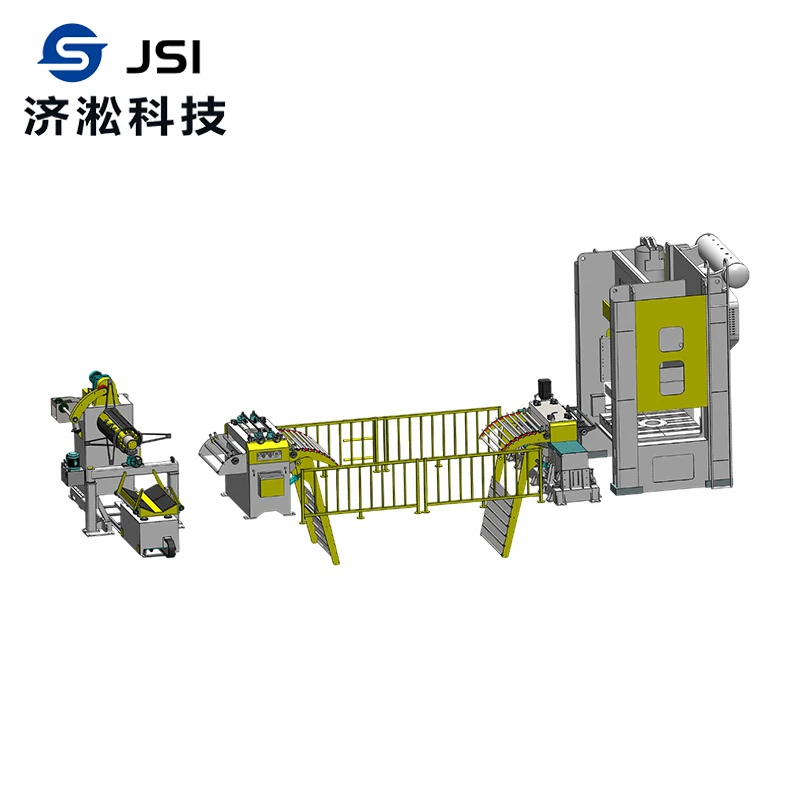

The 3 in 1 Blanking Line combines three functions - decoiling, leveling, and blanking - into a single machine. It is a cost-effective solution for producing simple blanks in high volumes. However, it may not be suitable for cutting complex shapes due to its limited cutting capabilities.
The Zigzag Blanking Line is designed to maximize material utilization by cutting blanks in a zigzag pattern. It is a good option for reducing scrap and improving efficiency. However, like the 3 in 1 Blanking Line, it may not be able to handle complex shapes as effectively as a Laser Blanking Line.
In contrast, the Laser Blanking Line offers the highest level of precision and flexibility, making it the ideal choice for cutting complex shapes. It can handle a wide range of materials and thicknesses, and it can be programmed to cut any shape or pattern.
Conclusion
In conclusion, a Laser Blanking Line is a powerful and versatile tool that can cut complex shapes with high precision and efficiency. Its ability to handle intricate geometries makes it suitable for a wide range of applications in various industries, including automotive, aerospace, electronics, and medical. By choosing a Laser Blanking Line, manufacturers can improve product quality, reduce production costs, and increase productivity.
If you are interested in learning more about our Laser Blanking Lines or discussing your specific requirements, please do not hesitate to contact us. Our team of experts is ready to assist you in finding the best solution for your manufacturing needs.
References
- "Laser Cutting Technology: Principles and Applications" by John Doe
- "Advanced Manufacturing Processes" by Jane Smith
- "Automotive Manufacturing: Trends and Technologies" by Robert Johnson