

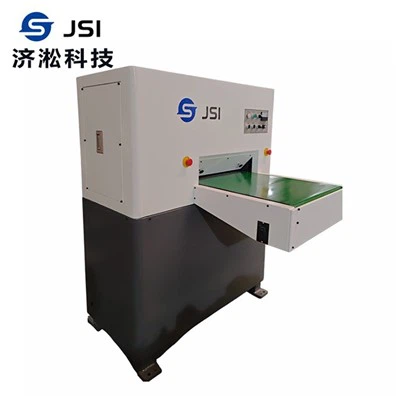
Precision Leveler Machine for Metal Sheets and Coils
1. Product Introduction
A Precision Leveler Machine is used to remove bends, waves, and uneven areas from metal sheets and coils. It helps make metal materials flatter and more suitable for further processing, such as stamping, laser cutting, welding, and bending.
During storage, transportation, and production, metal sheets and coils may develop unwanted bends or internal stress. These problems can affect product quality and cause difficulties in later manufacturing processes.
A precision leveling machine uses a series of upper and lower rollers to bend the metal in a controlled way. As the material passes through the rollers, the bending becomes smaller, helping improve its flatness.
Our precision leveler machines can be designed for different material types, thicknesses, widths, and production needs. The machine configuration should be selected according to the material and the required leveling result.
2. How Does a Precision Leveler Machine Work?
The working principle of a metal sheet leveling machine is based on controlled roller bending.
First, the metal sheet or coil strip enters the leveling section. The upper and lower rollers apply pressure to the material and create a series of small bends.
As the material moves forward, these bends gradually become smaller. This process helps reduce uneven areas and improve the flatness of the metal.
The leveling result depends on several factors, including material thickness, material strength, initial deformation, roller design, and machine settings. Correct adjustment is important for achieving a good result.
For coil processing lines, a precision coil leveler can be connected with an uncoiler and a feeder. This setup helps provide continuous material feeding for stamping and other automated production processes.
3. Main Advantages of a Precision Leveler Machine
Improved Material Flatness
The machine helps reduce waves, bends, and other flatness problems. Flatter material can make later processing easier and more consistent.
Better Production Quality
Uneven metal sheets may cause problems during stamping, cutting, welding, and assembly. A precision leveling machine helps improve material condition before these operations.
More Stable Processing
Flat material is easier to feed and position in many production processes. This can help reduce problems caused by uneven sheets, depending on the application.
Flexible Machine Configuration
Different materials require different leveling conditions. The machine can be configured according to material thickness, width, strength, production speed, and leveling requirements.
Easy Integration with Production Lines
A precision leveler machine can be used as a standalone unit or integrated into an automated line. For coil processing, it may work with an uncoiler, servo feeder, stamping press, or cutting system.
4. Technical Parameters
The following parameters should be confirmed according to your material and production requirements. Actual specifications depend on the selected machine model.
|
Model |
MAL-20-600-23 |
|
Material Max width |
600mm |
|
Leveling roller diameter |
φ20mm |
|
Thickness |
0.1-1.2mm |
|
Min. work-piece size |
10*25mm |
|
Straightening speed |
0-10m/min |
|
Backup roller quantity |
Upper three/Lower three |
|
Straightening roller quantity |
Standard 23 pcs (upper 11 pcs/lower 12pcs) |
|
Straightening gap adjust method |
Four-point manual adjustment |
|
Voltage |
3 Phase 380V 50Hz (Can be customized) |
Before choosing a machine, please provide your material type, thickness, width, production speed, and required leveling result. These details help us recommend a suitable solution.
5. Main Components
A precision leveler machine normally includes the following main components. The exact structure depends on the machine model.
Leveling Rollers
The leveling rollers apply controlled bending to the metal. Their design and arrangement affect the leveling process and the final material condition.
Roller Adjustment System
This system adjusts the roller position and pressure according to the material and required leveling result. Correct adjustment helps improve leveling performance.
Drive System
The drive system moves the rollers and feeds the material through the leveling section. Its design depends on the machine size and production requirements.
Frame and Support Structure
The machine frame supports the rollers and other main components. A suitable structure helps maintain stable operation under working loads.
Electrical Control System
The control system manages machine operation and related settings. Depending on the configuration, it may support adjustment and connection with other production equipment.
6. Applications
A Precision Leveler Machine for Metal Sheets can be used in different metalworking industries.
Stamping lines: Helps prepare metal strip before it enters the stamping press.
Laser cutting: Improves the flatness of suitable sheet materials before cutting. Parts that require leveling after cutting may need a different machine configuration.
Sheet metal processing: Helps improve material flatness before bending, welding, or assembly.
Automotive manufacturing: Supports metal processing for suitable automotive parts and components.
Electrical equipment production: Helps prepare metal sheets used for cabinets, enclosures, and other products.
Coil processing lines: Works with an uncoiler and feeder to support continuous material processing.
The correct machine depends on whether you need to level coil material before processing or level individual parts after cutting or stamping.
7. Frequently Asked Questions
Q1: What is a Precision Leveler Machine?
A Precision Leveler Machine is equipment used to improve the flatness of metal sheets, strips, or coils by passing the material through a series of leveling rollers.
Q2: What materials can the machine process?
Depending on its design, the machine may process carbon steel, stainless steel, aluminum, and other suitable metal materials. Material thickness, width, and strength must be checked before selection.
Q3: Can a precision leveler be used in an automatic stamping line?
Yes. A suitable precision coil leveler can be connected with an uncoiler, servo feeder, and stamping press to support automatic material feeding.
Q4: How do I choose the right leveling machine?
You should consider material type, thickness, width, material strength, initial flatness, production speed, and the required final result. Providing material samples or drawings can also help with evaluation.
Q5: Can the machine guarantee perfectly flat material?
The final result depends on the material properties, initial deformation, machine design, and operating settings. The required flatness should be discussed and tested for the specific application.
Q6: Can the machine be customized?
Machine configuration may be customized according to material size, production needs, and line layout. Please confirm your requirements with the manufacturer before ordering.


