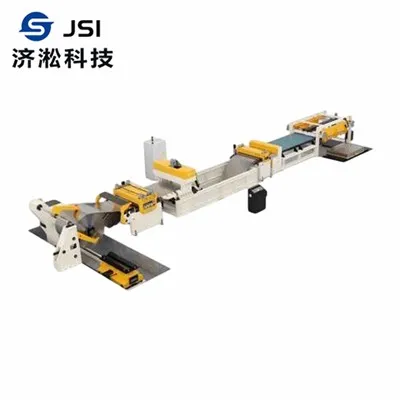
When it comes to the world of metal processing and manufacturing, decoilers play an indispensable role. They are designed to unwind coiled materials, such as steel, aluminum, and copper, smoothly and efficiently, feeding them into subsequent processing machines. As a decoiler supplier, I've had the opportunity to witness firsthand the importance of choosing the right motor for these machines. In this blog post, I'll explore the types of motors commonly used in decoilers, their characteristics, and how they impact the performance of the decoiler.
1. AC Induction Motors
AC induction motors are perhaps the most widely used type of motor in decoilers. These motors operate on the principle of electromagnetic induction, where the rotating magnetic field in the stator induces a current in the rotor, causing it to rotate.
One of the primary advantages of AC induction motors is their simplicity and reliability. They have a relatively simple design with fewer moving parts, which means less maintenance and a longer lifespan. This is crucial for decoilers, which often operate continuously in industrial environments. For example, in a large - scale steel production plant, a decoiler with an AC induction motor can run for long hours without frequent breakdowns, ensuring a steady supply of uncoiled material to the production line.
Another benefit is their cost - effectiveness. AC induction motors are generally more affordable than some other types of motors, making them an attractive option for manufacturers on a budget. They also offer good efficiency over a wide range of operating conditions. However, they do have some limitations. Their speed control can be a bit challenging. While it is possible to control the speed of an AC induction motor using variable frequency drives (VFDs), this adds to the overall cost of the system.
If you're interested in a decoiler that can benefit from the reliability of an AC induction motor, you might want to check out our Motorized Decoiler, which is designed to provide smooth and efficient material unwinding.
2. DC Motors
DC motors have also been a popular choice for decoilers, especially in applications where precise speed control is required. DC motors work by using a direct current to create a magnetic field in the stator and rotor, and the interaction between these fields causes the motor to rotate.
The main advantage of DC motors is their excellent speed control capabilities. They can easily adjust their speed according to the requirements of the decoiling process. For instance, when dealing with different thicknesses of coiled materials, a DC motor can slow down or speed up the decoiler to ensure a consistent and accurate unwinding process. This level of control is particularly useful in high - precision metal processing applications, such as in the production of electronic components or automotive parts.
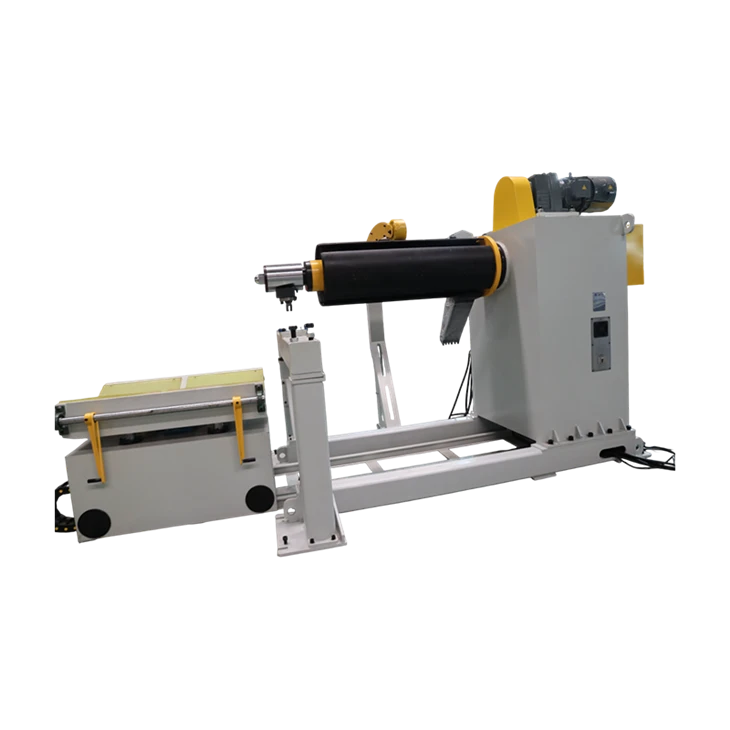

However, DC motors also have some drawbacks. They typically require more maintenance than AC induction motors. The brushes in a DC motor, which are used to transfer electrical power to the rotor, need to be replaced periodically. Additionally, DC motors are generally more expensive than AC induction motors, and they may require more complex control systems.
Our Hydraulic Decoiler Machine can be equipped with a DC motor for applications that demand high - precision speed control. This combination allows for a more customized and efficient decoiling process.
3. Servo Motors
Servo motors are becoming increasingly popular in modern decoilers, especially those used in high - end and high - precision applications. A servo motor consists of a motor, a feedback device (such as an encoder), and a controller. The feedback device provides information about the motor's position, speed, and acceleration, allowing the controller to adjust the motor's operation in real - time.
The key advantage of servo motors is their high precision and accuracy. They can provide extremely precise control over the decoiling process, ensuring that the material is unwound at a consistent speed and tension. This is essential in applications where even the slightest variation in the decoiling process can lead to product defects. For example, in the production of thin - gauge metal foils, a servo - motor - driven decoiler can maintain the perfect tension to prevent wrinkling or tearing of the material.
Servo motors also offer fast response times. They can quickly start, stop, and change speeds, which is beneficial in applications where the decoiler needs to respond rapidly to changes in the production process. However, servo motors are the most expensive option among the commonly used motors in decoilers. They also require a more sophisticated control system and may be more difficult to troubleshoot compared to other motor types.
If you're looking for a decoiler that offers the highest level of precision, our Decoiler with Coil Car can be equipped with a servo motor to meet your specific requirements.
4. Choosing the Right Motor for Your Decoiler
Selecting the appropriate motor for a decoiler depends on several factors.
Material Type and Thickness: Different materials and thicknesses require different levels of torque and speed control. For example, thick and heavy materials may require a motor with high torque, such as an AC induction motor or a DC motor. Lighter materials, on the other hand, may be unwound more efficiently with a servo motor for precise control.
Production Volume and Speed: High - volume production lines often require motors that can operate continuously at a high speed. AC induction motors are well - suited for such applications due to their reliability and relatively low cost. In contrast, if the production process involves frequent starts and stops or requires variable speeds, a DC or servo motor may be a better choice.
Budget Constraints: Cost is always a significant factor in purchasing decisions. As mentioned earlier, AC induction motors are the most cost - effective option, followed by DC motors, while servo motors are the most expensive. You need to balance your performance requirements with your budget to make the right choice.
Conclusion
In conclusion, the choice of motor for a decoiler is a critical decision that can significantly impact the performance, efficiency, and cost - effectiveness of the entire metal processing operation. Whether you opt for the simplicity and reliability of an AC induction motor, the precision speed control of a DC motor, or the high - end accuracy of a servo motor, each type has its own advantages and limitations.
As a decoiler supplier, we understand the importance of matching the right motor to your specific needs. We offer a wide range of decoilers equipped with different types of motors to meet the diverse requirements of our customers. If you're in the market for a decoiler or need more information about the motor options available, we encourage you to contact us for a detailed discussion and a customized solution. Let's work together to find the perfect decoiler for your production line.
References
- Fitzer, E.; Stanislav, B. Electrical Machines and Drives: Fundamentals, Design and Applications. Springer International Publishing, 2017.
- Kliman, G. B.; Habetler, T. G. Condition Monitoring of Electrical Machines. John Wiley & Sons, 2011.