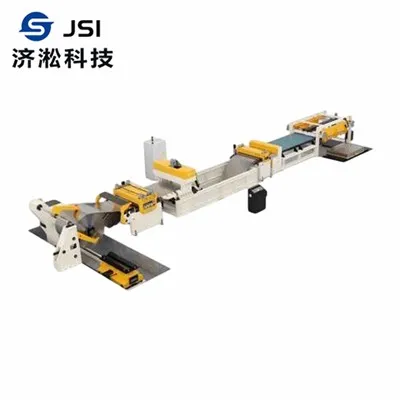
Hey there! As a supplier of tandem press lines, I've been getting a lot of questions lately about the role of the clutch in a mechanical tandem press line. So, I thought I'd take a few minutes to break it down for you.
Let's start with the basics. A mechanical tandem press line is a series of presses that work together to perform a series of operations on a metal sheet, like stamping, punching, and forming. These lines are used in a variety of industries, from automotive to aerospace, to create parts with high precision and efficiency.
Now, the clutch is a crucial component in this setup. Think of it as the traffic cop of the press line. It controls when the press starts and stops its operation, allowing for precise timing and synchronization between the different presses in the line.
How the Clutch Works
The clutch in a mechanical tandem press line is typically a friction clutch. It works by using friction to connect and disconnect the flywheel, which stores energy, to the crankshaft, which drives the press. When the clutch is engaged, the flywheel transfers its energy to the crankshaft, causing the press to move and perform its operation. When the clutch is disengaged, the connection between the flywheel and the crankshaft is broken, and the press stops.
This on - off control is essential for several reasons. First of all, it allows for safety. In case of an emergency or a malfunction, the clutch can be quickly disengaged to stop the press immediately. This helps prevent accidents and damage to the equipment.
Secondly, it enables precision. Different operations in the tandem press line require different amounts of time and force. The clutch can be adjusted to engage and disengage at the right moments, ensuring that each press in the line performs its task accurately. For example, if one press needs to make a deep draw operation that takes a bit longer, the clutch can be set to keep the press engaged for the appropriate duration.
The Role in Tandem Line Automation
Automation is a big deal in tandem press lines these days. With the Automation Of Tandem Lines, the clutch plays an even more important role. In an automated setup, the clutch needs to work in harmony with sensors, controllers, and other components.
Sensors are used to detect the position of the metal sheet and the status of the presses. The controller then sends signals to the clutch to engage or disengage at the right time. This seamless integration ensures that the entire line runs smoothly and efficiently. For instance, if a sensor detects that the metal sheet is not properly positioned, the controller can disengage the clutch to prevent a faulty operation.
Impact on Single Process Tandem Lines
In a Single Process Tandem Line, where a single operation is repeated across multiple presses, the clutch helps maintain consistency. Each press in the line needs to perform the operation with the same force and timing. The clutch ensures that the energy transfer from the flywheel to the crankshaft is consistent for each press.
This consistency is crucial for producing high - quality parts. If one press in the line has a different operation time or force due to a faulty clutch, it can lead to variations in the parts, which may not meet the required specifications.
Influence on High - Speed Tandem Press Lines
When it comes to High Speed Tandem Press Lines, the clutch has to work at lightning speed. These lines can operate at extremely high frequencies, with presses making multiple strokes per second.
The clutch needs to engage and disengage rapidly and accurately. A slow or inconsistent clutch can cause the press to miss its timing, leading to jams, misaligned parts, or even damage to the equipment. To handle these high - speed operations, modern clutches are designed with advanced materials and technologies. They are built to withstand the high - speed cycling and provide reliable performance.


Maintenance and Troubleshooting
Like any other component, the clutch in a mechanical tandem press line requires regular maintenance. Over time, the friction materials in the clutch can wear out, which can affect its performance. It's important to check the clutch regularly for signs of wear, such as unusual noises or a decrease in the press's responsiveness.
If you notice any issues with the clutch, it's crucial to address them promptly. Ignoring a problem with the clutch can lead to more serious problems down the line, such as damage to the flywheel or the crankshaft. In some cases, a simple adjustment or replacement of the friction material can solve the problem. But in more severe cases, you may need to replace the entire clutch assembly.
Why Choose Our Tandem Press Lines
As a supplier of tandem press lines, we understand the importance of a well - functioning clutch. Our press lines are equipped with high - quality clutches that are designed for reliability and precision. We use the latest technologies to ensure that our clutches can handle the demands of different applications, whether it's a single - process line or a high - speed automated setup.
We also offer comprehensive support and maintenance services. Our team of experts can help you with installation, troubleshooting, and regular maintenance of your press line. We know that downtime can be costly for your business, so we strive to keep your press line up and running at all times.
If you're in the market for a tandem press line or need to upgrade your existing one, we'd love to have a chat with you. Our team can work with you to understand your specific requirements and recommend the best solution for your business. Whether you're looking for a simple single - process line or a complex high - speed automated system, we've got you covered.
Conclusion
In conclusion, the clutch is a vital component in a mechanical tandem press line. It controls the operation of the press, ensuring safety, precision, and efficiency. Whether it's in an automated setup, a single - process line, or a high - speed press line, the clutch plays a key role in the overall performance of the system.
If you're interested in learning more about our tandem press lines or have any questions about the clutch or other components, don't hesitate to reach out. We're here to help you make the best decision for your business.
References
- "Industrial Press Technology Handbook"
- "Automation in Manufacturing Processes"
- Technical manuals from leading clutch manufacturers