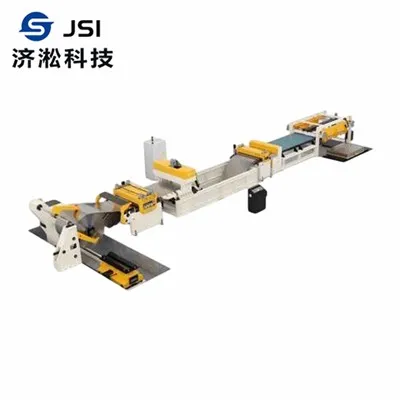
In the realm of industrial automation, the independent manipulator stands as a cornerstone of efficiency and precision. As a leading supplier of independent manipulators, I've witnessed firsthand the transformative impact these devices have on manufacturing processes. In this blog, we'll delve into the concept of the speed of an independent manipulator, exploring its significance, influencing factors, and how it relates to overall productivity.
Understanding the Independent Manipulator
Before we dive into speed, let's briefly understand what an independent manipulator is. An independent manipulator is a robotic device designed to handle and move objects with a high degree of flexibility and precision. It can be programmed to perform a variety of tasks, such as picking, placing, assembling, and transporting parts within a manufacturing environment. These manipulators are often used in conjunction with other automated systems, like Independent Transfer System, Integrated Loading and Unloading Transfer Press, and 3D Transfer System, to create a seamless and efficient production line.
The Significance of Speed
Speed is a critical factor when it comes to independent manipulators. In a manufacturing setting, time is money, and every second counts. A faster manipulator can increase the throughput of a production line, allowing more products to be manufactured in a given time frame. This directly translates to higher productivity and profitability for the manufacturer.
Moreover, speed can also enhance the competitiveness of a manufacturing facility. In today's global market, companies are constantly striving to reduce production costs and improve product quality. A fast and efficient independent manipulator can help a company achieve these goals by minimizing cycle times and reducing the likelihood of errors.
Factors Affecting the Speed of an Independent Manipulator
Several factors can influence the speed of an independent manipulator. Understanding these factors is crucial for optimizing the performance of the manipulator and achieving the desired production rates.
1. Design and Construction
The design and construction of the manipulator play a significant role in determining its speed. A well-designed manipulator with a lightweight yet robust structure can move more quickly and efficiently. Advanced materials, such as carbon fiber and aluminum alloys, are often used to reduce the weight of the manipulator without sacrificing strength.
In addition, the kinematic design of the manipulator also affects its speed. A manipulator with a simple and efficient kinematic structure can achieve faster movements with less energy consumption. For example, a parallel kinematic manipulator, which uses a parallel linkage system, can offer higher speeds and accelerations compared to a traditional serial kinematic manipulator.
2. Actuators and Drives
The actuators and drives used in the manipulator are another important factor. High-performance actuators, such as servo motors and hydraulic cylinders, can provide the necessary power and torque to drive the manipulator at high speeds. The quality and responsiveness of the drives also play a crucial role in determining the speed and accuracy of the manipulator.
For instance, a servo motor with a high torque-to-inertia ratio can accelerate and decelerate quickly, allowing the manipulator to reach its target position rapidly. Similarly, a well-designed drive system can ensure smooth and precise movements, reducing the time required for each operation.
3. Control System
The control system of the manipulator is responsible for coordinating the movements of the actuators and ensuring that the manipulator follows the programmed path accurately. A sophisticated control system can optimize the speed of the manipulator by adjusting the actuator commands in real-time based on the feedback from sensors.
Advanced control algorithms, such as adaptive control and predictive control, can be used to improve the performance of the manipulator. These algorithms can compensate for external disturbances, such as friction and load variations, and adjust the speed and trajectory of the manipulator accordingly.
4. Payload and Workspace
The payload that the manipulator needs to handle and the size of the workspace also affect its speed. A heavier payload requires more power and torque to move, which can reduce the speed of the manipulator. Similarly, a larger workspace may require the manipulator to travel longer distances, increasing the cycle time.
Manufacturers need to carefully consider the payload and workspace requirements when selecting an independent manipulator. By choosing a manipulator with the appropriate load capacity and reach, they can ensure that the manipulator can operate at its maximum speed without overloading or compromising its performance.


Measuring the Speed of an Independent Manipulator
There are several ways to measure the speed of an independent manipulator. One common method is to measure the cycle time, which is the time required for the manipulator to complete a single operation, such as picking up a part and placing it in a specific location. A shorter cycle time indicates a faster manipulator.
Another way to measure the speed is to calculate the maximum linear or angular velocity of the manipulator's end-effector. This can provide an indication of the manipulator's ability to move quickly in a straight line or rotate around an axis.
In addition, acceleration and deceleration rates are also important measures of speed. A manipulator with high acceleration and deceleration rates can reach its target speed quickly and stop precisely, reducing the overall cycle time.
Optimizing the Speed of an Independent Manipulator
To optimize the speed of an independent manipulator, manufacturers can take several steps. First, they should select a manipulator that is specifically designed for high-speed applications. This may involve choosing a manipulator with a lightweight design, high-performance actuators, and an advanced control system.
Second, the programming of the manipulator should be optimized to minimize the cycle time. This can be achieved by using efficient motion planning algorithms and reducing the number of unnecessary movements. For example, the manipulator can be programmed to move in a straight line whenever possible, rather than following a complex path.
Third, regular maintenance and calibration of the manipulator are essential to ensure its optimal performance. This includes checking the condition of the actuators, drives, and sensors, and making any necessary adjustments or replacements.
Finally, the integration of the manipulator with other automated systems, such as conveyors and robots, should be carefully planned to ensure seamless operation. By synchronizing the movements of the manipulator with the other components of the production line, manufacturers can further improve the overall speed and efficiency of the system.
Conclusion
The speed of an independent manipulator is a crucial factor in determining its performance and the productivity of a manufacturing facility. By understanding the factors that affect speed and taking steps to optimize it, manufacturers can achieve higher throughput, lower production costs, and improved competitiveness.
As a supplier of independent manipulators, we are committed to providing our customers with high-quality products that offer exceptional speed and performance. Our manipulators are designed and engineered to meet the most demanding requirements of modern manufacturing, and we offer a range of customization options to ensure that they are tailored to the specific needs of each customer.
If you are interested in learning more about our independent manipulators or would like to discuss your specific requirements, please feel free to contact us. We would be happy to provide you with more information and assist you in selecting the right manipulator for your application.
References
- Robotics: Modelling, Planning and Control, Bruno Siciliano, Lorenzo Sciavicco, Luigi Villani, Giuseppe Oriolo
- Industrial Robotics: Technology, Programming, and Applications, Peter W. McLean