

Hey there! As a supplier of Laser Blanking Lines, I've seen firsthand how different factors can impact the cutting process. One key factor that often gets overlooked is the material hardness. In this blog, I'll dig into what effect material hardness has on the cutting process of a Laser Blanking Line.
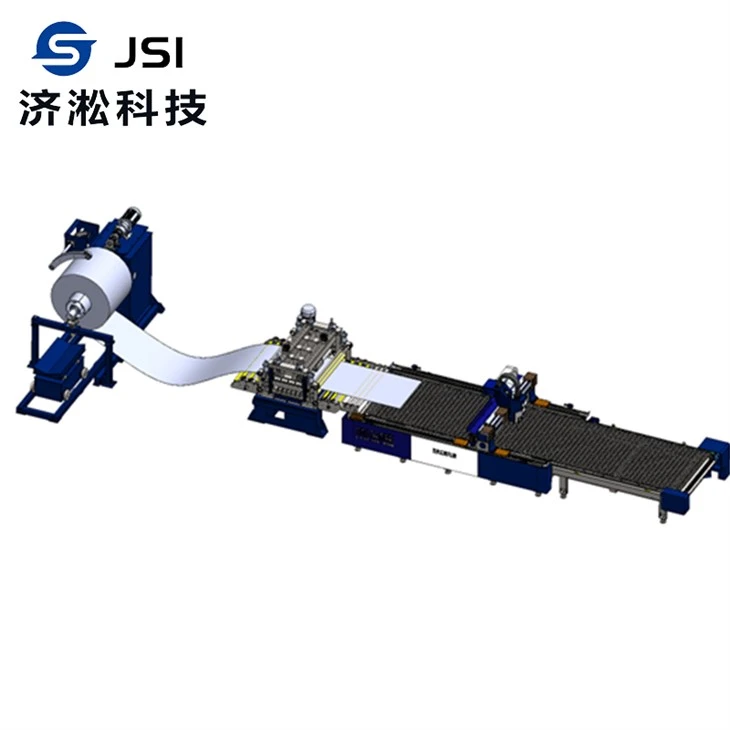

Understanding Material Hardness
Before we jump into the effects, let's quickly understand what material hardness is. Material hardness is a measure of how resistant a material is to deformation, indentation, or scratching. It's usually determined by testing methods like the Rockwell, Brinell, or Vickers tests. Different materials have different hardness levels, and these levels can greatly affect how they're cut.
How Material Hardness Affects Laser Cutting
Cutting Speed
One of the most noticeable effects of material hardness on the cutting process is the cutting speed. Generally, harder materials take longer to cut. When the laser beam hits a hard material, it has to work harder to melt or vaporize the material. This means the laser has to stay in one place for a longer time, which slows down the overall cutting speed.
For example, if you're cutting a soft aluminum sheet, the laser can zip through it quickly. But if you switch to a hard stainless - steel alloy, the cutting speed will drop significantly. As a Laser Blanking Line supplier, we've had customers who were initially surprised by how much slower the line operated when they switched to a harder material.
Laser Power Requirements
Harder materials also demand more laser power. The laser needs to deliver enough energy to break the strong atomic bonds in the hard material. If the laser power is too low, it won't be able to cut through the material properly. You might end up with incomplete cuts or rough edges.
Let's say you have a Laser Blanking Line with a certain laser power setting that works great for cutting mild steel. But when you try to cut a high - strength alloy, you'll likely find that the existing power isn't sufficient. You'll need to crank up the laser power to get a clean and precise cut. However, increasing the laser power can also have its drawbacks, such as higher energy consumption and potentially more wear and tear on the laser components.
Edge Quality
The quality of the cut edges is another area where material hardness plays a big role. When cutting soft materials, the laser can produce smooth and clean edges with minimal heat - affected zones. But with hard materials, achieving a good edge quality can be more challenging.
Hard materials are more prone to cracking and chipping during the cutting process. The high - energy laser can cause thermal stress in the material, which can lead to micro - cracks along the cut edges. Additionally, the molten material might not flow as smoothly as it does in soft materials, resulting in a rougher edge finish.
As a supplier, we often work with customers to optimize the cutting parameters to improve the edge quality when dealing with hard materials. This might involve adjusting the laser focus, the assist gas flow, or the cutting speed.
Kerf Width
The kerf width, which is the width of the cut made by the laser, can also be affected by material hardness. In general, harder materials tend to have a wider kerf. This is because the laser has to work harder to penetrate the material, and it might spread out a bit more as it does so.
A wider kerf can be a problem if you're trying to cut parts with tight tolerances. It can lead to dimensional inaccuracies in the final product. We've had customers who were concerned about the increased kerf width when switching to harder materials, and we've helped them find solutions to minimize this issue.
Dealing with Different Material Hardness in a Laser Blanking Line
Material Selection and Planning
As a Laser Blanking Line supplier, we always recommend that our customers carefully consider the material hardness before starting a project. If possible, try to group materials with similar hardness levels together. This way, you can optimize the cutting parameters for each group and improve the overall efficiency of the Laser Blanking Line.
For instance, if you have a batch of soft materials and a batch of hard materials, don't mix them up during the cutting process. Set the appropriate cutting speed, laser power, and other parameters for each batch separately.
Parameter Optimization
We also offer support in optimizing the cutting parameters for different material hardness levels. Our team of experts can analyze the material properties and recommend the best settings for your Laser Blanking Line. This might involve adjusting the laser pulse frequency, the assist gas pressure, and the feed rate.
By fine - tuning these parameters, you can improve the cutting speed, edge quality, and overall performance of the Laser Blanking Line when dealing with different material hardness.
Equipment Upgrades
In some cases, if you frequently work with very hard materials, you might need to consider upgrading your Laser Blanking Line. This could involve installing a more powerful laser or improving the cooling system to handle the increased heat generated during the cutting process.
We've helped many customers make these upgrades to ensure that their Laser Blanking Lines can handle a wide range of material hardnesses effectively.
Other Blanking Lines and Material Hardness
It's also worth mentioning that other types of blanking lines, such as the Zigzag Blanking Line and High Speed Blanking Line, are also affected by material hardness.
The Zigzag Blanking Line, which is known for its unique cutting pattern, might face similar challenges with hard materials as the Laser Blanking Line. The mechanical cutting process in a Zigzag Blanking Line needs to overcome the material's resistance, and harder materials can put more stress on the cutting tools.
The High Speed Blanking Line, on the other hand, is designed for high - volume production. When dealing with hard materials, the high - speed operation might need to be adjusted to ensure proper cutting quality. The cutting tools in a High Speed Blanking Line can wear out faster when cutting hard materials, so regular maintenance and tool replacement are crucial.
Conclusion
In conclusion, material hardness has a significant impact on the cutting process of a Laser Blanking Line. It affects the cutting speed, laser power requirements, edge quality, and kerf width. As a Laser Blanking Line supplier, we understand these challenges and are here to help you navigate them.
If you're in the market for a Laser Blanking Line or need to optimize your existing line for different material hardnesses, we'd love to have a chat. Whether you're dealing with soft or hard materials, we can provide the solutions and support you need to ensure a smooth and efficient cutting process.
References
- ASM Handbook Volume 8: Mechanical Testing and Evaluation. ASM International.
- "Laser Cutting Technology: Theory and Practice" by John C. Ion.
