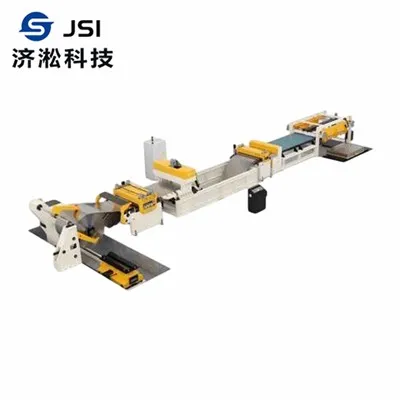
Anti-corrosion measures for a tandem press line are crucial to ensure its long - term performance, reliability, and cost - effectiveness. As a tandem press line supplier, I understand the significance of these measures and am here to share some effective anti - corrosion strategies.


Understanding the Corrosion Risks in Tandem Press Lines
Tandem press lines are complex industrial systems that are often exposed to various environmental factors and operational conditions that can lead to corrosion. These factors include humidity, temperature variations, exposure to chemicals (such as lubricants and cleaning agents), and the presence of abrasive particles.
Humidity is one of the most common causes of corrosion. When the relative humidity in the environment exceeds a certain level, water vapor can condense on the metal surfaces of the press line. This water can act as an electrolyte, facilitating the electrochemical reactions that lead to corrosion. Temperature variations can also exacerbate the problem. For example, rapid changes in temperature can cause the metal to expand and contract, creating micro - cracks in the protective coatings and exposing the underlying metal to the corrosive environment.
Chemicals used in the operation of the tandem press line can also contribute to corrosion. Lubricants, for instance, may contain additives that can react with the metal over time. Cleaning agents, if not properly selected or used, can also damage the protective coatings on the press line components.
Anti - Corrosion Coating Application
One of the most effective anti - corrosion measures for a tandem press line is the application of protective coatings. These coatings act as a barrier between the metal surface and the corrosive environment. There are several types of coatings that can be used, including paint, powder coating, and galvanizing.
Paint coatings are widely used due to their relatively low cost and ease of application. They can provide good protection against corrosion, especially when multiple layers are applied. However, paint coatings may be prone to chipping and scratching during the operation of the press line, which can expose the underlying metal.
Powder coating is another popular option. It involves applying a dry powder to the metal surface and then heating it to form a hard, durable coating. Powder coatings are more resistant to chipping, scratching, and chemicals compared to paint coatings. They also provide a more uniform finish, which can enhance the aesthetic appearance of the press line.
Galvanizing is a process of coating the metal with a layer of zinc. Zinc is a sacrificial metal, which means that it will corrode preferentially to the underlying metal. This provides excellent corrosion protection, especially in harsh environments. Galvanized coatings are commonly used for outdoor applications or in areas where the press line is exposed to high levels of moisture.
Environmental Control
Controlling the environment in which the tandem press line operates is also an important anti - corrosion measure. This can be achieved through proper ventilation, humidity control, and temperature regulation.
Proper ventilation helps to remove moisture and corrosive gases from the air around the press line. It can also prevent the buildup of heat, which can contribute to corrosion. Installing exhaust fans or ventilation systems can help to maintain a clean and dry environment.
Humidity control is essential to prevent the condensation of water vapor on the metal surfaces. This can be achieved by using dehumidifiers or air - conditioning systems. Maintaining the relative humidity at a level below 60% is generally recommended to minimize the risk of corrosion.
Temperature regulation is also important. Keeping the temperature within a stable range can prevent the metal from expanding and contracting too much, which can damage the protective coatings. Insulating the press line or using heating and cooling systems can help to maintain a stable temperature.
Regular Maintenance and Inspection
Regular maintenance and inspection are key to ensuring the effectiveness of the anti - corrosion measures. This includes cleaning the press line components, checking the integrity of the protective coatings, and replacing any damaged parts.
Cleaning the press line components on a regular basis helps to remove dirt, debris, and corrosive substances from the metal surfaces. This can prevent the buildup of contaminants that can accelerate corrosion. Using appropriate cleaning agents and following the manufacturer's instructions is important to avoid damaging the protective coatings.
Inspecting the protective coatings regularly is also crucial. Look for signs of chipping, scratching, or peeling. If any damage is found, it should be repaired immediately to prevent corrosion from spreading. This may involve reapplying the coating or using a touch - up paint.
In addition to inspecting the coatings, it is also important to check the overall condition of the press line components. Look for signs of corrosion, such as rust or discoloration. If any corrosion is detected, the affected parts should be repaired or replaced as soon as possible.
Selection of Corrosion - Resistant Materials
When designing and manufacturing a tandem press line, the selection of corrosion - resistant materials is an important consideration. Using materials that are less prone to corrosion can significantly reduce the need for anti - corrosion measures.
Stainless steel is a popular choice for many press line components. It contains chromium, which forms a passive oxide layer on the surface of the metal, providing excellent corrosion resistance. Stainless steel is particularly suitable for applications where the press line is exposed to moisture or chemicals.
Aluminum is another corrosion - resistant material. It forms a thin oxide layer on its surface, which protects it from further corrosion. Aluminum is lightweight and has good mechanical properties, making it a suitable choice for some press line components.
Types of Tandem Press Lines
There are different types of tandem press lines, each with its own characteristics and requirements for anti - corrosion measures.
The Single Process Tandem Line is designed for a single stamping process. It is relatively simple in structure but still requires proper anti - corrosion protection. The components of this type of press line, such as the frames and dies, should be protected with appropriate coatings and maintained regularly.
The Manipulator Conveys Tandem Line uses manipulators to transfer the workpieces between the presses. The manipulators and their associated components are often exposed to moving parts and may be more prone to wear and tear, which can also lead to corrosion. Special attention should be paid to the lubrication and protection of these components.
The Servo System Transfer Tandem Line utilizes a servo system for precise transfer of workpieces. The electrical and electronic components in this type of press line need to be protected from moisture and corrosion to ensure their proper functioning. Encapsulating these components or using corrosion - resistant enclosures can be effective measures.
Conclusion
In conclusion, anti - corrosion measures for a tandem press line are essential for its long - term performance and reliability. By applying protective coatings, controlling the environment, conducting regular maintenance and inspection, and selecting corrosion - resistant materials, the risk of corrosion can be significantly reduced. As a tandem press line supplier, we are committed to providing high - quality press lines with effective anti - corrosion solutions.
If you are interested in purchasing a tandem press line or need more information about our anti - corrosion measures, please feel free to contact us for further discussion and negotiation. We look forward to working with you to meet your industrial needs.
References
- Fontana, M. G. (1986). Corrosion Engineering. McGraw - Hill.
- Uhlig, H. H., & Revie, R. W. (1985). Corrosion and Corrosion Control. Wiley - Interscience.
- ASTM International. (2019). Standards related to corrosion testing and protection.