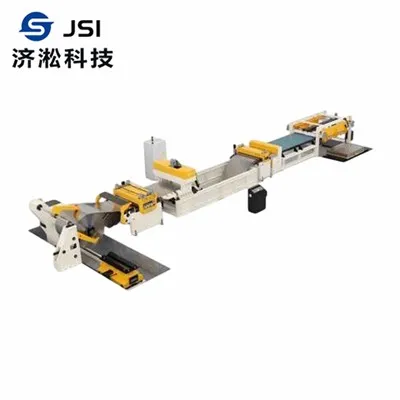
Hey there! As a supplier of NC Feeder Machines, I've gotten tons of questions about how these machines actually work, especially their feeding modes. So, I thought I'd break it down for you in this blog post.
First off, let's talk about what an NC Feeder Machine is. It's a key piece of equipment in the stamping industry. NC stands for Numerical Control, which means these feeders are controlled by a computer system. This allows for precise and accurate feeding of materials like metal sheets into stamping presses.
There are mainly three types of feeding modes for NC Feeder Machines: intermittent feeding, continuous feeding, and step feeding.
Intermittent Feeding
Intermittent feeding is like taking short breaks while you're walking. The feeder moves the material forward in short, discrete steps, then stops. This is super useful when you need to perform multiple operations on the same piece of material at different positions. For example, if you're stamping a complex part with different holes and shapes, the machine will move the sheet forward, stop, and let the press do its job. Then it moves again to the next position.
The advantage of intermittent feeding is its high precision. Since the material stops at each position, the stamping can be done very accurately. It's also great for handling materials that are prone to deformation, like thin sheets. Because the movement is in small increments, there's less stress on the material, reducing the risk of bending or warping.
We offer a Thick Sheet NC Servo Feeder that's perfect for intermittent feeding of thick materials. It's equipped with a powerful servo motor and advanced control system, ensuring smooth and precise movement even with heavy sheets.
Continuous Feeding
Continuous feeding is the opposite of intermittent feeding. It's like running without stopping. The material moves at a constant speed through the feeder and into the press. This mode is ideal for high - volume production where you're making simple parts. For example, if you're stamping washers or small brackets, continuous feeding can significantly increase your production efficiency.
One of the main benefits of continuous feeding is speed. Since the material is always in motion, there's no time wasted on starting and stopping. This can lead to a much higher output rate. However, it requires a very stable feeding system to ensure that the material doesn't get misaligned or jammed.
Our High Speed NC Servo Roll Feeder is designed for continuous feeding at high speeds. It has a high - precision roller system that can grip the material firmly and move it smoothly, even at high velocities.
Step Feeding
Step feeding is a bit of a hybrid between intermittent and continuous feeding. The material moves forward in steps, but the steps are larger than in intermittent feeding. This mode is often used when you need to balance precision and speed. For example, if you're stamping parts that have a medium level of complexity, step feeding can be a great choice.
Step feeding allows for more flexibility in the production process. You can adjust the step size according to the requirements of the part you're making. It also gives you a bit more time to perform operations compared to continuous feeding, while still maintaining a relatively high production rate.
Our Medium Sheet NC Servo Feeder is well - suited for step feeding of medium - sized sheets. It offers adjustable step lengths and a user - friendly control panel, making it easy to set up and operate.
Now, let's talk about how these feeding modes are controlled. The heart of an NC Feeder Machine is its control system. Most modern NC feeders use a programmable logic controller (PLC) or a computer numerical control (CNC) system. These systems allow you to input the feeding parameters, such as the feeding length, speed, and mode.
The control system also monitors the operation of the feeder in real - time. It can detect any issues, like a misaligned material or a malfunctioning motor, and stop the machine immediately to prevent damage. This ensures the safety and reliability of the production process.

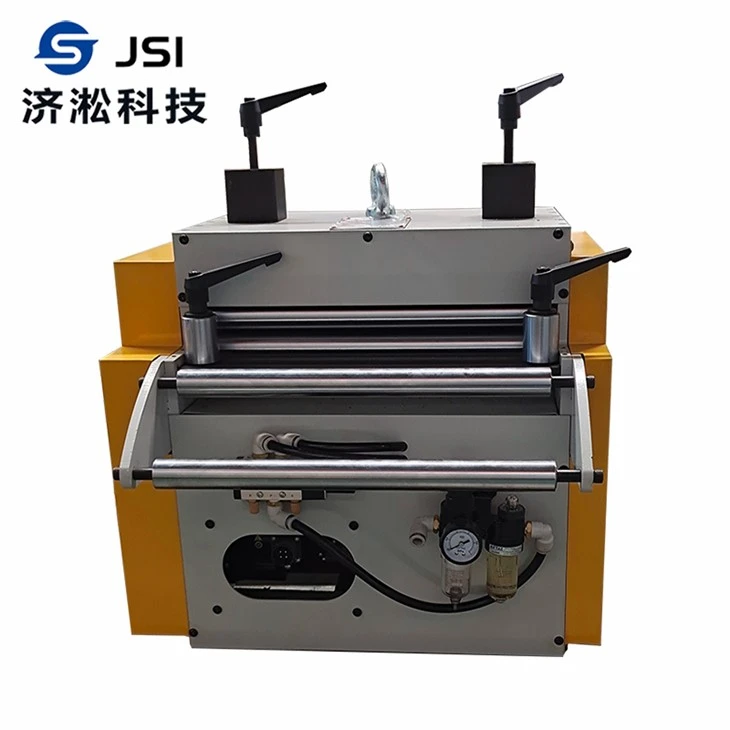
Another important factor in the feeding mode is the servo motor. The servo motor is responsible for driving the rollers that move the material. It can adjust its speed and torque according to the requirements of the feeding mode. For example, in intermittent feeding, the servo motor needs to start and stop quickly and accurately. In continuous feeding, it needs to maintain a constant speed.
So, which feeding mode should you choose? Well, it depends on your production needs. If you're making complex parts with high precision requirements, intermittent feeding might be the best option. If you're looking for high - volume production of simple parts, continuous feeding is probably what you need. And if you need a balance between the two, step feeding could be the way to go.
As a supplier, we understand that every customer has unique requirements. That's why we offer a wide range of NC Feeder Machines with different features and capabilities. Whether you're a small workshop or a large manufacturing plant, we have a solution for you.
If you're interested in learning more about our NC Feeder Machines or need help choosing the right feeding mode for your production, don't hesitate to reach out. We're here to assist you in making the best decision for your business.
References
- Manufacturing Handbook: Stamping Processes
- Technical Manuals of NC Feeder Machines