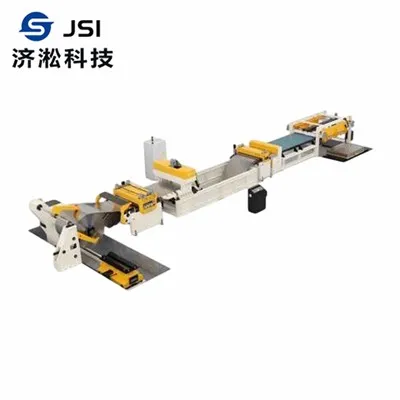
Hey there! As a supplier of Laser Blanking Lines, I've seen firsthand the importance of cutting quality in the manufacturing world. A Laser Blanking Line is a game - changer for many industries, offering precision and efficiency. But how can we take the cutting quality of a Laser Blanking Line to the next level? Let's dive in and explore some practical tips.
1. Choose the Right Laser Source
The laser source is the heart of a Laser Blanking Line. Different types of lasers have different characteristics, and choosing the right one is crucial for quality cutting.
- Fiber Lasers: These are super popular these days. They're highly efficient, have a long lifespan, and can cut a wide range of materials, from thin sheets to relatively thick metals. They offer excellent beam quality, which means cleaner and more precise cuts. For example, if you're cutting thin stainless - steel sheets for electronic components, a fiber laser can provide sharp edges and minimal heat - affected zones. You can learn more about our Laser Blanking Line equipped with fiber lasers here.
- CO2 Lasers: CO2 lasers are great for cutting non - metallic materials like wood, plastics, and some textiles. They also work well for thicker metal sheets. The key advantage of CO2 lasers is their ability to produce a high - power beam, which can penetrate thicker materials more easily. However, they do require more maintenance compared to fiber lasers.
2. Optimize the Cutting Parameters
Once you've chosen the right laser source, you need to optimize the cutting parameters to get the best results.
- Power and Speed: Finding the right balance between power and speed is essential. If the power is too low and the speed is too high, the laser might not be able to cut through the material completely, resulting in rough edges or uncut sections. On the other hand, if the power is too high and the speed is too low, it can cause excessive melting and a large heat - affected zone. You need to test different combinations of power and speed on sample materials to find the sweet spot.
- Frequency and Pulse Width: For pulsed lasers, the frequency and pulse width also play a significant role in cutting quality. A higher frequency can increase the cutting speed, but it might also reduce the depth of cut. Adjusting the pulse width can control the amount of energy delivered to the material during each pulse. By fine - tuning these parameters, you can achieve cleaner and more accurate cuts.
3. Maintain the Laser Blanking Line Regularly
Regular maintenance is the key to keeping your Laser Blanking Line in top shape and ensuring consistent cutting quality.
- Clean the Optics: The optics in a Laser Blanking Line, such as lenses and mirrors, can get dirty over time. Even a small amount of dust or debris on the optics can affect the laser beam's quality, leading to reduced cutting performance. Make sure to clean the optics regularly using appropriate cleaning materials.
- Check the Cooling System: The laser source generates a lot of heat during operation, and the cooling system is responsible for keeping it at the right temperature. A malfunctioning cooling system can cause the laser to overheat, which can damage the laser source and affect the cutting quality. Check the coolant level, temperature, and flow rate regularly to ensure the cooling system is working properly.
- Inspect the Mechanical Components: The mechanical components of the Laser Blanking Line, such as the linear guides, ball screws, and belts, need to be inspected regularly for wear and tear. Loose or damaged mechanical components can cause vibrations, which can lead to inaccurate cuts. Replace any worn - out parts promptly to maintain the accuracy of the machine.
4. Use High - Quality Materials
The quality of the material you're cutting also has a significant impact on the cutting quality.


- Choose the Right Material Grade: Different grades of materials have different properties, such as hardness, density, and thermal conductivity. Make sure to choose the right material grade for your application. For example, if you're cutting parts for a high - stress application, you might need to use a higher - grade steel.
- Ensure Material Flatness: A flat material surface is essential for accurate cutting. If the material is warped or uneven, the laser might not be able to cut it evenly. Use a leveling device to ensure the material is flat before loading it onto the Laser Blanking Line.
5. Train Your Operators
Even the best Laser Blanking Line won't perform well if the operators don't know how to use it properly.
- Provide Comprehensive Training: Make sure your operators receive comprehensive training on the operation, maintenance, and troubleshooting of the Laser Blanking Line. They should understand the cutting parameters, safety procedures, and how to optimize the machine for different materials and applications.
- Encourage Continuous Learning: The field of laser cutting is constantly evolving, and there are always new techniques and technologies to learn. Encourage your operators to stay up - to - date with the latest industry trends and participate in training courses and workshops.
6. Consider Upgrading the Laser Blanking Line
If you've been using your Laser Blanking Line for a while, it might be time to consider an upgrade.
- New Laser Technology: Newer laser technologies are constantly being developed, offering better performance and cutting quality. Upgrading to a more advanced laser source can significantly improve the cutting speed, precision, and versatility of your Laser Blanking Line.
- Automation and Software Upgrades: Automation features, such as automatic material loading and unloading systems, can improve the efficiency of your Laser Blanking Line. Upgrading the software can also provide more advanced cutting functions and better control over the machine.
In addition to the Laser Blanking Line, we also offer other types of blanking lines, such as the 3 in 1 Blanking Line and the High Speed Blanking Line. These lines have their own unique features and advantages, and they can be a great addition to your manufacturing setup.
If you're interested in improving the cutting quality of your Laser Blanking Line or exploring our range of blanking lines, don't hesitate to reach out. We're here to help you find the best solution for your specific needs. Whether you're a small - scale manufacturer or a large - scale production facility, we have the expertise and products to meet your requirements. Let's work together to take your manufacturing process to the next level!
References
- Laser Cutting Handbook, 2nd Edition
- Journal of Laser Applications
- Industrial Laser Solutions Magazine