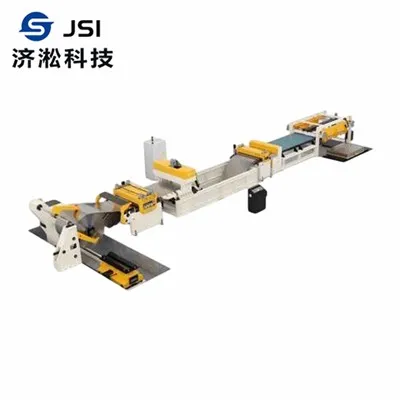
Blanking is a fundamental process in the manufacturing industry, especially in high - volume production scenarios. A High Speed Blanking Line is a crucial piece of equipment that can significantly enhance productivity. However, ensuring high - quality blanking edges is often a challenge. As a supplier of High Speed Blanking Lines, I have witnessed various issues related to blanking edge quality and have gathered a wealth of knowledge on how to improve it.
Understanding the Importance of Blanking Edge Quality
The quality of the blanking edge directly impacts the subsequent manufacturing processes and the final product's performance. A poor - quality blanking edge may lead to problems such as burrs, cracks, and uneven surfaces. These defects can cause difficulties in assembly, reduce the strength of the final product, and even affect its aesthetic appearance. For example, in the automotive industry, high - quality blanking edges are essential for components like body panels and engine parts to ensure proper fit and function.
Factors Affecting Blanking Edge Quality
Tooling
Tooling is one of the most critical factors influencing blanking edge quality. The sharpness and wear of the cutting tools play a vital role. Dull tools can cause excessive deformation of the material during the blanking process, resulting in burrs and rough edges. Regular inspection and maintenance of the cutting tools are necessary. For instance, if the cutting edge of a punch becomes worn, it should be re - sharpened or replaced promptly. Additionally, the material and design of the tooling also matter. High - quality tool steels can withstand higher stresses and provide better cutting performance. The proper design of the punch and die, including the clearance between them, is crucial. An incorrect clearance can lead to uneven cutting and poor edge quality. A clearance that is too large may cause excessive shearing and burr formation, while a clearance that is too small can result in tool breakage and material cracking.
Material Properties
The properties of the material being blanked have a significant impact on the edge quality. Different materials have different ductility, hardness, and grain structures. For example, softer materials are more likely to form burrs during blanking, while harder materials may cause more wear on the tooling. Understanding the material's properties and adjusting the blanking parameters accordingly is essential. The thickness of the material also matters. Thicker materials require more force to blank, and improper force application can lead to poor edge quality.
Blanking Speed
In a High Speed Blanking Line, the blanking speed is a double - edged sword. On one hand, high - speed blanking can increase productivity. On the other hand, if the speed is too high, it can cause problems such as vibration, which can lead to uneven cutting and poor edge quality. The inertia forces generated at high speeds can also affect the stability of the material and the tooling. Therefore, it is necessary to find an optimal blanking speed that balances productivity and edge quality. This may require some experimentation and adjustment based on the specific material and tooling used.
Lubrication
Lubrication plays a crucial role in improving blanking edge quality. A proper lubricant can reduce friction between the tooling and the material, which helps to prevent excessive heat generation and wear. It can also improve the flow of the material during the blanking process, resulting in smoother edges. There are different types of lubricants available, and the choice depends on the material being blanked and the blanking conditions. For example, for some metals, a water - based lubricant may be sufficient, while for others, a more specialized oil - based lubricant may be required.
Strategies to Improve Blanking Edge Quality
Optimize Tooling Design and Maintenance
As mentioned earlier, the design and maintenance of the tooling are crucial. When designing the tooling, it is important to consider the material properties and the blanking requirements. The clearance between the punch and die should be carefully calculated based on the material thickness and type. For example, for a common steel sheet with a thickness of 1 - 3 mm, the clearance may range from 5% - 10% of the material thickness. Regular maintenance of the tooling includes cleaning, inspection, and re - sharpening or replacement of worn parts. Implementing a preventive maintenance schedule can help to ensure that the tooling is always in good condition.
Adjust Blanking Parameters
Based on the material properties, the blanking parameters such as speed, force, and stroke should be adjusted. For softer materials, a lower blanking force may be sufficient to achieve a clean cut, while for harder materials, a higher force may be required. The blanking speed should be adjusted to avoid excessive vibration and ensure stable cutting. In some cases, using a variable - speed High Speed Blanking Line can provide more flexibility in adjusting the speed according to the specific requirements.


Improve Material Handling
Proper material handling is essential to ensure consistent blanking edge quality. The material should be fed into the blanking line smoothly and accurately. Any misalignment or uneven feeding can lead to poor edge quality. Using a reliable material feeding system, such as a servo - driven feeder, can help to ensure accurate and consistent feeding. Additionally, the material should be stored and handled in a way that prevents damage and contamination, as these can also affect the blanking process.
Enhance Lubrication
Selecting the right lubricant and applying it correctly is crucial. The lubricant should be applied evenly to the tooling and the material surface. Some High Speed Blanking Lines are equipped with automatic lubrication systems that can ensure a consistent supply of lubricant. Regularly monitoring the lubricant level and quality is also necessary. If the lubricant becomes contaminated or loses its effectiveness, it should be replaced promptly.
The Role of Advanced High Speed Blanking Lines
Advanced High Speed Blanking Lines, such as the Multi Cut Precison Blanking Line and High Speed Blanking Line, are designed to offer better control over the blanking process. These lines are often equipped with advanced sensors and control systems that can monitor and adjust the blanking parameters in real - time. For example, they can detect changes in the material properties or tooling wear and automatically adjust the speed, force, or lubrication accordingly. The 3 in 1 Blanking Line combines multiple functions, which can improve the overall efficiency and edge quality of the blanking process.
Conclusion
Improving the blanking edge quality in a High Speed Blanking Line requires a comprehensive approach that takes into account tooling design, material properties, blanking parameters, and lubrication. By optimizing these factors and using advanced High Speed Blanking Lines, manufacturers can achieve high - quality blanking edges, which in turn can improve the quality and performance of the final products.
If you are interested in improving the blanking edge quality in your manufacturing process, or if you are looking for a reliable High Speed Blanking Line supplier, we are here to help. Our team of experts can provide you with customized solutions based on your specific requirements. Contact us to start a procurement discussion and take your manufacturing process to the next level.
References
- Smith, J. (2018). "Advanced Blanking Technologies". Manufacturing Journal.
- Johnson, A. (2019). "Tooling Design for High - Quality Blanking". Industrial Engineering Review.
- Brown, C. (2020). "Material Handling in High - Speed Blanking Processes". Production Engineering Magazine.