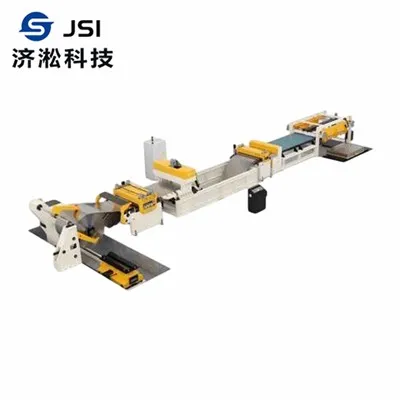
As a supplier of Independent Manipulators, I've witnessed firsthand the growing demand for expanding the working range of these versatile machines. In various industrial applications, the ability to reach a wider area can significantly enhance productivity, efficiency, and flexibility. In this blog, I'll explore several effective strategies to expand the working range of an Independent Manipulator.
Understanding the Basics of Independent Manipulators
Before delving into the expansion methods, it's crucial to understand what an Independent Manipulator is. An Independent Manipulator is a robotic device designed to handle and manipulate objects within a defined workspace. It offers high precision, repeatability, and the ability to perform complex tasks autonomously. These manipulators are widely used in industries such as automotive, aerospace, electronics, and manufacturing for tasks like material handling, assembly, and inspection.
Mechanical Design Enhancements
One of the most straightforward ways to expand the working range of an Independent Manipulator is through mechanical design improvements.
Extended Arm Length
Increasing the length of the manipulator's arm is a direct approach to reach farther distances. However, this must be carefully balanced with the manipulator's payload capacity and structural integrity. Longer arms may introduce additional weight and inertia, which can affect the manipulator's accuracy and speed. Advanced materials such as carbon fiber composites can be used to reduce the weight of the arm while maintaining its strength.
Additional Joints
Adding more joints to the manipulator can significantly increase its range of motion. Each additional joint provides an extra degree of freedom, allowing the manipulator to access areas that were previously unreachable. For example, a six - axis manipulator can perform more complex movements compared to a three - axis one. However, more joints also mean more complex control algorithms and potential interference issues, which need to be carefully addressed during the design process.
Mobile Bases
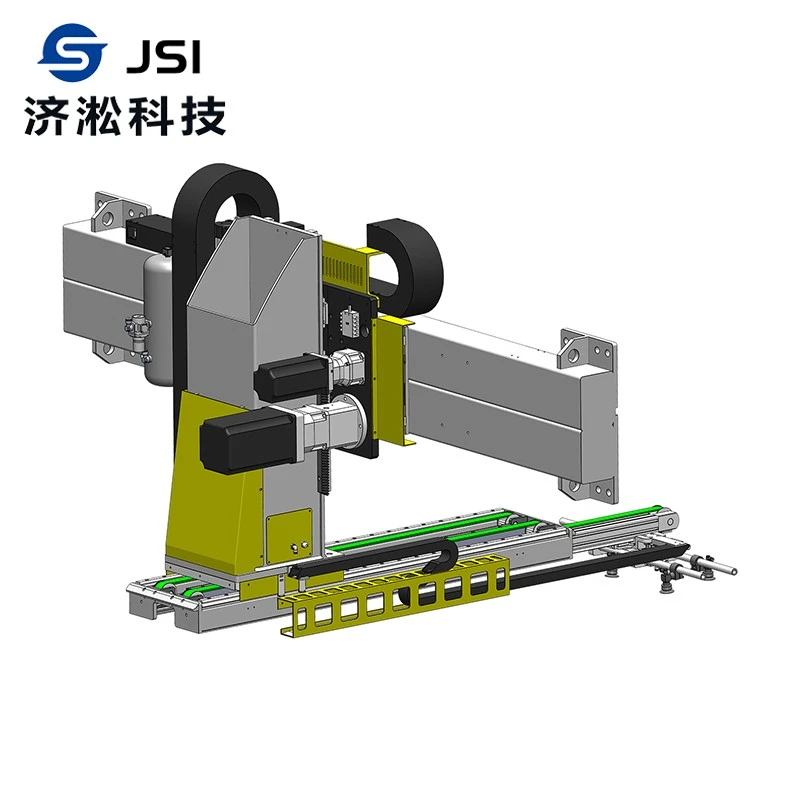
Mounting the Independent Manipulator on a mobile base, such as a robotic vehicle or a gantry system, can greatly expand its working range. A mobile base allows the manipulator to move around the workspace, reaching different areas as needed. This is particularly useful in large manufacturing facilities or warehouses where the objects to be manipulated are spread over a wide area. For instance, in an automotive assembly line, a manipulator on a mobile base can move between different workstations to perform various tasks.

Technological Upgrades
In addition to mechanical design enhancements, technological upgrades can also play a crucial role in expanding the working range of an Independent Manipulator.
Vision Systems
Integrating advanced vision systems with the manipulator can enable it to detect and locate objects in a larger area. A vision system can provide real - time feedback to the manipulator, allowing it to adjust its position and orientation based on the location of the target object. This is especially useful when dealing with irregularly shaped or randomly placed objects. For example, in a pick - and - place application, a vision system can help the manipulator identify the exact position of the parts to be picked up, even if they are not in a fixed location.
Sensor Technology
The use of various sensors, such as proximity sensors, force sensors, and tactile sensors, can enhance the manipulator's ability to interact with its environment. Proximity sensors can detect the presence of objects in the vicinity of the manipulator, allowing it to avoid collisions and adjust its path accordingly. Force sensors can be used to measure the force applied by the manipulator during gripping or manipulation, ensuring that the object is handled safely without being damaged. Tactile sensors can provide information about the texture and shape of the object, enabling more precise manipulation.
Advanced Control Algorithms
Upgrading the control algorithms of the manipulator can improve its performance and expand its working range. For example, model - based control algorithms can take into account the dynamic characteristics of the manipulator, such as its mass, inertia, and friction, to achieve more accurate and efficient motion control. Reinforcement learning algorithms can also be used to train the manipulator to adapt to different tasks and environments, allowing it to optimize its movements and reach areas that were previously difficult to access.
System Integration
Integrating the Independent Manipulator with other industrial systems can also expand its working range and functionality.
Integration with Conveyor Systems
Connecting the manipulator to a conveyor system can enable it to handle objects continuously as they move along the conveyor. This is commonly used in manufacturing and packaging applications, where the manipulator can pick up, assemble, or inspect products on the conveyor belt. The conveyor system can be used to transport the objects to different locations within the workspace, effectively expanding the working range of the manipulator.
Integration with Integrated Loading and Unloading Transfer Press
The Integrated Loading and Unloading Transfer Press is a powerful industrial system that can be integrated with an Independent Manipulator. This integration allows the manipulator to load and unload workpieces from the press, increasing the efficiency of the pressing process. The transfer press can move the workpieces between different stations, and the manipulator can perform additional operations such as inspection or finishing, expanding the overall working range and capabilities of the system.
Integration with Multi Press Transfer System
The Multi Press Transfer System is another system that can be integrated with an Independent Manipulator. This system consists of multiple presses arranged in a sequence, and the manipulator can transfer workpieces between the presses. By integrating with the multi - press transfer system, the manipulator can handle more complex manufacturing processes, reaching different presses and performing various operations, thus expanding its working range.
Integration with Independent Transfer System
The Independent Transfer System provides a flexible and efficient way to transfer workpieces within a manufacturing cell. When integrated with an Independent Manipulator, the transfer system can move the workpieces to different positions, and the manipulator can perform tasks such as assembly, welding, or painting. This integration allows the manipulator to access a larger area and handle a wider variety of tasks.
Conclusion
Expanding the working range of an Independent Manipulator is a multi - faceted challenge that requires a combination of mechanical design enhancements, technological upgrades, and system integration. By implementing these strategies, we can significantly enhance the performance and capabilities of the manipulator, making it more suitable for a wide range of industrial applications.
If you're interested in exploring how our Independent Manipulators can be customized to meet your specific requirements and expand their working range, we'd love to have a discussion with you. Contact us to start a procurement negotiation and discover how our solutions can optimize your production processes.
References
- Craig, J. J. (2005). Introduction to Robotics: Mechanics and Control. Pearson Prentice Hall.
- Siciliano, B., & Khatib, O. (Eds.). (2016). Springer Handbook of Robotics. Springer.
- Spong, M. W., Hutchinson, S., & Vidyasagar, M. (2006). Robot Modeling and Control. Wiley.