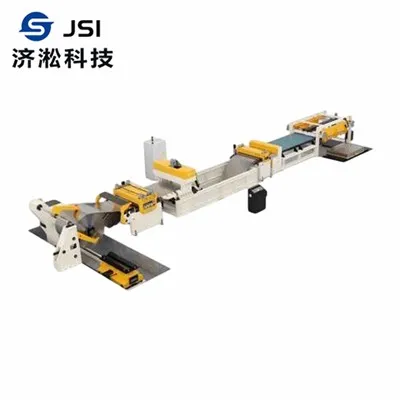
Hey there! As a supplier of Zigzag Blanking Lines, I often get asked whether these machines can be used for prototyping. Well, let's dive right into it and explore this topic in detail.
First off, let's understand what a zigzag blanking line is. A zigzag blanking line is a specialized piece of equipment designed to cut metal sheets into various shapes and sizes. It uses a series of dies and punches to create precise cuts, and the "zigzag" part comes from the way it can cut in a non - linear pattern, allowing for more efficient use of the metal sheet and reducing waste.
Now, when it comes to prototyping, there are several factors to consider. Prototyping is all about quickly and cost - effectively creating a sample of a product to test its design, functionality, and fit. So, can a zigzag blanking line meet these requirements?
Advantages of Using a Zigzag Blanking Line for Prototyping
1. Precision Cutting
One of the biggest advantages of a zigzag blanking line is its ability to make precise cuts. In prototyping, accuracy is crucial. Whether you're making a small part for a consumer product or a component for a large machine, the dimensions of the prototype need to be as close to the final design as possible. A zigzag blanking line can achieve tight tolerances, ensuring that your prototype parts are of high quality. For example, if you're prototyping a custom - shaped bracket, the zigzag blanking line can cut it with the exact angles and curves required.
2. Flexibility
Zigzag blanking lines offer a great deal of flexibility. They can be programmed to cut different shapes and sizes, which is ideal for prototyping. You might have a concept for a new product that requires several different parts, each with a unique shape. With a zigzag blanking line, you can easily switch between different cutting patterns to create all the necessary components for your prototype. This flexibility also allows you to make design changes on the fly. If you realize that a particular part needs to be adjusted, you can quickly reprogram the machine to make the new cuts.


3. Material Efficiency
In prototyping, especially when dealing with expensive materials, minimizing waste is important. A zigzag blanking line is designed to optimize the use of the metal sheet. By cutting in a zigzag pattern, it can fit more parts onto a single sheet, reducing the amount of scrap material. This not only saves you money on materials but also has a positive environmental impact.
4. Speed
When you're in the prototyping phase, time is of the essence. You want to get your prototype up and running as quickly as possible to test and refine your design. Zigzag blanking lines are relatively fast compared to some other cutting methods. They can make multiple cuts in a short period, allowing you to produce your prototype parts in a timely manner.
Limitations of Using a Zigzag Blanking Line for Prototyping
1. Initial Setup Time
Setting up a zigzag blanking line for a new cutting pattern can take some time. You need to program the machine, install the appropriate dies, and make sure everything is calibrated correctly. For a small - scale prototype where you only need a few parts, this setup time might seem like a drawback. However, if you're planning to make multiple prototypes or eventually move into production, the initial setup time can be justified.
2. Die Costs
The dies used in a zigzag blanking line can be expensive. If you're prototyping a unique part, you might need to have a custom die made, which can add to the cost. However, there are some ways to mitigate this. For example, you can use standard dies for some parts of the prototype and only invest in custom dies for the critical components.
3. Material Thickness and Type
Zigzag blanking lines are best suited for certain types and thicknesses of materials. They work well with thin to medium - thickness metal sheets, such as steel, aluminum, and copper. If you're prototyping a part made from a very thick or hard material, a zigzag blanking line might not be the best option. In such cases, you might need to consider alternative cutting methods, like laser cutting or waterjet cutting.
Comparing with Other Blanking Lines
There are other types of blanking lines available in the market, such as the 3 in 1 Blanking Line, High Speed Blanking Line, and Multi Cut Precison Blanking Line. Each has its own advantages and disadvantages when it comes to prototyping.
The 3 in 1 Blanking Line combines three functions in one machine, which can be very convenient for prototyping. It can handle different types of cutting operations, giving you more options for creating your prototype parts. The High Speed Blanking Line, as the name suggests, is great for quickly producing a large number of parts. If you need to make multiple copies of your prototype for testing or demonstration purposes, a high - speed blanking line might be a good choice. The Multi Cut Precison Blanking Line is designed for high - precision cutting, which is essential for prototyping complex parts.
Conclusion
So, can a zigzag blanking line be used for prototyping? The answer is yes, it can be a great option in many cases. It offers precision, flexibility, material efficiency, and speed, which are all important factors in the prototyping process. However, it also has some limitations, such as initial setup time and die costs. When deciding whether to use a zigzag blanking line for your prototyping needs, you need to consider the specific requirements of your project, including the type of material, the complexity of the parts, and your budget.
If you're interested in learning more about how our zigzag blanking lines can be used for your prototyping projects, or if you want to discuss other blanking line options like the 3 in 1 Blanking Line, High Speed Blanking Line, or Multi Cut Precison Blanking Line, feel free to reach out. We're here to help you find the best solution for your needs. Let's start a conversation about how we can work together to bring your prototypes to life!
References
- "Blanking Line Technology and Applications" - Industry research report
- "Prototyping in the Manufacturing Sector" - Academic journal article on manufacturing processes