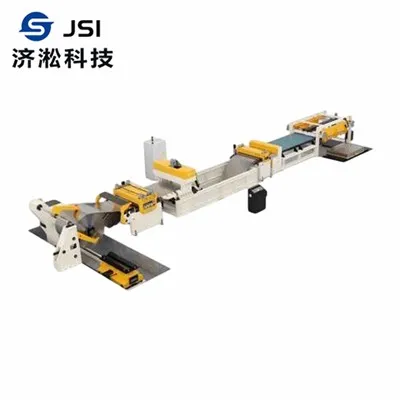
What is the feeding tension control of an NC Feeder Machine?


As a supplier of NC Feeder Machines, I often encounter inquiries from customers regarding the feeding tension control of these machines. Feeding tension control is a crucial aspect of the operation of an NC Feeder Machine, as it directly affects the quality and efficiency of the feeding process. In this blog post, I will explain what feeding tension control is, why it is important, and how it is achieved in an NC Feeder Machine.
What is Feeding Tension Control?
Feeding tension control refers to the regulation of the tension applied to the material being fed into the NC Feeder Machine. The tension must be carefully controlled to ensure that the material is fed smoothly and accurately without any wrinkles, stretching, or slippage. The ideal tension varies depending on the type, thickness, and width of the material, as well as the feeding speed and the specific requirements of the production process.
Why is Feeding Tension Control Important?
- Quality of the final product: Proper tension control ensures that the material is fed uniformly, which is essential for producing high - quality products. If the tension is too high, the material may stretch or break, leading to defects in the final product. On the other hand, if the tension is too low, the material may wrinkle or bunch up, also causing quality issues.
- Efficiency of the production process: Consistent tension control helps to prevent jams and interruptions in the feeding process. This reduces downtime and increases the overall productivity of the manufacturing line. For example, in a stamping process, a well - controlled feeding tension allows for continuous and accurate feeding of the sheet metal, enabling high - speed stamping operations.
- Protection of the material and the machine: Maintaining the right tension protects both the material being fed and the components of the NC Feeder Machine. Excessive tension can damage the material and put extra stress on the machine's drive system, belts, and rollers, leading to premature wear and tear.
How is Feeding Tension Control Achieved in an NC Feeder Machine?
Sensor - based Tension Detection
Most modern NC Feeder Machines are equipped with tension sensors. These sensors are placed at strategic points along the feeding path to measure the tension of the material in real - time. For example, load cells can be used to detect the force exerted by the material on the rollers. The data collected by these sensors is then sent to the machine's control system.
Closed - loop Control System
The control system of the NC Feeder Machine uses the data from the tension sensors to adjust the tension. It operates on a closed - loop principle, where the actual tension is compared with the setpoint (the desired tension). If the actual tension deviates from the setpoint, the control system will take corrective actions. For instance, if the tension is too high, the control system may reduce the speed of the drive motor or adjust the braking force on the material roll. Conversely, if the tension is too low, it may increase the drive speed or release some of the braking force.
Automatic Adjustment Mechanisms
There are several automatic adjustment mechanisms in an NC Feeder Machine to control the tension.
- Torque - controlled motors: The drive motors of the feeder can be torque - controlled. By adjusting the torque output of the motors, the tension applied to the material can be regulated. For example, in a Double Servo High Speed Feeder, the servo motors can precisely control the torque, allowing for accurate tension adjustment during high - speed feeding.
- Braking systems: Brakes are used to control the unwinding speed of the material roll. A magnetic powder brake, for example, can be adjusted to apply a variable amount of braking force. When the tension needs to be increased, the brake can be tightened to slow down the unwinding of the roll, and when the tension needs to be decreased, the brake can be loosened.
Different Types of NC Feeder Machines and Their Tension Control Features
NC Feeder Machine
The NC Feeder Machine is a versatile feeding device. It typically has a user - friendly control panel where operators can set the desired tension values. The machine's control system then uses the tension sensors and adjustment mechanisms to maintain the set tension. It can handle a wide range of materials, from thin sheets to relatively thick metal plates, and can adjust the tension accordingly.
Thin Sheet NC Servo Feeder
The Thin Sheet NC Servo Feeder is specifically designed for feeding thin materials. Since thin sheets are more prone to wrinkling and stretching, precise tension control is even more critical. These feeders often have more sensitive tension sensors and finer - tuned adjustment mechanisms. The servo motors in these machines can respond quickly to small changes in tension, ensuring that the thin sheets are fed smoothly without damage.
Conclusion
Feeding tension control is an essential function of an NC Feeder Machine. It plays a vital role in ensuring the quality of the final product, the efficiency of the production process, and the protection of both the material and the machine. By using advanced sensor technology, closed - loop control systems, and automatic adjustment mechanisms, modern NC Feeder Machines can achieve accurate and consistent tension control.
If you are in the market for an NC Feeder Machine and are interested in learning more about our products' feeding tension control capabilities, or if you have any specific requirements for your production line, we invite you to contact us for a detailed discussion. Our team of experts is ready to assist you in finding the most suitable solution for your needs.
References
- "Automation in Metal Forming Processes", Industrial Press Inc.
- "Handbook of Feeding and Conveying Equipment", Christopher J. Conveyor, McGraw - Hill Education.