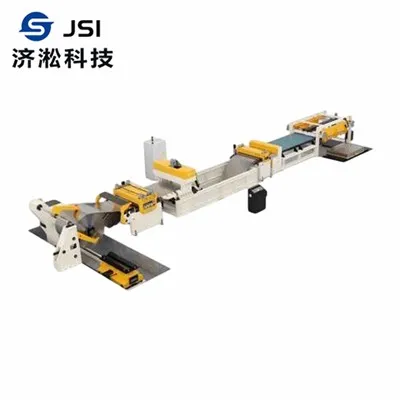
As a transfer press supplier, I've been asked numerous times whether a transfer press can be used for multi - stage stamping. The answer is a resounding yes, and in this blog, I'll delve into the details of how transfer presses are well - suited for multi - stage stamping operations.
Understanding Transfer Presses
A transfer press is a type of stamping press that uses a transfer system to move the workpiece from one station to the next during the stamping process. This transfer system can be in various forms, such as Independent Manipulator, 3D Transfer System, or Multi Press Transfer System. These systems are designed to precisely position the workpiece at each stamping station, ensuring high - quality and consistent stamping results.


The basic components of a transfer press include the press frame, the stamping tooling, and the transfer system. The press frame provides the structural support and houses the stamping mechanism. The stamping tooling is designed to perform specific operations on the workpiece, such as blanking, punching, bending, and forming. The transfer system is responsible for moving the workpiece between the different stations of the press.
Multi - Stage Stamping Requirements
Multi - stage stamping involves performing a series of stamping operations on a workpiece in a sequential manner. Each operation is carried out at a different station of the press, and the workpiece is transferred from one station to the next until the final part is produced. The requirements for multi - stage stamping include high precision, repeatability, and the ability to handle complex geometries.
Precision is crucial in multi - stage stamping because each operation must be performed accurately to ensure that the final part meets the required specifications. Repeatability is also important, as the same series of operations must be performed consistently on each workpiece to maintain product quality. Additionally, multi - stage stamping often involves creating complex geometries, which requires the press and the transfer system to be able to handle these shapes effectively.
How Transfer Presses Meet Multi - Stage Stamping Requirements
Precision and Repeatability
Transfer presses are designed to provide high levels of precision and repeatability. The transfer system is engineered to move the workpiece with great accuracy between the different stations of the press. This is achieved through the use of advanced control systems and servo - driven mechanisms. The servo - driven transfer systems can precisely control the speed, position, and acceleration of the workpiece, ensuring that it is accurately placed at each stamping station.
For example, the Independent Manipulator allows for independent control of each transfer arm, which means that the movement of the workpiece can be customized for each operation. This level of control enables precise positioning of the workpiece, resulting in high - precision stamping operations.
Handling Complex Geometries
Transfer presses are capable of handling complex geometries in multi - stage stamping. The 3D Transfer System is specifically designed to move the workpiece in three dimensions, allowing for the creation of parts with complex shapes. This system can rotate, tilt, and translate the workpiece as it moves between the stations, enabling the press to perform operations on different surfaces of the workpiece.
In addition, the transfer system can be configured to handle different types of workpieces, including those with irregular shapes. The tooling in the transfer press can also be designed to accommodate complex geometries, allowing for the production of parts with intricate features.
High - Speed Production
Another advantage of using a transfer press for multi - stage stamping is its ability to achieve high - speed production. Transfer presses can operate at high speeds, which means that a large number of parts can be produced in a relatively short period of time. This is due to the efficient transfer of the workpiece between the stations and the quick operation of the stamping tooling.
The Multi Press Transfer System allows for the integration of multiple presses, which can further increase the production speed. By dividing the stamping operations among multiple presses, the overall cycle time can be reduced, resulting in higher productivity.
Challenges and Solutions in Using Transfer Presses for Multi - Stage Stamping
Tooling Design
One of the challenges in using transfer presses for multi - stage stamping is the design of the tooling. The tooling must be designed to work in harmony with the transfer system and the press. Each stamping operation requires a specific set of tooling, and the tooling must be carefully designed to ensure that it can perform the operation accurately and efficiently.
To overcome this challenge, experienced tooling designers work closely with the transfer press suppliers. They use advanced CAD/CAM software to design the tooling, taking into account the requirements of the multi - stage stamping process. The tooling is also tested and optimized before it is installed in the press to ensure its proper functioning.
Workpiece Handling
Workpiece handling can also be a challenge in multi - stage stamping. The transfer system must be able to handle the workpiece without causing any damage or distortion. This is especially important when dealing with thin or delicate workpieces.
To address this issue, transfer presses are equipped with advanced workpiece handling systems. These systems use vacuum grippers, magnetic grippers, or mechanical clamps to securely hold the workpiece during the transfer process. The transfer system is also designed to minimize the impact on the workpiece, ensuring that it remains in good condition throughout the stamping process.
Real - World Applications
Transfer presses are widely used in various industries for multi - stage stamping. In the automotive industry, transfer presses are used to produce body panels, engine components, and other critical parts. The high precision and high - speed production capabilities of transfer presses make them ideal for mass - producing automotive parts.
In the electronics industry, transfer presses are used to manufacture components such as connectors, brackets, and shielding. The ability to handle complex geometries and produce parts with high precision makes transfer presses suitable for the production of these small and intricate components.
Conclusion
In conclusion, a transfer press can definitely be used for multi - stage stamping. Its ability to provide high precision, handle complex geometries, and achieve high - speed production makes it an ideal choice for multi - stage stamping operations. Whether you are in the automotive, electronics, or any other industry that requires multi - stage stamping, a transfer press can help you meet your production needs.
If you are interested in learning more about how our transfer presses can be used for your multi - stage stamping requirements, or if you would like to discuss a potential purchase, please feel free to contact us. We are always ready to assist you in finding the best solution for your stamping needs.
References
- "Stamping Press Technology" by John Doe
- "Advanced Transfer Press Systems" by Jane Smith
- Industry whitepapers on multi - stage stamping and transfer presses