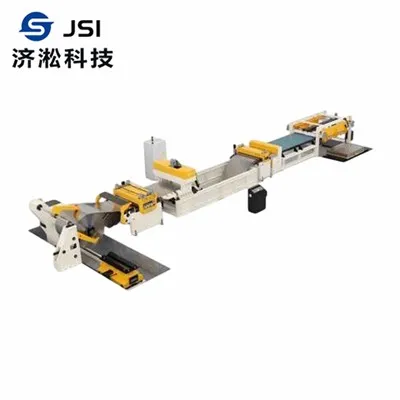
When it comes to installing a High Speed Blanking Line, one of the first questions that pops up is, “How much space do I actually need?” As a supplier of High Speed Blanking Lines, I get this query quite often, and it's a valid one. The space requirement can vary significantly based on several factors, and I'm here to break it down for you.
Key Factors Affecting Space Requirements
-
Line Configuration: Not all High Speed Blanking Lines are created equal. There are different types, like the 3 in 1 Blanking Line, Zigzag Blanking Line, and Multi Cut Precison Blanking Line. Each configuration has its own unique setup and, therefore, different space needs.
-
For example, a 3 in 1 Blanking Line combines multiple functions in one unit. This usually means it's more compact compared to a traditional single - function setup. But, it still requires enough room for material loading, processing, and unloading. The loading area needs to accommodate the coils of metal that will be fed into the line, and the unloading area requires space for the finished blanks.


-
Zigzag Blanking Lines, on the other hand, are designed to maximize the use of the raw material. This design may require a longer and more complex layout, as the material moves in a zigzag pattern during the blanking process. It needs additional space on either side of the line to ensure smooth material flow and proper operation of the machinery.
-
Multi Cut Precison Blanking Lines are focused on high - precision cuts, often with multiple cutting stations. These lines can be quite long, as they need to house all the necessary cutting and precision - control equipment. The space between each cutting station is also crucial to allow for proper maintenance and operator access.
-
-
Material Size and Coil Capacity: The size of the material you plan to use in the High Speed Blanking Line plays a major role in determining the space requirement. Larger coils of metal need more space for storage and handling. If you're working with wide and thick materials, the line itself may need to be wider to accommodate the material width during processing.
- For instance, if you're using coils that are 60 inches in width, the loading and feeding mechanisms of the blanking line need to be adjusted accordingly. This may mean a wider footprint for the entire line, as well as more space for the coil car or uncoiler that holds the large coils.
-
Automation and Auxiliary Equipment: In today's manufacturing environment, many High Speed Blanking Lines are highly automated. This includes features like robotic loading and unloading systems, conveyor belts, and quality - control stations. Each of these additional components adds to the overall space requirement.
- A robotic loading system needs space to move freely and access the coils and the blanking line. Conveyor belts need to be laid out in a way that ensures efficient material transfer between different stages of the process. And quality - control stations need enough room for operators to inspect the blanks and for any testing equipment to be set up.
Calculating the Space
To get a rough estimate of the space needed for a High Speed Blanking Line, you need to consider the following steps:
- Measure the Equipment: Start by getting the physical dimensions of each major component of the High Speed Blanking Line. This includes the uncoiler, straightener, feeder, press, and stacker. Add a few extra feet around each component to allow for maintenance access and operator movement.
- Consider Material Flow: Map out how the material will flow through the line. You need to account for the space needed for the coils at the beginning, the movement of the material through the various processing stages, and the storage of the finished blanks at the end. If you have a high - volume production, you may need more space for intermediate storage areas to prevent bottlenecks.
- Factor in Auxiliary Equipment: As mentioned earlier, don't forget to include the space for any automation or auxiliary equipment. This could be anywhere from a few square feet for a small sensor to large areas for robotic systems.
- Allow for Future Expansion: It's always a good idea to plan for future growth. If you think you might increase your production capacity or add new features to the line in the future, leave some extra space around the installation area. This will save you the hassle and cost of having to relocate or modify the line later on.
Real - World Examples
Let's look at a couple of real - world scenarios to illustrate the space requirements:
Example 1: Small - Scale Production with a 3 in 1 Blanking Line
For a small - scale operation that uses a 3 in 1 Blanking Line with a coil width of up to 36 inches and a moderate production volume, you might need an area of around 20 feet by 30 feet. This includes space for the coil storage, the line itself, and a small area for the finished blanks.
Example 2: Large - Scale Production with a Multi Cut Precison Blanking Line
In a large - scale manufacturing plant where a Multi Cut Precison Blanking Line is used to produce high - precision blanks from large coils (up to 60 inches wide) at a high volume, the space requirement could be much larger. You might need an area of 50 feet by 80 feet or more. This accounts for the long line, large - capacity coil storage, extensive automation, and a significant area for the finished product storage.
Final Thoughts
Determining the space requirement for installing a High Speed Blanking Line is a crucial step in the planning process. It's not just about squeezing the equipment into a small area; it's about creating an efficient and safe working environment. By considering the line configuration, material size, automation, and future expansion, you can ensure that you allocate the right amount of space for your High Speed Blanking Line.
If you're in the market for a High Speed Blanking Line and need help with the space planning or any other aspects of the installation, don't hesitate to reach out. We're here to assist you in making the best decision for your manufacturing needs. Contact us today to start the conversation and explore how our High Speed Blanking Lines can enhance your production process.
References
- Industry standards and guidelines for High Speed Blanking Line installation
- Manufacturer's specifications for different types of High Speed Blanking Lines