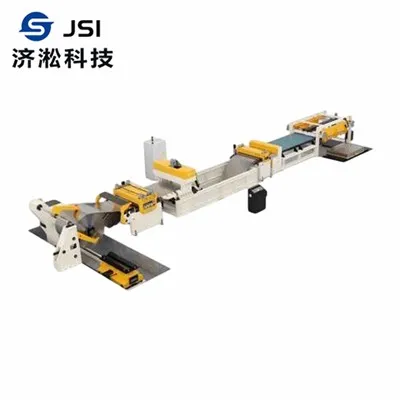
When it comes to the cut to length line, one of the most frequently asked questions is: What is the maximum number of cuts per minute on a cut to length line? As a seasoned supplier in this field, I'm excited to delve into this topic and share some insights with you.
Understanding the Cut to Length Line
Before we discuss the maximum number of cuts per minute, let's briefly understand what a cut to length line is. A cut to length line is a sophisticated piece of equipment used in the metal processing industry. It is designed to uncoil, level, and cut metal coils into precise lengths according to specific requirements. This process is crucial for various industries, including automotive, construction, and manufacturing, where accurately sized metal sheets are essential.
There are different types of cut to length lines available in the market, each with its own features and capabilities. For instance, the Multi - function Cutting Line offers a wide range of functions, allowing for more flexibility in the cutting process. The Coil Cut To Length Line is specifically designed for handling metal coils, ensuring smooth and efficient processing. And the Hydraulic Metal Sheet Shearing Machine provides powerful cutting force for thick metal sheets.
Factors Affecting the Maximum Number of Cuts per Minute
The maximum number of cuts per minute on a cut to length line is influenced by several factors.


1. Material Properties
The type and thickness of the material being cut play a significant role. Different metals have different hardness, ductility, and tensile strength. For example, cutting stainless steel is more challenging than cutting mild steel because stainless steel is harder and has higher strength. Thicker materials also require more force and time to cut. A cut to length line may be able to achieve a higher number of cuts per minute when working with thin and soft materials compared to thick and hard ones.
2. Machine Design and Specification
The design and specification of the cut to length line itself are crucial. High - end machines are often equipped with advanced servo - motor systems, precision cutting tools, and efficient control systems. These features allow for faster and more accurate cutting. For example, a machine with a high - speed servo - motor can quickly move the cutting blade, reducing the time between cuts. The quality of the cutting blade also affects the cutting speed. A sharp and durable blade can make clean cuts more quickly.
3. Cutting Length
The length of the cut also impacts the number of cuts per minute. Shorter cutting lengths generally allow for a higher number of cuts per minute because less time is spent on moving the material and making the cut. For instance, if you are cutting very short pieces, the machine can make a cut, move the material a short distance, and then make another cut in a relatively short time. In contrast, cutting long pieces requires more time for the material to move through the machine and for the cut to be made.
4. Automation Level
Automation can significantly increase the cutting speed. An automated cut to length line can perform tasks such as uncoiling, leveling, and cutting without manual intervention. This reduces the time wasted on human - related operations and ensures a continuous and efficient process. For example, an automated system can precisely control the feeding speed of the material, synchronize the movement of the cutting blade, and quickly adjust the cutting length according to the preset parameters.
Real - World Examples of Maximum Cuts per Minute
In real - world applications, the maximum number of cuts per minute can vary widely. For a basic cut to length line used for thin - gauge mild steel with short cutting lengths, it may be able to achieve around 60 - 80 cuts per minute. However, for more advanced and high - speed machines, especially those used in large - scale industrial production, the number can reach up to 200 or even more cuts per minute.
For example, in a modern automotive manufacturing plant, where high - precision and high - volume production are required, the cut to length lines are often optimized to achieve a very high number of cuts per minute. These machines are designed to handle large - diameter coils of steel and can cut them into precise lengths at a rapid pace to meet the production demands.
Optimizing the Cutting Speed
As a supplier, we understand the importance of optimizing the cutting speed for our customers. Here are some ways to increase the maximum number of cuts per minute:
1. Select the Right Machine
Choose a cut to length line that is suitable for your specific material and cutting requirements. Consider factors such as the material thickness, cutting length, and production volume. If you need to cut thick materials or require high - precision cuts, invest in a high - end machine with advanced features.
2. Maintain the Machine Regularly
Regular maintenance is essential to keep the machine in good working condition. This includes sharpening the cutting blade, lubricating the moving parts, and checking the electrical and mechanical systems. A well - maintained machine will operate more efficiently and can achieve a higher number of cuts per minute.
3. Optimize the Cutting Process
Work with our technical team to optimize the cutting process. This may involve adjusting the feeding speed, cutting force, and blade position. By fine - tuning these parameters, you can reduce the cutting time and increase the overall efficiency.
Conclusion
The maximum number of cuts per minute on a cut to length line is a complex issue that depends on multiple factors. As a supplier, we are committed to providing our customers with high - quality cut to length lines that can meet their specific production needs. Whether you are looking for a machine with a high cutting speed or one that offers precise cutting, we have the solutions for you.
If you are interested in learning more about our cut to length lines or have any questions regarding the maximum number of cuts per minute, please feel free to contact us for a detailed discussion. We look forward to working with you to optimize your metal processing operations.
References
- Metal Processing Handbook, 3rd Edition
- Industrial Automation and Cutting Technology Journal, Vol. 15, Issue 2