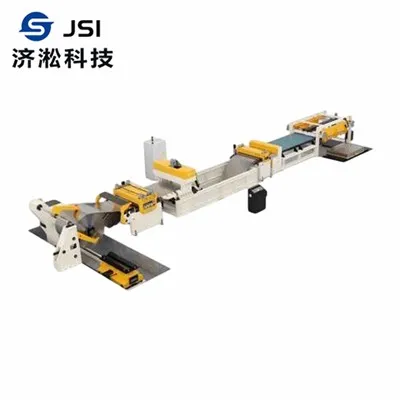
What is the leveling force adjustment method of a Precision Leveler Machine?
As a supplier of Precision Leveler Machines, I've had the privilege of witnessing firsthand the pivotal role these machines play in various industries. Precision leveler machines are indispensable for ensuring the flatness and quality of sheet materials, from thin aluminum foils to thick steel plates. One of the most critical aspects of operating a precision leveler machine is the adjustment of the leveling force. In this blog, I'll delve into the different methods of leveling force adjustment and their significance in achieving optimal leveling results.
Understanding the Importance of Leveling Force Adjustment
Before we dive into the adjustment methods, it's essential to understand why leveling force adjustment is so crucial. The leveling force refers to the pressure applied by the leveling rollers to the sheet material during the leveling process. If the leveling force is too low, the material may not be sufficiently flattened, resulting in residual stresses and uneven surfaces. On the other hand, if the leveling force is too high, it can cause excessive deformation, damage to the material, and even premature wear and tear of the leveling rollers.
Proper leveling force adjustment ensures that the material is leveled to the desired flatness while minimizing the risk of damage. It also helps to improve the efficiency of the leveling process, reduce production costs, and enhance the overall quality of the finished product.
Manual Adjustment Method
The manual adjustment method is the most basic and traditional way of adjusting the leveling force in a precision leveler machine. This method involves physically adjusting the position of the leveling rollers or the pressure applied by the hydraulic or mechanical systems.
Roller Position Adjustment: In some precision leveler machines, the leveling force can be adjusted by changing the vertical position of the upper leveling rollers. By raising or lowering the upper rollers, the gap between the upper and lower rollers can be increased or decreased, thereby adjusting the pressure applied to the sheet material. This method is relatively simple and straightforward, but it requires a high level of skill and experience to achieve accurate and consistent results.
Pressure Adjustment: Another way to manually adjust the leveling force is by adjusting the pressure of the hydraulic or mechanical systems that drive the leveling rollers. This can be done by turning a pressure adjustment knob or valve to increase or decrease the pressure. However, this method also requires careful monitoring and adjustment to ensure that the pressure is within the safe and effective range.
The manual adjustment method is suitable for small-scale production or when dealing with materials that have relatively consistent thickness and properties. However, it has some limitations, such as low precision, slow adjustment speed, and the need for frequent calibration.
Automatic Adjustment Method
With the development of technology, many modern precision leveler machines are equipped with automatic leveling force adjustment systems. These systems use sensors and controllers to continuously monitor and adjust the leveling force based on the real-time feedback from the material being leveled.
Sensor-Based Adjustment: One of the most common types of automatic adjustment systems is the sensor-based system. This system uses sensors, such as pressure sensors, displacement sensors, or laser sensors, to measure the thickness, flatness, and stress distribution of the sheet material. The sensors send the measured data to the controller, which then calculates the optimal leveling force and adjusts the position or pressure of the leveling rollers accordingly.
Closed-Loop Control System: Another type of automatic adjustment system is the closed-loop control system. This system uses a feedback loop to continuously compare the actual leveling results with the desired flatness specifications. If there is a deviation between the two, the controller will automatically adjust the leveling force to correct the error. This method ensures high precision and consistency in the leveling process, even when dealing with materials that have complex shapes or varying thicknesses.
The automatic adjustment method offers several advantages over the manual method, such as higher precision, faster adjustment speed, and reduced operator intervention. It also helps to improve the quality and stability of the leveling process, especially in large-scale production environments.
Adaptive Adjustment Method
In addition to the manual and automatic adjustment methods, some advanced precision leveler machines are equipped with adaptive adjustment systems. These systems can automatically adapt to changes in the material properties, thickness, and production conditions to optimize the leveling force in real-time.
Machine Learning and Artificial Intelligence: Adaptive adjustment systems often use machine learning and artificial intelligence algorithms to analyze the data collected from the sensors and historical production records. Based on this analysis, the system can predict the optimal leveling force for different materials and production scenarios, and adjust the leveling force accordingly.
Self-Calibration and Self-Optimization: Some adaptive adjustment systems also have self-calibration and self-optimization functions. These functions allow the machine to automatically calibrate the leveling force based on the real-time feedback from the sensors, and optimize the adjustment parameters to improve the leveling efficiency and quality.


The adaptive adjustment method represents the future direction of precision leveler machine technology. It offers the highest level of precision, flexibility, and efficiency, and can significantly improve the competitiveness of manufacturers in the global market.
Conclusion
The leveling force adjustment method is a critical factor in the operation of a precision leveler machine. Choosing the right adjustment method depends on various factors, such as the type of material being leveled, the required flatness specifications, the production volume, and the available budget.
As a supplier of Sheet Material Precision Leveling Machine, Precision Leveler Machine, and 4-layer High Precision Roller Leveler, we offer a wide range of precision leveler machines with different adjustment methods to meet the diverse needs of our customers. Whether you need a simple manual adjustment system or an advanced adaptive adjustment system, we have the solution for you.
If you're interested in learning more about our precision leveler machines or need help with leveling force adjustment, please feel free to contact us. Our team of experts is always ready to provide you with professional advice and support. Let's work together to achieve the highest level of precision and quality in your sheet material leveling process.
References
- [1] Smith, J. (2020). Precision Leveling Technology: Principles and Applications. New York: Wiley.
- [2] Johnson, A. (2019). Advances in Automatic Leveling Force Adjustment Systems for Precision Leveler Machines. Journal of Manufacturing Technology, 45(3), 212-225.
- [3] Brown, C. (2018). Adaptive Control Strategies for Precision Leveler Machines. Proceedings of the International Conference on Manufacturing Engineering and Automation, 2018, 456-462.