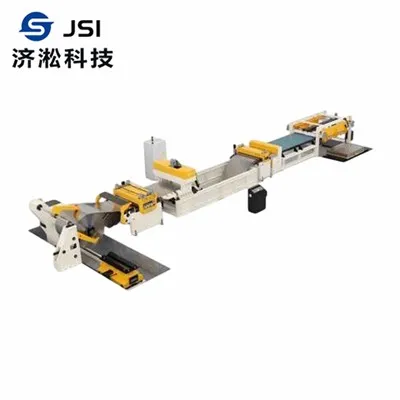
Hey there! As a supplier of High Speed Slitting Lines, I've seen firsthand how the material hardness can have a huge impact on the performance of these machines. In this blog, I'm gonna break down exactly what that impact is and why it matters to you.
First off, let's talk about what material hardness actually means. Simply put, hardness is a measure of how resistant a material is to deformation, such as scratching, denting, or cutting. Different materials have different levels of hardness, and this can vary widely even within the same type of material. For example, stainless steel can come in various grades, each with its own hardness characteristics.
Now, let's dig into how material hardness affects the performance of a High Speed Slitting Line.
Cutting Quality
One of the most obvious impacts of material hardness is on the cutting quality. When you're slitting a material, you want clean, precise cuts without any burrs or rough edges. Harder materials can be a real challenge in this regard.
If the material is too hard, the slitting knives may struggle to cut through it smoothly. This can lead to uneven cuts, where one side of the strip may be cut more cleanly than the other. Burrs are also more likely to form on the edges of the slit strips. These burrs can cause problems downstream, such as interfering with the assembly process or causing damage to other components.
On the other hand, if the material is too soft, it may deform during the slitting process. The knives can push the material out of shape, resulting in wavy or distorted strips. This can also affect the accuracy of the slitting and make it difficult to achieve the desired width and thickness of the strips.
Knife Wear
Another major factor is knife wear. The hardness of the material directly affects how quickly the slitting knives wear out. Harder materials put more stress on the knives, causing them to dull faster. This means you'll have to replace the knives more frequently, which can be costly in terms of both the cost of the knives themselves and the downtime required for replacement.
For example, when slitting a hard alloy steel, the knives may need to be replaced after a relatively short period of operation compared to slitting a softer aluminum alloy. Regularly replacing knives not only adds to the operating costs but also disrupts the production schedule.
Machine Speed
Material hardness can also impact the speed at which the High Speed Slitting Line can operate. When dealing with harder materials, the machine may need to slow down to ensure a clean cut. This is because the knives need more time and force to penetrate the hard material. As a result, the overall production rate decreases.
Conversely, softer materials can generally be slit at higher speeds. However, there's a limit to how fast you can go even with soft materials, as going too fast can still lead to quality issues like deformation or uneven cuts.


Tension Control
Tension control is crucial in a slitting line to ensure that the strips are wound up neatly and without any wrinkles or slack. Harder materials can be more difficult to control in terms of tension. They tend to be stiffer and less flexible, which means they may not respond well to changes in tension.
If the tension is too high, the hard material may break or crack. If the tension is too low, the strips may not be wound tightly enough, leading to loose coils that can be difficult to handle and transport.
Types of Slitting Lines for Different Materials
Depending on the hardness of the material you're working with, different types of slitting lines may be more suitable.
For non-ferrous metals, which are generally softer than steel, Non-ferrous Metal Slitting Lines are designed to handle these materials efficiently. These lines often have features that are optimized for the lower hardness and different properties of non-ferrous metals, such as aluminum and copper.
If you're dealing with steel coils, Steel Coil Slitting Line is the way to go. These lines are built to handle the higher hardness and strength of steel. They typically have more powerful motors and stronger cutting tools to ensure a clean cut through the tough steel.
For those looking for maximum efficiency and automation, Fully Automatic Slitting Line can be a great option. These lines can be programmed to adjust to different material hardnesses and thicknesses, making them versatile for a wide range of applications.
How to Optimize Performance
So, how can you optimize the performance of your High Speed Slitting Line when dealing with different material hardnesses?
First, choose the right slitting knives. Make sure the knives are made from a high-quality material that can withstand the hardness of the material you're slitting. You may also need to select knives with different geometries depending on the material. For example, a harder material may require a knife with a sharper edge and a more robust design.
Second, adjust the machine settings. This includes the cutting speed, feed rate, and tension control. Experiment with different settings to find the optimal combination for each type of material. You may need to make small adjustments based on the actual performance and quality of the slitting.
Finally, perform regular maintenance on the slitting line. This includes cleaning the machine, lubricating the moving parts, and inspecting the knives for wear. By keeping the machine in good condition, you can ensure consistent performance and reduce the risk of breakdowns.
Conclusion
In conclusion, material hardness has a significant impact on the performance of a High Speed Slitting Line. It affects cutting quality, knife wear, machine speed, and tension control. As a supplier, I understand the challenges you face when dealing with different materials, and I'm here to help you find the best solutions.
Whether you're slitting non-ferrous metals, steel coils, or need a fully automatic solution, we have the right slitting line for you. If you're interested in learning more about our products or have any questions about how to optimize your slitting process, don't hesitate to reach out. We're always happy to have a chat and discuss your specific needs. Let's work together to improve your production efficiency and quality!
References
- Smith, J. (2020). "The Impact of Material Properties on Metal Slitting Processes." Journal of Manufacturing Technology, 15(2), 45 - 52.
- Johnson, A. (2019). "Optimizing Slitting Line Performance for Different Materials." Industrial Engineering Review, 22(3), 78 - 85.
- Brown, C. (2021). "Advanced Slitting Techniques for Hard and Soft Materials." Manufacturing Innovation Magazine, 18(4), 33 - 40.