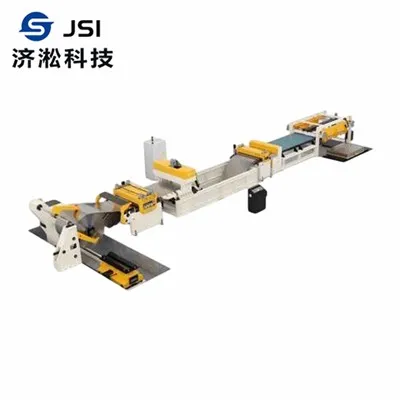
As a supplier of High Speed Slitting Lines, I am often asked about the various components and their functions within these sophisticated machines. One crucial component that plays a significant role in the slitting process is the strip flattener. In this blog post, I will delve into the functions of the strip flattener in a High Speed Slitting Line, explaining why it is an essential part of the overall operation.
Understanding the High Speed Slitting Line
Before we discuss the strip flattener, let's briefly understand what a High Speed Slitting Line is. A High Speed Slitting Line is a specialized machine used to cut wide coils of metal or other materials into narrower strips. These strips are then used in various industries, such as automotive, construction, and manufacturing. The slitting process involves unwinding the coil, cutting it into multiple strips of the desired width, and then rewinding the strips onto separate coils.
There are different types of slitting lines available, including Steel Coil Slitting Line and Coating Material Slitting Line. However, for the purpose of this discussion, we will focus on the High Speed Slitting Line, which is designed to operate at high speeds and produce high-quality strips.
The Role of the Strip Flattener
The strip flattener is a key component in a High Speed Slitting Line, and its primary function is to remove any residual stresses and flatness defects from the strip before it is slit. When a coil of metal is unwound, it often retains some of the curvature and stresses from the coiling process. These defects can cause problems during the slitting process, such as uneven cutting, poor strip quality, and increased wear on the slitting blades.
The strip flattener uses a series of rollers to apply pressure to the strip, gradually flattening it and removing any residual stresses. The rollers are typically arranged in a specific pattern, with some rollers applying pressure in the vertical direction and others in the horizontal direction. This combination of forces helps to ensure that the strip is evenly flattened and that any defects are eliminated.
Functions of the Strip Flattener
1. Improving Strip Flatness
One of the main functions of the strip flattener is to improve the flatness of the strip. By removing any residual curvature and stresses, the strip flattener ensures that the strip is straight and flat before it enters the slitting section. This is crucial for achieving accurate and consistent slitting results. If the strip is not flat, the slitting blades may not cut through the material evenly, resulting in uneven strip widths and poor quality edges.
2. Reducing Coil Set
Coil set is a common problem in metal strips that have been wound into coils. It refers to the tendency of the strip to retain its coiled shape even after it has been unwound. Coil set can cause the strip to curl or twist, making it difficult to handle and slit. The strip flattener helps to reduce coil set by applying pressure to the strip and gradually straightening it. This makes the strip easier to feed through the slitting line and ensures that it is cut accurately.
3. Eliminating Waviness and Edge Wave
Waviness and edge wave are other flatness defects that can occur in metal strips. Waviness refers to a series of small waves or undulations along the length of the strip, while edge wave is a wavy or curved edge on the strip. These defects can affect the quality of the slit strips and make them unsuitable for certain applications. The strip flattener is designed to eliminate waviness and edge wave by applying pressure to the strip and smoothing out any irregularities. This results in a flat and uniform strip with straight edges.
4. Enhancing Surface Quality
In addition to improving flatness, the strip flattener can also enhance the surface quality of the strip. By removing any residual stresses and defects, the strip flattener helps to prevent the formation of surface cracks and scratches. This is particularly important for applications where the surface finish of the strip is critical, such as in the automotive and electronics industries.
5. Increasing Slitting Efficiency
A flat and straight strip is easier to handle and slit than a strip with flatness defects. By improving the flatness of the strip, the strip flattener helps to increase the efficiency of the slitting process. It reduces the likelihood of jams and misfeeds, which can cause downtime and increase production costs. Additionally, a flat strip is less likely to cause wear and tear on the slitting blades, extending their lifespan and reducing the need for frequent blade replacements.
Types of Strip Flatteners
There are several types of strip flatteners available, each with its own unique design and operating principle. The most common types of strip flatteners include:


1. Roll Flatteners
Roll flatteners are the most widely used type of strip flattener in High Speed Slitting Lines. They consist of a series of rollers that are arranged in a specific pattern to apply pressure to the strip. The rollers can be either powered or non-powered, depending on the design of the flattener. Roll flatteners are effective at removing residual stresses and improving strip flatness, but they may not be suitable for all types of materials and thicknesses.
2. Leveling Machines
Leveling machines are another type of strip flattener that is commonly used in High Speed Slitting Lines. They use a series of leveling rolls to apply pressure to the strip and gradually flatten it. Leveling machines are more versatile than roll flatteners and can be used to flatten a wider range of materials and thicknesses. They are also more effective at removing severe flatness defects, such as coil set and edge wave.
3. Tension Levelers
Tension levelers are a specialized type of strip flattener that uses tension to straighten the strip. They consist of a series of rollers that are driven at different speeds, creating a tension force in the strip. This tension force helps to stretch the strip and remove any residual stresses and flatness defects. Tension levelers are particularly effective at reducing coil set and improving the flatness of thick and heavy-gauge strips.
Conclusion
In conclusion, the strip flattener is a crucial component in a High Speed Slitting Line. Its functions of improving strip flatness, reducing coil set, eliminating waviness and edge wave, enhancing surface quality, and increasing slitting efficiency are essential for achieving accurate and consistent slitting results. By investing in a high-quality strip flattener, you can ensure that your slitting line operates smoothly and produces high-quality strips.
If you are in the market for a High Speed Slitting Line or have any questions about the strip flattener or other components, please feel free to contact us. We are a leading supplier of High Speed Slitting Lines and can provide you with the expertise and support you need to make the right choice for your business.
References
- ASM Handbook, Volume 6: Welding, Brazing, and Soldering, ASM International, 1993.
- Metals Handbook, Desk Edition, 2nd Edition, ASM International, 1998.
- The Manufacturing Engineering Handbook, 3rd Edition, Society of Manufacturing Engineers, 2004.