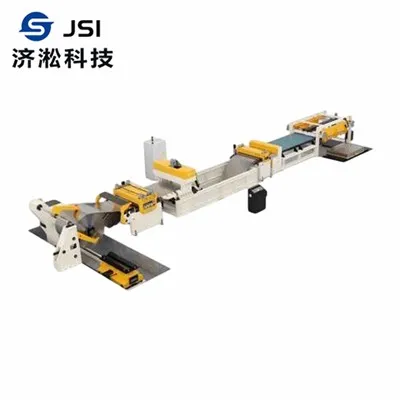
In the realm of metal forming and stamping, transfer presses stand as a cornerstone of high - efficiency production. A transfer press is a sophisticated piece of equipment that automates the process of moving workpieces through multiple stamping stations, enabling complex and precise metal forming operations. At the heart of a transfer press lies its feeding system, which is crucial for the overall performance and productivity of the machine. As a transfer press supplier, I am excited to delve into the details of what a transfer press feeding system is and how it functions.
The Basics of a Transfer Press Feeding System
A transfer press feeding system is designed to move workpieces from one stamping station to the next in a coordinated and precise manner. This system eliminates the need for manual handling of parts between operations, significantly increasing production speed and reducing the risk of human error. The feeding system consists of several key components, including transfer fingers, rails, drives, and control systems.
Transfer fingers are the physical elements that grip and move the workpieces. They are designed to securely hold the parts during transfer while minimizing damage to the material. Rails provide a guide for the transfer fingers, ensuring that they move in a straight and accurate path. Drives, such as servo - motors or hydraulic cylinders, power the movement of the transfer fingers along the rails. The control system is responsible for coordinating the movement of the transfer fingers with the stamping operations of the press, ensuring that the workpieces are transferred at the right time and in the correct position.
Types of Transfer Press Feeding Systems
There are several types of transfer press feeding systems, each with its own advantages and applications.
Mechanical Transfer Systems
Mechanical transfer systems are the most traditional type of feeding system for transfer presses. They use mechanical linkages and cams to drive the movement of the transfer fingers. These systems are known for their simplicity, reliability, and low cost. However, they have limited flexibility in terms of stroke length and speed adjustment. Mechanical transfer systems are typically used in applications where the production volume is high and the part geometry is relatively simple.
Servo - Driven Transfer Systems
Servo - driven transfer systems have become increasingly popular in recent years. They use servo - motors to control the movement of the transfer fingers, providing greater flexibility and precision compared to mechanical systems. Servo - driven systems can easily adjust the stroke length, speed, and acceleration of the transfer fingers, allowing for more complex part geometries and higher production speeds. They are also more energy - efficient than mechanical systems, as the servo - motors can be programmed to operate only when needed. Servo - driven transfer systems are suitable for a wide range of applications, from high - volume production to small - batch, custom - part manufacturing.
Independent Manipulator
Independent manipulators are a type of advanced transfer press feeding system. They consist of individual robotic arms or manipulators that can move the workpieces independently of each other. This allows for greater flexibility in part handling and transfer, as each manipulator can be programmed to perform different tasks. Independent manipulators are particularly useful in applications where the part geometry is complex or where multiple parts need to be assembled during the stamping process. They can also be easily integrated with other automation equipment, such as vision systems or robotic loaders, to create a fully automated production line.
Independent Transfer System
An independent transfer system is another innovative solution for transfer press feeding. This system uses a modular design, where each transfer unit can be controlled independently. This provides greater flexibility in terms of the number of stations and the transfer path. Independent transfer systems can be easily reconfigured to accommodate different part sizes and geometries, making them ideal for applications with frequent product changes. They also offer high - speed operation and excellent repeatability, ensuring consistent quality in the stamped parts.
3D Transfer System
3D transfer systems are designed to handle workpieces in three - dimensional space. They can move the workpieces not only horizontally but also vertically and rotationally, allowing for more complex part geometries and stamping operations. 3D transfer systems are often used in the automotive and aerospace industries, where parts with complex shapes and high precision requirements are common. These systems require advanced control algorithms and sensors to ensure accurate positioning and movement of the workpieces.
Key Considerations in Selecting a Transfer Press Feeding System
When selecting a transfer press feeding system, several factors need to be considered.
Part Geometry and Complexity
The geometry and complexity of the parts to be stamped are the most important factors in determining the type of feeding system. Simple, flat parts can often be handled by mechanical or basic servo - driven systems, while complex, three - dimensional parts may require a more advanced system such as an independent manipulator or a 3D transfer system.
Production Volume
The production volume also plays a crucial role in the selection of the feeding system. High - volume production typically requires a system with high speed and reliability, such as a mechanical or servo - driven system. For low - volume or custom - part production, a more flexible system like an independent transfer system or an independent manipulator may be more suitable.
Flexibility and Changeover Time
If the production process requires frequent product changes, a feeding system with high flexibility and short changeover time is essential. Servo - driven systems, independent transfer systems, and independent manipulators are better suited for such applications, as they can be easily reconfigured to accommodate different part sizes and geometries.
Cost and Return on Investment
The cost of the feeding system is an important consideration. While more advanced systems may have a higher upfront cost, they can offer significant savings in terms of increased productivity, reduced scrap, and lower labor costs in the long run. It is important to evaluate the return on investment (ROI) of the feeding system based on the specific production requirements.
The Role of the Supplier in the Transfer Press Feeding System
As a transfer press supplier, we play a crucial role in helping our customers select the right feeding system for their applications. We have a team of experienced engineers who can analyze the customer's part geometry, production volume, and other requirements to recommend the most suitable feeding system. We also provide comprehensive after - sales support, including installation, training, maintenance, and technical assistance.


Our goal is to ensure that our customers get the maximum value from their transfer press investment. We work closely with our customers to understand their needs and challenges, and we offer customized solutions to meet their specific requirements. Whether it is a simple mechanical transfer system or a complex 3D transfer system, we have the expertise and resources to provide high - quality products and services.
Conclusion
The feeding system of a transfer press is a critical component that directly affects the performance, productivity, and quality of the stamping process. There are several types of feeding systems available, each with its own advantages and applications. When selecting a feeding system, it is important to consider factors such as part geometry, production volume, flexibility, and cost. As a transfer press supplier, we are committed to providing our customers with the best - in - class feeding systems and support services.
If you are interested in learning more about our transfer press feeding systems or would like to discuss your specific requirements, we invite you to contact us for a detailed consultation. Our team of experts is ready to assist you in finding the perfect solution for your stamping needs.
References
- "Metal Forming Handbook: Processes and Applications" by G. E. Totten and D. Y. Yang
- "Automotive Stamping and Assembly" by SAE International
- "Advanced Manufacturing Technology" by Peter W. Nachtmann