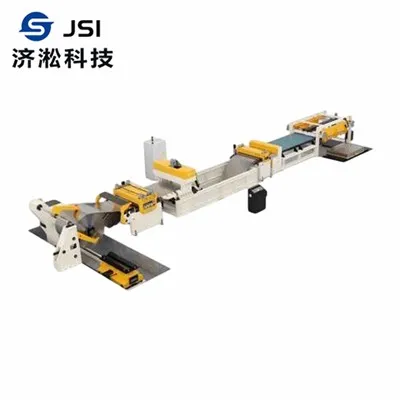
Hey there! As a supplier of Zigzag Feeders, I often get asked about the differences between Zigzag Feeders and other types of feeders. So, I thought I'd take a few minutes to break it down for you.
Let's start with the basics. A feeder, in the context of industrial machinery, is a device that moves materials from one point to another. This could be anything from sheets of metal in a stamping operation to granules in a plastic molding process. Different types of feeders are designed to handle different materials, volumes, and speeds, and each has its own set of advantages and disadvantages.
Zigzag Feeder: The Unique Performer
First up, let's talk about the Zigzag Feeder. This bad boy is a real standout in the world of feeders. The Zigzag Feeder gets its name from the way it moves materials in a zigzag pattern. This unique motion allows it to handle a wide range of materials, including thin, flexible sheets and irregularly shaped parts.
One of the biggest advantages of the Zigzag Feeder is its ability to prevent material jams. The zigzag motion helps to keep the materials separated and moving smoothly through the feeder. This is especially important when dealing with thin or flexible materials that are prone to bunching up or getting stuck.
Another great thing about the Zigzag Feeder is its versatility. It can be easily adjusted to accommodate different material sizes and shapes. This makes it a great choice for industries that need to process a variety of materials, such as the automotive, electronics, and packaging industries.
High Speed NC Servo Roll Feeder: The Speed Demon
Next, let's take a look at the High Speed NC Servo Roll Feeder. As the name suggests, this feeder is all about speed. It uses a servo motor to drive the rollers, which allows it to achieve high feeding speeds with great precision.
The High Speed NC Servo Roll Feeder is designed to handle continuous rolls of material, such as metal coils. It's commonly used in high-volume stamping operations, where speed and accuracy are crucial.
One of the main advantages of the High Speed NC Servo Roll Feeder is its high-speed operation. It can feed materials at speeds of up to several hundred feet per minute, which can significantly increase productivity.
However, the High Speed NC Servo Roll Feeder does have some limitations. It's not well-suited for handling thin or flexible materials, as the high-speed rollers can cause the materials to stretch or tear. It also requires a relatively large amount of space to operate, which may not be practical for some smaller facilities.
Medium Sheet NC Servo Feeder: The All-Rounder
Finally, let's talk about the Medium Sheet NC Servo Feeder. This feeder is a great middle-ground between the Zigzag Feeder and the High Speed NC Servo Roll Feeder. It's designed to handle medium-sized sheets of material, such as those used in the manufacturing of appliances and furniture.
The Medium Sheet NC Servo Feeder uses a servo motor to control the feeding process, which allows it to achieve accurate and consistent feeding. It also has a relatively simple design, which makes it easy to operate and maintain.
One of the main advantages of the Medium Sheet NC Servo Feeder is its versatility. It can handle a wide range of material sizes and thicknesses, and it can be easily adjusted to accommodate different production requirements.
However, like the High Speed NC Servo Roll Feeder, the Medium Sheet NC Servo Feeder may not be suitable for handling very thin or flexible materials. It also has a lower feeding speed compared to the High Speed NC Servo Roll Feeder, which may not be ideal for high-volume production.
Comparing the Feeders
So, how do these feeders stack up against each other? Let's take a look at a few key factors:
Material Handling
- Zigzag Feeder: Can handle a wide range of materials, including thin, flexible sheets and irregularly shaped parts.
- High Speed NC Servo Roll Feeder: Designed for continuous rolls of material, such as metal coils. Not suitable for thin or flexible materials.
- Medium Sheet NC Servo Feeder: Can handle medium-sized sheets of material. May not be suitable for very thin or flexible materials.
Speed
- Zigzag Feeder: Moderate feeding speed. Focuses more on preventing jams and handling a variety of materials.
- High Speed NC Servo Roll Feeder: High feeding speed, up to several hundred feet per minute. Ideal for high-volume production.
- Medium Sheet NC Servo Feeder: Moderate feeding speed. Suitable for medium-volume production.
Versatility
- Zigzag Feeder: Highly versatile. Can be easily adjusted to accommodate different material sizes and shapes.
- High Speed NC Servo Roll Feeder: Less versatile. Designed mainly for continuous rolls of material.
- Medium Sheet NC Servo Feeder: Moderately versatile. Can handle a range of material sizes and thicknesses.
Space Requirements
- Zigzag Feeder: Relatively compact. Can be installed in smaller facilities.
- High Speed NC Servo Roll Feeder: Requires a relatively large amount of space to operate.
- Medium Sheet NC Servo Feeder: Moderate space requirements.
Conclusion
In conclusion, each type of feeder has its own unique advantages and disadvantages. The best feeder for your application will depend on a variety of factors, including the type of material you're handling, the volume of production, and your specific production requirements.
If you're looking for a feeder that can handle a wide range of materials and prevent jams, the Zigzag Feeder is a great choice. If speed is your top priority, the High Speed NC Servo Roll Feeder may be the way to go. And if you need a versatile feeder that can handle medium-sized sheets of material, the Medium Sheet NC Servo Feeder is a solid option.
If you're interested in learning more about our Zigzag Feeders or any of our other products, please don't hesitate to reach out. We'd be happy to discuss your specific needs and help you find the right feeder for your application. Let's start a conversation and see how we can work together to improve your production process!


References
- Industrial Feeding Systems Handbook
- Machinery's Handbook
- Journal of Manufacturing Technology