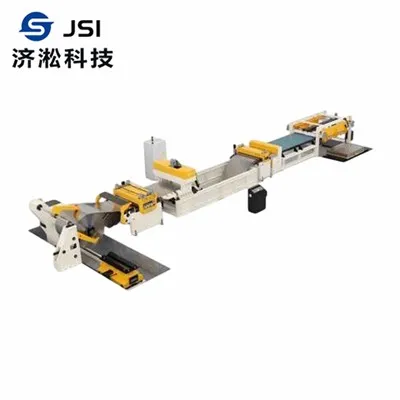
As a seasoned supplier of tandem press lines, I've witnessed firsthand the critical role that quality control plays in the production process. A tandem press line is a sophisticated setup where multiple presses work in sequence to transform raw materials into finished parts efficiently. In this blog, I'll delve into the key quality control points that are essential for ensuring the smooth operation and high - quality output of a tandem press line.
1. Raw Material Inspection
The foundation of a high - quality production process lies in the quality of the raw materials. Before the materials enter the tandem press line, a thorough inspection is necessary. The dimensions of the raw materials, such as the thickness, width, and length, should be measured precisely. Deviations from the specified dimensions can lead to issues during the stamping process, such as improper fit in the dies or inconsistent part thickness.
For example, if the sheet metal used in the press line has a thickness that is slightly off, it can cause uneven pressure distribution in the dies, resulting in parts with poor surface finish or even structural weaknesses. Additionally, the material's mechanical properties, like hardness and ductility, need to be verified. These properties affect how the material behaves during the stamping process. A material that is too brittle may crack during forming, while one that is too soft may not hold its shape properly.
2. Die Maintenance and Inspection
Dies are the heart of a tandem press line. They are responsible for shaping the raw materials into the desired parts. Regular die maintenance and inspection are crucial quality control points. Before starting the production, the dies should be inspected for any signs of wear, damage, or misalignment.
Worn - out dies can lead to parts with incorrect dimensions, rough surfaces, or burrs. For instance, if the cutting edges of a die are dull, it will require more force to cut the material, which can cause deformation of the part. Misaligned dies can also result in parts that do not meet the design specifications.
During production, periodic die inspections should be carried out. This can involve checking for any signs of chipping, cracking, or excessive wear. If any issues are detected, the dies should be repaired or replaced immediately to prevent the production of defective parts. You can learn more about high - performance die applications in High Speed Tandem Press Lines.
3. Press Machine Calibration
The press machines in a tandem press line need to be calibrated accurately. Calibration ensures that the presses apply the correct amount of force, operate at the right speed, and maintain the proper stroke length.
Incorrect force application can lead to under - formed or over - formed parts. If the press applies too little force, the material may not be fully formed, resulting in parts with incomplete features. On the other hand, excessive force can cause the material to rupture or the dies to be damaged.
The speed of the press is also critical. A press that operates too fast may not allow the material to flow properly in the dies, leading to defects such as wrinkles or splits. Similarly, an incorrect stroke length can affect the part's dimensions and shape. Regular calibration of the press machines helps to maintain consistent quality throughout the production process.
4. Automation System Checks
Many modern tandem press lines are highly automated. The automation system is responsible for coordinating the movement of the materials between the presses, controlling the press operations, and ensuring the overall efficiency of the production line.
Regular checks of the automation system are essential. This includes verifying the accuracy of the sensors that detect the position of the materials and the status of the presses. Faulty sensors can lead to misfeeding of materials, which can cause damage to the dies or result in defective parts.
The programming of the automation system also needs to be reviewed. Any changes in the production requirements should be accurately reflected in the program. For more information on the automation aspects of tandem lines, visit Automation Of Tandem Lines.
5. In - Process Quality Monitoring
Continuous in - process quality monitoring is a vital quality control point. This can involve using various inspection techniques, such as visual inspection, dimensional measurement, and non - destructive testing.
Visual inspection is a simple yet effective method. Operators can quickly identify obvious defects such as cracks, scratches, or improper forming. However, for more precise quality control, dimensional measurement tools like calipers, micrometers, and coordinate measuring machines (CMMs) should be used. These tools can accurately measure the dimensions of the parts and detect any deviations from the design specifications.
Non - destructive testing methods, such as ultrasonic testing or magnetic particle testing, can be used to detect internal defects in the parts that are not visible to the naked eye. By monitoring the quality of the parts during the production process, any issues can be detected early, and corrective actions can be taken immediately.
6. Part Handling and Storage
Proper part handling and storage are often overlooked quality control points. After the parts are produced, they need to be handled carefully to avoid damage. Rough handling can cause scratches, dents, or other surface defects.
The parts should be stored in a clean, dry environment to prevent corrosion or other forms of damage. If the parts are stacked or stored incorrectly, they may deform under their own weight. For single - process tandem lines, specific handling and storage requirements may apply. You can find more details about Single Process Tandem Line.
7. Operator Training and Skill Development
The operators of a tandem press line play a crucial role in quality control. They need to be well - trained in operating the press machines, maintaining the dies, and performing quality inspections.
Regular training programs should be provided to keep the operators updated with the latest techniques and best practices. A skilled operator can quickly identify potential quality issues and take appropriate actions. They can also contribute to the continuous improvement of the production process by providing feedback on any problems they encounter.
8. Documentation and Traceability
Maintaining detailed documentation is an important quality control aspect. Records should be kept of all the production parameters, such as the raw material specifications, die maintenance schedules, press machine settings, and quality inspection results.
This documentation provides traceability, which is essential for quality control. In case of any quality issues, it allows for a detailed investigation to determine the root cause. It also helps in meeting the requirements of quality management systems and regulatory standards.


In conclusion, quality control in a tandem press line's production process is a comprehensive and multi - faceted task. By paying attention to these key quality control points, we can ensure the production of high - quality parts, improve the efficiency of the production line, and reduce the risk of defects.
If you are interested in learning more about our tandem press lines or are looking to purchase one for your production needs, we encourage you to reach out for a detailed discussion. Our team of experts is ready to assist you in finding the best solution for your specific requirements.
References
- "Press Shop Automation and Control" - Industry - specific technical literature on press line operations.
- "Quality Control in Manufacturing Processes" - General manufacturing quality control textbook.
- "Die Design and Maintenance for Stamping Operations" - Specialized book on die - related aspects of press line production.