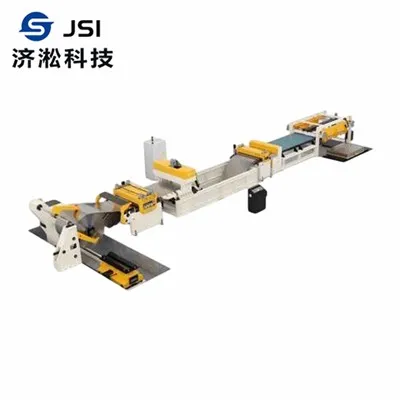
As a reliable decoiler supplier in the metal processing industry, I've witnessed firsthand how decoilers have evolved to meet the dynamic needs of modern manufacturing. In this article, I'll break down the main components of a decoiler, exploring their functions and importance in the overall operation.
1. Base Frame
The base frame serves as the foundation for the entire decoiler. It is typically made of heavy - duty steel or other robust materials. This component provides stability and support to the entire machine, ensuring that it can withstand the weight of the coil and the forces exerted during the uncoiling process. The base frame is designed to be rigid to prevent any unnecessary vibrations that could affect the quality of the uncoiling operation. In some advanced designs, the base frame may also be adjustable, allowing for fine - tuning of the machine's position and levelness according to the specific requirements of the production line.
2. Mandrel
The mandrel is a crucial part of the decoiler. It is the central shaft around which the coil is loaded. Mandrels can be of different types, including solid mandrels and expandable mandrels. Expandable mandrels are more commonly used as they can accommodate coils of different inner diameters. By expanding or contracting, the mandrel firmly grips the inner periphery of the coil, preventing it from slipping during the uncoiling process. This ensures a smooth and continuous supply of material. The size and strength of the mandrel are determined by the maximum weight and diameter of the coils that the decoiler is designed to handle.
3. Driving System
The driving system is responsible for powering the uncoiling process. There are different types of driving systems available, with motor - driven being one of the most popular. A Motorized Decoiler typically uses an electric motor, hydraulic motor, or a combination of both. Electric motors are known for their precision and ease of control, while hydraulic motors can provide high torque, which is necessary for handling heavy - duty coils. The driving system is connected to the mandrel through a set of gears or a belt drive. It must be able to maintain a consistent speed during the uncoiling process to ensure a uniform supply of material to the downstream machines.
4. Brake System
A brake system is essential for a decoiler to control the rotation of the mandrel and the coil. It can quickly stop the uncoiling process in case of emergencies or when the required length of the material has been uncoiled. There are various types of brake systems, such as mechanical brakes, electromagnetic brakes, and hydraulic brakes. Mechanical brakes are relatively simple and cost - effective, but they may require more maintenance. Electromagnetic brakes offer precise control and fast response times, while hydraulic brakes can provide high - braking torque for large and heavy coils. The brake system is usually integrated with the driving system to achieve coordinated control.
5. Coil Car (Optional)
Some decoilers are equipped with a Decoiler with Coil Car. A coil car is a mobile platform used to transport the coil from the storage area to the decoiler. It simplifies the loading process and reduces the amount of manual labor required. The coil car is typically powered by an electric or hydraulic motor and can be designed to lift and position the coil accurately onto the mandrel. This not only improves efficiency but also enhances safety in the workplace by minimizing the risk of injuries associated with manual coil handling.
6. Guide Rolls
Guide rolls are positioned along the path of the uncoiled material. Their main function is to guide the material in a straight line and prevent it from deviating or wrinkling during the uncoiling process. Guide rolls can be adjustable, allowing operators to set the appropriate width and height according to the dimensions of the material. They are usually made of high - quality steel or other wear - resistant materials to ensure long - term performance. Some guide rolls may also be equipped with sensors to detect any irregularities in the material's path and make automatic adjustments.
7. Control Panel
The control panel is the interface through which operators can control and monitor the operation of the decoiler. It is equipped with various switches, buttons, and displays. The control panel allows operators to start, stop, and adjust the speed of the decoiler. It also provides information about the operating parameters, such as the length of the uncoiled material, the remaining coil diameter, and the status of the machine. In modern decoilers, the control panel may be integrated with a programmable logic controller (PLC), which allows for more advanced control functions and remote monitoring.


8. Recoiler Function (Optional)
Some decoilers are also equipped with a Recoiler Machine function. A recoiler can re - wind the material back onto a new coil if there is a need for further processing or storage. This is particularly useful in applications where the material needs to be shipped in coil form or where there is a requirement to reuse the material in a coiled state. The recoiler function is usually integrated with the decoiler's control system, allowing for seamless transition between uncoiling and recoiling operations.
Importance of Understanding Decoiler Components
Understanding the main components of a decoiler is crucial for several reasons. Firstly, it helps in the proper selection of a decoiler for a specific application. Different industries have different requirements in terms of coil size, weight, and material type, and having a good understanding of the components allows for a more informed decision - making process. Secondly, it enables operators to perform routine maintenance and troubleshooting. By knowing how each component works, operators can quickly identify and resolve any issues that may arise, minimizing downtime. Finally, it promotes safety in the workplace. A well - maintained decoiler with all its components in good working condition is less likely to cause accidents.
Connecting for Procurement
If you are in the market for a high - quality decoiler, or if you have any questions about the components and their functions, I encourage you to reach out. Whether you need a standard model or a customized solution, we can work together to find the best fit for your business. Our team of experts is ready to assist you in making an informed decision.
References
- Smith, J. (2018). Metal Processing Machinery Handbook. Publisher Name.
- Johnson, M. (2020). Advanced Decoiling and Coiling Techniques. Engineering Press.