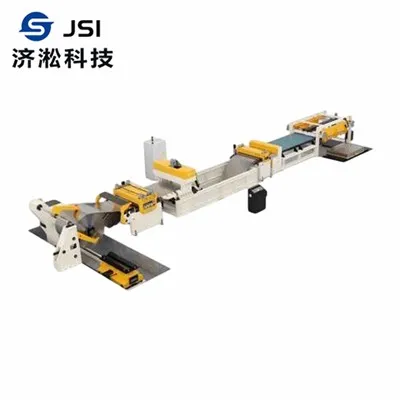
Hey there! I'm a supplier of NC feeders, and I've been in this game for quite a while. One of the most common questions I get from customers is how to make an NC feeder adapt to different production volumes. Well, you're in luck because I'm gonna share some tips and tricks that I've picked up over the years.
Understanding the Basics of NC Feeders
First off, let's talk a bit about what an NC feeder is. An NC feeder, or numerical control feeder, is a machine used in metal stamping and other manufacturing processes to accurately feed materials into a press or other processing equipment. It uses a servo motor and a control system to precisely control the feeding speed, length, and direction of the material.


There are different types of NC feeders available in the market, each designed for specific applications. For example, the NC Servo Roll Feeder is great for continuous feeding of thin to medium - thick sheets. It offers high precision and can work at relatively high speeds, making it suitable for large - volume production.
On the other hand, the Thick Sheet NC Servo Feeder is specifically designed for thicker materials. It has a more robust structure and a powerful servo system to handle the extra weight and resistance of thick sheets. And if you have a need for feeding materials in a zig - zag pattern, the Zigzag Feeder is the way to go.
Adapting to Low Production Volumes
When it comes to low production volumes, flexibility is key. You don't want to invest a lot of time and money in setting up a complex feeding system for just a few parts.
Quick Setup and Changeover
One of the first things you can do is to choose an NC feeder that allows for quick setup and changeover. Look for feeders with user - friendly control panels that let you easily input different feeding parameters. Some modern NC feeders come with pre - programmed settings for common materials and feeding lengths. This means you can switch between different jobs in a matter of minutes, rather than hours.
For example, if you're producing a small batch of custom - shaped parts, you can quickly adjust the feeding length and speed on the control panel to match the requirements of the new job. This reduces downtime and makes the most of your machine's capabilities.
Manual Adjustment Options
In addition to the automated features, having manual adjustment options can be really handy for low - volume production. Sometimes, you might need to make small tweaks to the feeding process to get the perfect result. A feeder with manual adjustment knobs for tension, alignment, and feeding pressure allows you to fine - tune the operation without having to go through a complex programming process.
Cost - Effective Operation
Since low - volume production doesn't require the high - speed and high - capacity capabilities of large - scale operations, you can also look for ways to reduce operating costs. For instance, you can choose a feeder with a lower power consumption motor. This not only saves on electricity bills but also reduces the overall wear and tear on the machine, leading to lower maintenance costs in the long run.
Adapting to Medium Production Volumes
Medium - volume production requires a balance between flexibility and efficiency. You need to be able to handle a variety of jobs while still maintaining a reasonable production rate.
Multi - Functionality
A feeder with multi - functionality is a great choice for medium - volume production. For example, some feeders can be configured to handle both coil materials and cut - to - length sheets. This means you can switch between different types of materials depending on the job requirements without having to invest in multiple machines.
Integration with Other Equipment
Integrating your NC feeder with other equipment in the production line can also improve efficiency. For example, you can connect the feeder to a press or a laser cutting machine. This allows for seamless material transfer between different processes, reducing the need for manual handling and minimizing the risk of errors.
Data Monitoring and Analysis
In medium - volume production, it's important to keep track of your production data. Modern NC feeders often come with data monitoring capabilities. You can track things like feeding speed, length accuracy, and the number of parts produced. Analyzing this data can help you identify areas for improvement, such as reducing feeding errors or increasing the overall production rate.
Adapting to High Production Volumes
High - volume production demands high - speed, high - precision, and continuous operation.
High - Speed Feeding
For high - volume production, you need a feeder that can handle high - speed feeding. Look for feeders with powerful servo motors and advanced control systems that can maintain accurate feeding at high speeds. The NC Servo Roll Feeder is a great option in this regard, as it can achieve high feeding speeds while still ensuring precise material placement.
Continuous Operation
Continuous operation is crucial for high - volume production. You need a feeder that can run for long periods without breakdowns. Regular maintenance is essential, but choosing a feeder with a durable construction and high - quality components can also reduce the risk of unexpected failures.
Automation and Integration
Automation is the name of the game in high - volume production. You can integrate your NC feeder with automatic coil handling systems, robotic loaders, and other automated equipment. This creates a fully automated production line that can run 24/7 with minimal human intervention, increasing productivity and reducing labor costs.
Conclusion
Making an NC feeder adapt to different production volumes is all about choosing the right feeder for the job and optimizing its operation. Whether you're dealing with low, medium, or high - volume production, there are specific strategies you can implement to get the most out of your machine.
If you're in the market for an NC feeder or need more advice on how to make your existing feeder more adaptable, don't hesitate to reach out. We're here to help you find the perfect solution for your production needs. Let's have a chat and see how we can work together to improve your manufacturing process.
References
- Industry knowledge and experience in NC feeder manufacturing and supply.
- Technical specifications and user manuals of various NC feeders.