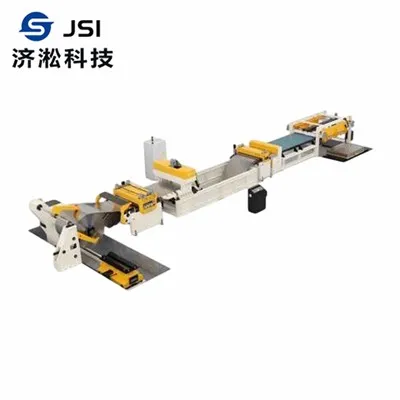
As a supplier of High Speed Slitting Lines, I've encountered numerous challenges and questions from customers, especially regarding how to ensure the synchronization of different components in these high - tech machines. In this blog, I'll share some insights based on my years of experience in the industry.
Understanding the High Speed Slitting Line
Before diving into synchronization, let's quickly go over what a High Speed Slitting Line is. It's a piece of equipment used to cut wide coils of material, like steel or other metals, into narrower strips. You can check out our High Speed Slitting Line for more details on the product.
A typical High Speed Slitting Line consists of several key components: the uncoiler, which holds and feeds the large coil; the slitter head, where the actual cutting happens; and the recoiler, which winds up the slit strips. Other components may include guides, tension controllers, and measuring devices. Each of these parts plays a crucial role, and for the line to work efficiently, they need to be in sync.
Why Synchronization Matters
Synchronization is the heart of a High Speed Slitting Line. When components are synchronized, the line runs smoothly, producing high - quality slit strips. If there's a lack of synchronization, it can lead to a whole bunch of problems. For example, if the uncoiler feeds the material too fast or too slow compared to the slitter head, the cutting quality will be affected. The strips may have uneven edges, or there could be excessive tension or slack in the material, which might cause the strips to break or wrinkle.
In addition, poor synchronization can reduce the overall productivity of the line. The line may need to be stopped frequently for adjustments, which not only wastes time but also increases the cost of production.
Methods to Ensure Synchronization
1. Electronic Control Systems
One of the most effective ways to ensure synchronization is through advanced electronic control systems. These systems use sensors and actuators to monitor and adjust the operation of each component. For instance, sensors can measure the speed, position, and tension of the material at different points along the line. Based on the data collected, the control system can send signals to the motors of the uncoiler, slitter head, and recoiler to adjust their speeds and positions accordingly.
Modern electronic control systems are often programmable, which means you can set different parameters for different types of materials and production requirements. They can also store historical data, allowing you to analyze the performance of the line over time and make further improvements.
2. Mechanical Linkages
In some cases, mechanical linkages can be used to ensure synchronization. For example, gears, belts, and chains can be used to connect different components so that they move in a coordinated manner. While mechanical linkages are not as flexible as electronic control systems, they can be very reliable in certain applications.
However, mechanical linkages require regular maintenance. The gears and belts need to be checked for wear and tear, and proper lubrication is essential to prevent friction and ensure smooth operation.
3. Calibration and Testing
Regular calibration and testing are crucial for maintaining synchronization. Before starting production, the line should be calibrated to ensure that all components are set to the correct speeds and positions. This involves measuring the dimensions of the material, checking the alignment of the slitter blades, and verifying the tension settings.
Periodic testing during production is also necessary. You can run test runs with a small amount of material to check the quality of the slit strips and make any necessary adjustments. If you notice any issues, don't hesitate to stop the line and fix them right away.
Specific Considerations for Different Components
Uncoiler
The uncoiler is responsible for feeding the material into the line. To ensure synchronization, it needs to feed the material at a constant speed that matches the speed of the slitter head. The tension of the material between the uncoiler and the slitter head should also be carefully controlled. If the tension is too high, it can cause the material to stretch; if it's too low, the material may sag and cause cutting problems.
Slitter Head
The slitter head is the core of the line. It needs to cut the material accurately and at the right time. The speed of the slitter blades should be synchronized with the speed of the incoming material. The alignment of the blades is also critical. Even a small misalignment can lead to poor cutting quality.
Recoiler
The recoiler winds up the slit strips. It needs to wind the strips at a speed that matches the speed of the slitter head and the feed rate of the uncoiler. The tension of the material during recoiling should be consistent to ensure that the strips are wound tightly and evenly.
Industry - Specific Considerations
Different industries may have different requirements for synchronization. For example, in the steel industry, where the material is heavy and thick, more powerful motors and robust control systems are needed to ensure synchronization. Our Steel Coil Slitting Line is designed to meet the specific needs of the steel industry.


On the other hand, in the coating material industry, the material is often more delicate. The synchronization needs to be more precise to avoid damaging the coating. Our Coating Material Slitting Line takes these factors into account, using advanced sensors and control algorithms to ensure the highest quality of slitting.
Conclusion
Ensuring the synchronization of different components in a High Speed Slitting Line is a complex but essential task. By using advanced electronic control systems, mechanical linkages, and regular calibration and testing, you can achieve a high level of synchronization, leading to better product quality and higher productivity.
If you're in the market for a High Speed Slitting Line or need advice on improving the synchronization of your existing line, don't hesitate to get in touch. We're here to help you make the most of your investment and ensure the success of your production process.
References
- Industrial Machinery Handbook: Covers general principles of machinery operation and synchronization.
- Journal of Material Processing Technology: Contains research on the latest techniques for slitting line operation and synchronization.