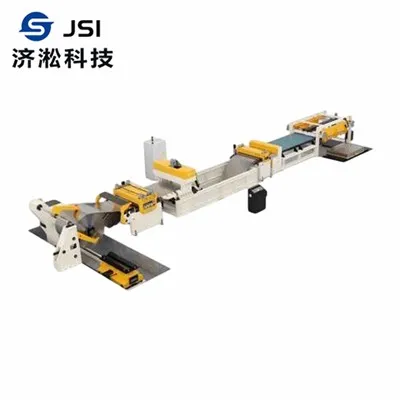
As a trusted supplier of slitting lines, ensuring the parallelism of slitting blades is of utmost importance. Precise blade parallelism directly impacts the quality of the slitting process, the lifespan of the blades, and ultimately, the satisfaction of our customers. In this blog, I will share some key strategies and techniques that we, as a slitting line provider, use to guarantee the parallelism of slitting blades.
Understanding the Importance of Blade Parallelism
Before delving into the methods of ensuring parallelism, it's crucial to understand why it matters so much. When slitting blades are not parallel, it can lead to uneven cutting forces. This uneven distribution of force can cause the blades to wear out prematurely on one side, reducing their overall lifespan. Moreover, non - parallel blades can result in inconsistent slit widths, burrs on the edges of the slit material, and even damage to the material itself. These issues can significantly impact the productivity and profitability of our customers' operations.


Precise Manufacturing and Installation
The first step in ensuring blade parallelism starts at the manufacturing stage. We work with high - quality materials and state - of - the - art manufacturing processes to produce slitting blades with tight tolerances. Our blades are machined to exact specifications, ensuring that their surfaces are flat and parallel within a very narrow margin of error.
During the installation process, we use precision alignment tools. Laser alignment systems are particularly useful in this regard. These systems project a laser beam across the blade assembly, allowing us to measure the alignment of the blades with high accuracy. By adjusting the blade holders and mounting brackets, we can fine - tune the position of the blades until they are perfectly parallel. This meticulous installation process is essential for setting a solid foundation for the slitting operation.
Regular Maintenance and Inspection
Even with precise manufacturing and installation, the parallelism of slitting blades can be affected over time due to factors such as vibration, wear, and thermal expansion. That's why regular maintenance and inspection are crucial.
We recommend that our customers establish a routine maintenance schedule. During these maintenance checks, our technicians carefully examine the blades for signs of wear, damage, or misalignment. We use micrometers and other measuring tools to check the thickness and parallelism of the blades at multiple points. If any deviation from the desired parallelism is detected, we can make the necessary adjustments.
In addition to visual and measurement inspections, we also perform functional tests. Running a test strip of material through the slitting line allows us to observe the quality of the cut. If the edges of the slit material are rough or if the slit widths are inconsistent, it may indicate a problem with blade parallelism.
Environmental Considerations
The operating environment can also have an impact on the parallelism of slitting blades. Temperature and humidity fluctuations can cause the materials of the blade holders and the blades themselves to expand or contract, leading to misalignment.
To mitigate these effects, we recommend that our slitting lines be installed in a controlled environment. Temperature and humidity control systems can help maintain stable conditions within the production area. Additionally, proper ventilation can prevent the build - up of heat and moisture around the blade assembly, reducing the risk of thermal expansion and corrosion.
Operator Training
Well - trained operators are an essential part of ensuring blade parallelism. Our company provides comprehensive training programs for our customers' operators. During these training sessions, operators learn about the importance of blade parallelism, how to perform basic maintenance tasks, and how to recognize signs of misalignment.
Operators are also taught how to use the alignment tools correctly. By empowering operators with the knowledge and skills to monitor and adjust blade parallelism, we can minimize the risk of issues occurring during the slitting process. They can take immediate action if they notice any problems, preventing further damage to the blades and the material.
Upgrading and Retrofitting
As technology advances, there are often new solutions available to improve blade parallelism. We keep our customers informed about the latest advancements in slitting line technology. If an existing slitting line is experiencing issues with blade parallelism, we may recommend upgrading or retrofitting certain components.
For example, upgrading to a more advanced blade holder system with better alignment features can significantly improve the parallelism of the blades. Our team of engineers can assess the specific needs of each customer's slitting line and recommend the most suitable upgrades.
Conclusion
Ensuring the parallelism of slitting blades is a multi - faceted process that involves precise manufacturing, careful installation, regular maintenance, environmental control, operator training, and potential upgrades. By following these strategies, we can help our customers achieve consistent, high - quality slitting results.
If you are in the market for a High Speed Slitting Line, Non - ferrous Metal Slitting Lines, or a Coating Material Slitting Line, and want to ensure the best performance of your slitting operation, we are here to help. Our team of experts can provide you with customized solutions and support to meet your specific requirements. Contact us today to start a discussion about your slitting needs and how we can assist you in achieving optimal blade parallelism.
References
- "Precision Slitting Technology Handbook", Industry Press, 20XX
- "Advanced Manufacturing Processes for Slitting Blades", Journal of Manufacturing Science, Vol. XX, Issue XX, 20XX
- "Environmental Factors Affecting Slitting Operations", International Journal of Industrial Engineering, Vol. XX, Issue XX, 20XX