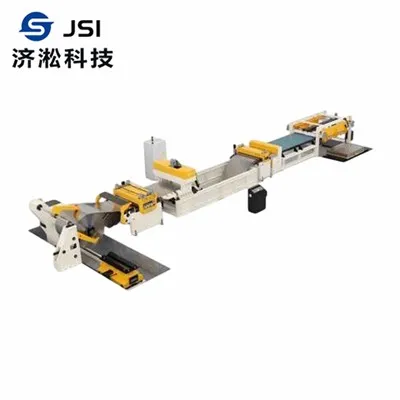
In the fast - paced world of manufacturing, production efficiency is the key to staying ahead of the competition. A high - speed slitting line is a crucial piece of equipment that can significantly enhance the efficiency of various production processes. As a supplier of high - speed slitting lines, I have witnessed firsthand how these lines revolutionize manufacturing operations.
Understanding the Basics of a High - Speed Slitting Line
A slitting line is a set of machinery used to cut wide coils of material into narrower strips. High - speed slitting lines are designed to perform this task at a much faster rate compared to traditional slitting equipment. They are commonly used in industries such as steel, aluminum, paper, plastic, and coating materials.
The main components of a high - speed slitting line typically include an uncoiler, a slitting section, a recoiler, and various control systems. The uncoiler holds the large master coil and feeds the material into the slitting section. Here, circular blades or knives precisely cut the material into the desired widths. After slitting, the recoiler winds up the individual strips into smaller coils.
How High - Speed Slitting Lines Improve Production Efficiency
1. Reduced Processing Time
One of the most significant advantages of a high - speed slitting line is the substantial reduction in processing time. These lines are engineered to operate at extremely high speeds, which means that more material can be slit in a shorter period. For example, in a steel manufacturing plant, a traditional slitting line might be able to process a certain number of coils per day. In contrast, a high - speed slitting line can double or even triple that output.
This reduction in processing time has a domino effect on the entire production cycle. It allows companies to meet tight deadlines, increase their production capacity without adding excessive labor or floor space, and ultimately, respond more quickly to customer demands.
2. Precision and Consistency
High - speed slitting lines are equipped with advanced control systems that ensure precise cutting and consistent strip widths. This precision is essential, especially in industries where the quality of the final product is highly dependent on the accuracy of the slit strips. For instance, in the electronics industry, even a slight deviation in the width of a metal strip used for circuit boards can lead to product failures.
The consistent quality achieved by high - speed slitting lines reduces the need for rework and wastage. This not only saves time and materials but also improves the overall product quality, leading to higher customer satisfaction.
3. Automation and Integration
Modern high - speed slitting lines are highly automated, which reduces the reliance on manual labor. Automation eliminates human errors and allows for continuous operation with minimal interruptions. For example, automated feeding systems can accurately position the coils at the start of the slitting process, while automated tension control systems ensure that the material is slit evenly throughout.
Moreover, high - speed slitting lines can be easily integrated into existing production lines. This seamless integration enables a more streamlined production process, where the slit materials can be directly fed into subsequent manufacturing steps. For example, in a coating material production facility, a Fully Automatic Slitting Line can be integrated with a coating machine, so that the coated material is immediately slit into the required widths.
4. Material Utilization
High - speed slitting lines are designed to optimize material utilization. They can minimize the amount of scrap generated during the slitting process. For instance, advanced nesting algorithms can be used to arrange the strips in the most efficient way on the master coil, reducing the gaps between the strips and maximizing the usable material.
In industries where raw materials are costly, such as the steel and aluminum industries, improved material utilization can lead to significant cost savings. Additionally, it is also environmentally friendly, as it reduces the amount of waste sent to landfills.
Applications of High - Speed Slitting Lines in Different Industries
1. Steel Industry
In the steel industry, high - speed slitting lines are used to process large steel coils into narrower strips for various applications. These strips are then used in the manufacturing of pipes, automotive parts, construction materials, and more. A Steel Coil Slitting Line can handle high - strength steel and heavy - gauge materials at high speeds, improving the overall efficiency of steel production and downstream manufacturing processes.
2. Coating Material Industry
The coating material industry benefits from high - speed slitting lines as well. Materials such as painted metals, laminates, and coated plastics need to be slit into specific widths for further processing. A Coating Material Slitting Line can ensure that the delicate coating on the material is not damaged during the slitting process, while maintaining high - speed operation and precision.


3. Paper and Plastic Industry
In the paper and plastic industries, high - speed slitting lines are used to convert large rolls of paper or plastic films into smaller, more manageable widths. These narrow strips are used in applications such as packaging, labels, and stationery. The high - speed operation of these lines allows for high - volume production, meeting the demands of a fast - moving consumer goods market.
Choosing the Right High - Speed Slitting Line
When choosing a high - speed slitting line for your production needs, several factors should be considered. Firstly, the line should be able to handle the specific materials you work with, including their thickness, width, and physical properties. Secondly, the speed and precision of the line should match your production requirements. Additionally, factors such as ease of operation, maintenance requirements, and after - sales service should also be taken into account.
Our company offers a wide range of high - speed slitting lines that are designed to meet the diverse needs of different industries. Our lines are built with high - quality components and advanced technology, ensuring reliable performance and long - term durability.
Conclusion
In conclusion, a high - speed slitting line is a powerful tool for improving production efficiency in various industries. It reduces processing time, ensures precision and consistency, enables automation and integration, and optimizes material utilization. Whether you are in the steel, coating material, paper, or plastic industry, a high - speed slitting line can help you increase your production capacity, improve product quality, and reduce costs.
If you are interested in enhancing your production efficiency with a high - speed slitting line, we invite you to contact us for further discussion. We are committed to providing you with the best solutions tailored to your specific requirements.
References
- Smith, J. (2018). "Advanced Manufacturing Technologies in the Metal Processing Industry". Industrial Press.
- Johnson, A. (2020). "Automation and Efficiency in Material Slitting Processes". Manufacturing Journal.