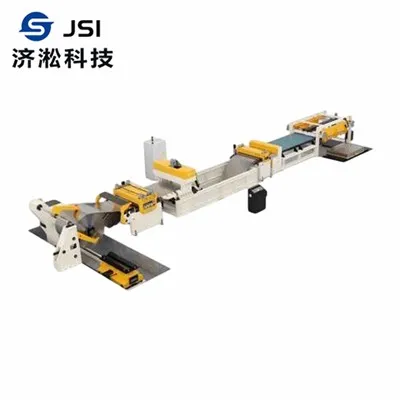
As a supplier of cut to length lines, I often encounter inquiries from manufacturers who are curious about the possibility of integrating a cut to length line into their existing production lines. This is a crucial question that can significantly impact the efficiency, productivity, and overall profitability of a manufacturing operation. In this blog post, I will delve into the factors to consider, the benefits, and the challenges associated with integrating a cut to length line into an existing production setup.
Factors to Consider
Before deciding to integrate a cut to length line, several factors need to be carefully evaluated. First and foremost, the physical space available in the existing production facility is a critical consideration. A cut to length line requires a certain amount of floor space for installation, operation, and maintenance. It's essential to measure the available area and ensure that it can accommodate the new equipment without causing congestion or interfering with other production processes.
Another important factor is the compatibility of the cut to length line with the existing production line's control systems. Modern manufacturing facilities often rely on sophisticated automation and control systems to ensure seamless operation. The new cut to length line should be able to communicate effectively with these systems to enable coordinated production. This may involve integrating the cut to length line's control software with the existing production management system, ensuring that they can exchange data and commands in real - time.
The material handling capabilities of the existing production line also need to be assessed. The cut to length line will be responsible for cutting coils or sheets of metal into specific lengths, and the processed materials need to be smoothly transferred to the next stage of production. This requires evaluating whether the existing conveyors, hoists, or other material handling equipment can handle the output of the cut to length line. If necessary, upgrades or modifications to the material handling systems may be required.
Benefits of Integration
Integrating a cut to length line into an existing production line offers numerous benefits. One of the most significant advantages is increased efficiency. By automating the cutting process, the cut to length line can perform cuts with high precision and consistency, reducing the time and labor required for manual cutting. This leads to faster production cycles and higher output levels.


Improved product quality is another key benefit. The cut to length line uses advanced cutting technologies that can ensure clean, straight cuts with minimal burrs or deformities. This results in higher - quality finished products, which can enhance the company's reputation in the market and potentially lead to increased customer satisfaction and sales.
Cost savings are also a major incentive for integration. While the initial investment in a cut to length line may be significant, the long - term savings in labor, material waste, and production time can be substantial. For example, the precise cutting capabilities of the cut to length line can minimize material waste, reducing the cost of raw materials. Additionally, the increased efficiency can lead to lower energy consumption and reduced maintenance costs over time.
Types of Cut to Length Lines
There are different types of cut to length lines available, each with its own features and capabilities. The Coil Cut To Length Line is designed specifically for processing coils of metal. It can unwind the coil, level the material, and cut it into precise lengths. This type of line is ideal for industries that deal with large volumes of coiled metal, such as automotive manufacturing, construction, and appliance production.
The Multi - function Cutting Line offers more versatility. It can handle a variety of materials, including different thicknesses and types of metals, and can perform multiple cutting operations, such as slitting and cross - cutting. This makes it suitable for manufacturers who need to process a diverse range of products.
The Fully Automatic Cutting Machine Production Line is the most advanced option. It is fully automated from start to finish, with minimal human intervention required. This type of line is capable of high - speed production and can be integrated with other automated processes in the production line, providing a seamless and efficient manufacturing solution.
Challenges of Integration
Despite the many benefits, integrating a cut to length line into an existing production line is not without its challenges. One of the main difficulties is the disruption to the existing production process during the installation and commissioning phase. The production line may need to be shut down for a period of time to install the new equipment, which can result in lost production and revenue. To minimize this impact, careful planning and scheduling are essential. It's important to work closely with the production team to develop a detailed installation plan that causes the least amount of disruption.
Technical challenges can also arise during the integration process. Ensuring that the cut to length line is compatible with the existing control systems and material handling equipment may require the expertise of engineers and technicians. There may be issues with software integration, electrical compatibility, or mechanical alignment that need to be resolved.
Training the existing workforce to operate and maintain the new cut to length line is another challenge. The new equipment may have different operating procedures and safety requirements compared to the existing production line. Adequate training programs need to be developed to ensure that the employees are proficient in using the cut to length line and can troubleshoot any minor issues that may arise.
Conclusion
In conclusion, integrating a cut to length line into an existing production line is a complex but achievable task. By carefully considering the factors such as physical space, control system compatibility, and material handling capabilities, manufacturers can make an informed decision about whether integration is the right choice for their operations. The benefits of increased efficiency, improved product quality, and cost savings make it an attractive option for many companies.
If you are considering integrating a cut to length line into your existing production line, I encourage you to reach out to us. Our team of experts can provide you with detailed information about our range of cut to length lines, assess your specific requirements, and help you develop a customized integration plan. We are committed to providing high - quality equipment and excellent customer service to ensure the success of your integration project.
References
- Manufacturing Automation Handbook: Covers general principles of integrating new equipment into existing production lines.
- Metal Processing Technology Journal: Contains case studies and research on the use of cut to length lines in various industries.
- Industrial Engineering Textbooks: Provide in - depth knowledge on factors such as space utilization, material handling, and control system integration.