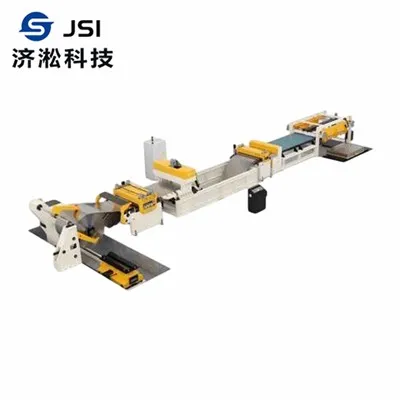
Hey there! As a supplier of NC Feeder Machines, I often get asked about the types of materials these machines can handle. So, I thought I'd share some insights on this topic.
First off, let's talk about what an NC Feeder Machine is. It's a crucial piece of equipment in the metalworking industry, used to feed materials accurately and efficiently into other machinery for further processing. The "NC" stands for Numerical Control, which means the machine can be programmed to perform specific tasks with high precision.
Metals
One of the most common materials that NC Feeder Machines can handle is metal. Metals come in various forms and thicknesses, and these machines are designed to accommodate a wide range.
Steel
Steel is a staple in many manufacturing processes. Whether it's mild steel, stainless steel, or high - strength steel, NC Feeder Machines can deal with it. Mild steel is relatively easy to work with, and our machines can smoothly feed thin sheets of mild steel, which are commonly used in automotive body parts, electronic enclosures, and household appliances. For example, when making the chassis of a computer, the thin steel sheets need to be precisely fed into the stamping machine, and our Thin Sheet NC Servo Feeder does an excellent job.
Stainless steel, on the other hand, is more corrosion - resistant and is often used in food processing equipment, medical devices, and architectural applications. Our NC Feeder Machines can handle different grades of stainless steel, from the thinner gauges used in kitchenware to the thicker ones for structural components.
High - strength steel is used in industries where durability and strength are of utmost importance, such as the aerospace and automotive industries for parts like engine mounts and suspension components. Our machines can feed high - strength steel sheets accurately, ensuring that the subsequent manufacturing processes run smoothly.
Aluminum
Aluminum is another popular metal in the manufacturing world. It's lightweight, corrosion - resistant, and has good electrical conductivity. Aluminum sheets are widely used in the aerospace, automotive, and packaging industries. Our NC Feeder Machines can handle both thin and thick aluminum sheets. For instance, in the aerospace industry, thin aluminum sheets are used to make aircraft skins, and our machines can precisely feed these sheets for the machining and forming processes. In the automotive industry, thicker aluminum sheets may be used for engine blocks or body frames, and our NC Feeder Machine can handle them without a hitch.
Copper
Copper is known for its excellent electrical conductivity and is commonly used in the electrical and electronics industries. Copper sheets and strips are used to make printed circuit boards (PCBs), electrical connectors, and transformers. Our NC Feeder Machines can accurately feed copper materials, whether they are in the form of thin foils for PCBs or thicker sheets for electrical enclosures.
Non - Metals
NC Feeder Machines aren't just limited to metals. They can also handle a variety of non - metal materials.
Plastics
Plastic sheets and films are used in many industries, including packaging, consumer goods, and electronics. Our machines can handle different types of plastics, such as polyethylene, polypropylene, and polycarbonate. In the packaging industry, thin plastic films are used to wrap products, and our NC Feeder Machines can feed these films accurately for the sealing and cutting processes. Polycarbonate sheets, which are strong and transparent, are used in applications like safety shields and optical lenses. Our machines can feed these sheets for the subsequent machining and finishing operations.
Paper and Cardboard
In the printing and packaging industries, paper and cardboard are essential materials. Our NC Feeder Machines can handle different weights and sizes of paper and cardboard. For example, in a printing press, our machines can feed large sheets of paper accurately for the printing process. In the packaging industry, cardboard sheets are fed into die - cutting machines to make boxes, and our NC Servo Roll Feeder can ensure a smooth and precise feeding operation.
Factors Affecting Material Handling
When it comes to handling different materials, there are a few factors that our NC Feeder Machines take into account.
Thickness
The thickness of the material is a crucial factor. Thinner materials require more delicate handling to prevent wrinkling or tearing. Our machines are equipped with adjustable feeding mechanisms that can be fine - tuned according to the thickness of the material. For very thin materials, we have special features that ensure gentle feeding, while for thicker materials, the machine can provide enough force to move them through the system.


Surface Finish
The surface finish of the material can also affect the feeding process. Materials with a smooth surface may require different feeding methods compared to those with a rough surface. Our machines can be adjusted to accommodate different surface finishes, ensuring that the material is fed without slipping or getting damaged.
Coating
Some materials may have a coating on their surface, such as a protective coating on metal sheets or a printing coating on paper. Our NC Feeder Machines are designed to handle coated materials without damaging the coating. We use special feeding rollers and guides that are gentle on the coated surface, ensuring that the coating remains intact during the feeding process.
Why Choose Our NC Feeder Machines
Our NC Feeder Machines are designed with the latest technology and high - quality components. They offer high precision, reliability, and flexibility. Whether you're dealing with thin sheets or thick plates, metals or non - metals, our machines can handle the job. We also provide excellent after - sales service, including maintenance, repair, and technical support.
If you're in the market for an NC Feeder Machine and have specific material handling requirements, don't hesitate to get in touch. We can help you choose the right machine for your needs and ensure that it integrates seamlessly into your production line. Contact us to start a discussion about your procurement needs and see how our machines can improve your manufacturing processes.
References
- Metal Forming Handbook: A Guide to Pressworking and Related Processes
- Plastics Processing Technology and Applications
- Printing and Packaging Industry Standards and Best Practices