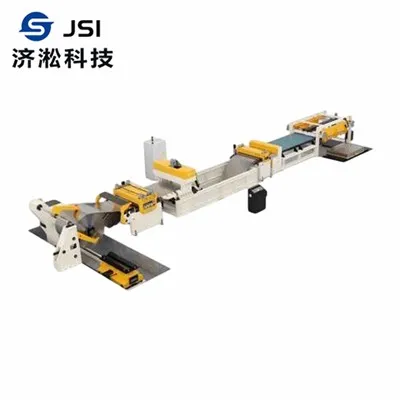
In the manufacturing industry, the quality of thin sheet metal processing is of utmost importance. A thin sheet straightener plays a crucial role in ensuring the flatness and quality of thin sheets. However, when operating in high - humidity environments, the straightening performance of a thin sheet straightener can be significantly affected. As a supplier of Thin Sheet Straightener, we have conducted in - depth research on this issue to provide our customers with the best solutions.
The Working Principle of a Thin Sheet Straightener
Before delving into the straightening performance in high - humidity environments, it is essential to understand how a thin sheet straightener works. A thin sheet straightener typically consists of a series of rollers arranged in an alternating pattern. When a thin sheet passes through these rollers, the rollers apply pressure to the sheet, correcting any curvature or unevenness. The adjustment of the roller gap and pressure is crucial for achieving the desired straightening effect.
The straightening process can be divided into several steps. First, the thin sheet is fed into the straightener. Then, the rollers gradually bend and unbend the sheet, redistributing the internal stress within the sheet. Finally, the sheet emerges from the straightener with improved flatness. The Straightener - top Flip Up design in some straighteners allows for easy access to the rollers for maintenance and adjustment, which is very convenient for operators.
Factors Affecting Straightening Performance in High - Humidity Environments
Rust and Corrosion
One of the most significant problems in high - humidity environments is rust and corrosion. Moisture in the air can react with the metal components of the straightener, such as the rollers and frames. Rust can form on the surface of the rollers, which will directly affect the contact between the rollers and the thin sheet. The rough surface of the rusted rollers may cause scratches on the thin sheet, and the uneven pressure distribution due to rust can lead to poor straightening results.
Moreover, corrosion can weaken the structural integrity of the straightener. For example, if the frame of the straightener is corroded, it may not be able to provide stable support for the rollers, resulting in misalignment of the rollers and inaccurate straightening.
Changes in Material Properties
High humidity can also cause changes in the material properties of the thin sheet itself. Some metals are more susceptible to moisture absorption. When a thin sheet absorbs moisture, its mechanical properties, such as hardness and elasticity, may change. A change in hardness can affect the amount of pressure required for straightening. If the sheet becomes softer due to moisture absorption, it may be over - straightened under the normal pressure settings of the straightener, leading to excessive bending or distortion.
On the other hand, changes in elasticity can make it more difficult to predict the final shape of the sheet after straightening. The sheet may not return to its expected flat state as it would in a normal environment, causing quality issues in the final product.


Lubrication and Friction
Lubrication is essential for the smooth operation of a thin sheet straightener. In high - humidity environments, the lubricants used in the straightener can be affected. Moisture can mix with the lubricant, reducing its effectiveness. A decrease in lubrication can increase the friction between the rollers and the thin sheet. Higher friction not only requires more power to drive the straightener but also increases the risk of surface damage to the thin sheet.
Excessive friction can also cause the rollers to heat up, which may further affect their performance. The thermal expansion of the rollers due to heat can change the roller gap, leading to inconsistent straightening results.
Strategies to Improve Straightening Performance in High - Humidity Environments
Anti - Rust and Corrosion Protection
To prevent rust and corrosion, we recommend using straighteners with anti - rust coatings. These coatings act as a barrier between the metal components and the moist air. Regular maintenance is also crucial. Operators should clean the straightener regularly to remove any moisture and dirt that may accumulate on the surface. Applying anti - rust agents periodically can further enhance the protection.
In addition, storing the straightener in a dry environment when not in use can significantly reduce the risk of rust and corrosion. If possible, a dehumidifier can be installed in the storage area to maintain a low - humidity environment.
Material Selection and Pre - treatment
When dealing with thin sheets in high - humidity environments, choosing materials that are more resistant to moisture is important. Some alloys have better corrosion resistance than pure metals. For example, stainless steel is a popular choice for thin sheets in humid conditions.
Pre - treatment of the thin sheets can also be beneficial. This may include surface treatments such as passivation, which can form a protective layer on the surface of the sheet, reducing its susceptibility to moisture absorption.
Lubrication Management
Proper lubrication management is essential to ensure the smooth operation of the straightener in high - humidity environments. Using high - quality lubricants that are resistant to moisture is recommended. These lubricants should be able to maintain their viscosity and lubricating properties even in the presence of moisture.
Regularly checking and replenishing the lubricant is also necessary. Operators should monitor the lubrication level and the condition of the lubricant. If the lubricant shows signs of contamination or degradation, it should be replaced immediately.
Case Studies
We have worked with several customers in high - humidity regions. One of our customers, a metal processing factory located near the coast, was facing significant problems with the straightening of thin aluminum sheets. The high humidity in the coastal area was causing rust on the rollers of their previous straightener, resulting in poor straightening quality and frequent scratches on the sheets.
After replacing their old straightener with our Thin Sheet Straightener, which is equipped with anti - rust coatings and a high - performance lubrication system, the situation improved significantly. The new straightener was able to maintain stable straightening performance even in the high - humidity environment. The surface quality of the straightened sheets was greatly enhanced, and the production efficiency also increased due to fewer breakdowns caused by rust and corrosion.
Another customer in a tropical region was using a Coil Stock Straightener to process thin steel coils. They were experiencing issues with inconsistent straightening results due to the changes in the material properties of the steel coils caused by high humidity. By following our advice on material pre - treatment and lubrication management, they were able to achieve more consistent straightening quality and reduce the rejection rate of their products.
Conclusion
The straightening performance of a thin sheet straightener in high - humidity environments is affected by various factors, including rust and corrosion, changes in material properties, and lubrication issues. However, with proper strategies such as anti - rust protection, material selection and pre - treatment, and lubrication management, these challenges can be overcome.
As a leading supplier of thin sheet straighteners, we are committed to providing our customers with high - quality products and solutions to meet their needs in different environments. Our Thin Sheet Straightener is designed to withstand the challenges of high - humidity environments and deliver excellent straightening performance.
If you are facing problems with thin sheet straightening in high - humidity environments or are looking for a reliable straightener for your production line, we invite you to contact us for a detailed discussion. Our team of experts will be happy to assist you in finding the best solution for your specific requirements.
References
- Smith, J. (2018). Metal Forming and Straightening in Harsh Environments. Journal of Manufacturing Technology, 25(3), 123 - 135.
- Johnson, M. (2019). The Impact of Humidity on Metal Processing Equipment. International Journal of Industrial Engineering, 32(2), 89 - 98.
- Brown, A. (2020). Strategies for Improving Straightening Performance in High - Humidity Conditions. Manufacturing Review, 45(4), 201 - 210.