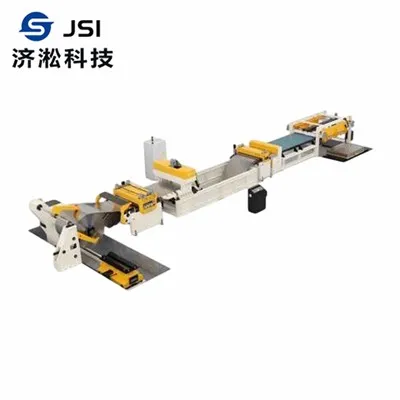
As a supplier of Steel Coil Slitting Lines, I've witnessed firsthand how the hardness of steel coils can significantly impact the slitting process. In this blog, I'll delve into the various aspects of this relationship, exploring the effects of different hardness levels on the slitting operation, the quality of the final product, and the overall efficiency of the production line.
Understanding Steel Coil Hardness
Steel coil hardness is a critical property that determines its resistance to deformation, wear, and cutting. It is typically measured using the Rockwell, Brinell, or Vickers hardness scales, each providing a numerical value that reflects the material's hardness. The hardness of a steel coil is influenced by several factors, including its chemical composition, heat treatment, and cold working.
Carbon content is one of the primary factors affecting steel hardness. Higher carbon steels generally have greater hardness and strength but may be more brittle. Alloying elements such as chromium, nickel, and molybdenum can also enhance hardness and other mechanical properties. Heat treatment processes, such as quenching and tempering, can further modify the hardness of the steel by altering its microstructure.
Impact on Slitting Tools
The hardness of the steel coil has a direct impact on the performance and lifespan of the slitting tools. When slitting a hard steel coil, the cutting blades are subjected to higher forces and wear rates compared to softer materials. This can lead to premature blade dulling, chipping, and breakage, resulting in increased tooling costs and downtime for blade replacement.
For example, in a slitting operation involving a high - hardness steel alloy, the cutting edges of the blades may experience rapid wear due to the abrasive nature of the material. The increased friction and stress can cause the blade material to deform and lose its sharpness, leading to poor cutting quality. To mitigate these issues, special high - speed steel or carbide blades are often used for slitting hard steel coils. These materials have higher hardness and wear resistance, allowing them to withstand the rigors of the cutting process for a longer period.
Cutting Quality
The hardness of the steel coil also affects the quality of the cut edges. In general, softer steel coils are easier to slit, resulting in cleaner, smoother cut edges with minimal burrs and deformation. On the other hand, hard steel coils can be more challenging to cut, and the resulting edges may be rougher, with more burrs and potential for micro - cracking.
When slitting a hard steel coil, the high cutting forces can cause the material to deform plastically around the cutting edges, leading to the formation of burrs. Additionally, the brittleness of hard steels may result in micro - cracking at the cut edges, which can compromise the integrity of the final product. To achieve high - quality cut edges when slitting hard steel coils, precise control of the cutting parameters, such as blade clearance, cutting speed, and feed rate, is essential.
Slitting Speed and Efficiency
The hardness of the steel coil can significantly impact the slitting speed and overall efficiency of the slitting line. Harder steel coils require more energy to cut, which often means that the slitting speed must be reduced to prevent excessive tool wear and maintain cutting quality. This reduction in speed can lead to longer production times and lower throughput.
For instance, if a slitting line is designed to operate at a certain speed for soft steel coils, when switching to hard steel coils, the speed may need to be decreased by 30 - 50% to ensure proper cutting. This slowdown can have a significant impact on the productivity of the manufacturing process, especially in high - volume production environments.
Material Waste
Another aspect affected by the hardness of the steel coil is the amount of material waste generated during the slitting process. When slitting hard steel coils, the increased wear on the cutting tools can lead to less precise cuts, resulting in wider kerfs (the width of the material removed by the cutting blade). This wider kerf means that more material is wasted during the slitting process, increasing the overall cost of production.


In addition, the potential for micro - cracking and burr formation in hard steel coils can also lead to more scrap material. If the cut edges do not meet the required quality standards, the slit strips may need to be discarded, further contributing to material waste.
Solutions and Considerations
To address the challenges posed by the hardness of steel coils in the slitting process, several solutions can be implemented. Firstly, proper tool selection is crucial. As mentioned earlier, using high - quality, wear - resistant cutting blades can significantly improve the performance and lifespan of the slitting tools. Additionally, regular blade maintenance and sharpening can help to ensure consistent cutting quality.
Secondly, optimizing the cutting parameters is essential. By adjusting the blade clearance, cutting speed, and feed rate according to the hardness of the steel coil, it is possible to achieve better cutting results with less tool wear and material waste. Advanced slitting lines are often equipped with automated control systems that can adjust these parameters in real - time based on the material properties.
Finally, investing in a high - quality slitting line is vital. A well - designed Steel Coil Slitting Line with advanced features such as precision blade positioning, high - speed drives, and reliable control systems can handle a wide range of steel coil hardnesses more effectively. Some lines also offer the option to switch between different cutting modes to accommodate different materials.
Other Types of Slitting Lines
In addition to the standard steel coil slitting lines, there are other types of slitting lines available that can be used for different materials. For non - ferrous metals, a Non - ferrous Metal Slitting Lines is specifically designed to handle materials such as aluminum, copper, and brass. These materials have different hardness and properties compared to steel, and the slitting lines are optimized accordingly.
For high - volume and highly automated production, a Fully Automatic Slitting Line can be a great choice. These lines are equipped with advanced sensors and control systems that can perform tasks such as coil loading, uncoiling, slitting, and recoiling with minimal human intervention, improving efficiency and reducing labor costs.
Conclusion
The hardness of the steel coil has a profound impact on the slitting process, affecting everything from the performance of the slitting tools to the quality of the final product and the overall efficiency of the production line. As a supplier of Steel Coil Slitting Lines, we understand the importance of providing solutions that can handle a wide range of steel coil hardnesses. By carefully considering the material properties, selecting the right tools, optimizing the cutting parameters, and investing in high - quality equipment, manufacturers can overcome the challenges associated with slitting hard steel coils and achieve optimal results.
If you are in the market for a slitting line or have questions about how to handle different steel coil hardnesses in your slitting process, we would be more than happy to assist you. Feel free to reach out to us to discuss your specific requirements and explore the best solutions for your business.
References
- "Metal Cutting Principles" by Paul A. Tool, published by Industrial Press Inc.
- "Materials Science and Engineering: An Introduction" by William D. Callister Jr. and David G. Rethwisch, published by Wiley.
- Technical literature from slitting line manufacturers.