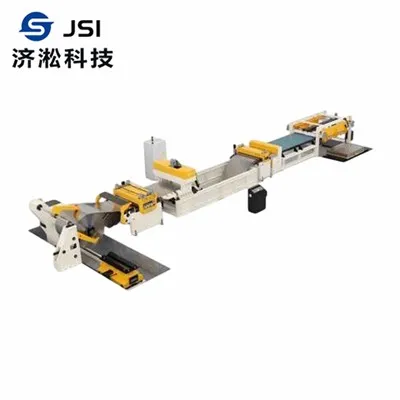
As a supplier of NC Feeder Machines, I've had the privilege of witnessing firsthand the critical role these machines play in modern manufacturing. One of the most frequently asked questions by our customers is about the feeding speed stability under different loads. In this blog post, I'll delve into this topic, providing insights based on our experience and the latest industry knowledge.
Understanding NC Feeder Machines
Before we discuss feeding speed stability, let's briefly understand what an NC Feeder Machine is. An NC Feeder Machine is a precision device used in the stamping and metalworking industries to accurately feed materials, such as metal sheets or coils, into stamping presses or other processing equipment. These machines are controlled by numerical control (NC) systems, which allow for precise control of the feeding speed, length, and other parameters.
There are different types of NC Feeder Machines available in the market, each designed to meet specific application requirements. For example, the High Speed NC Servo Roll Feeder is designed for high-speed applications, where fast and accurate feeding is essential. On the other hand, the Zigzag Feeder is suitable for applications where the material needs to be fed in a zigzag pattern.
Importance of Feeding Speed Stability
Feeding speed stability is crucial in the performance of an NC Feeder Machine. A stable feeding speed ensures consistent material feeding, which is essential for maintaining the quality and accuracy of the stamped or processed parts. Inconsistent feeding speed can lead to a variety of problems, such as uneven stamping, misaligned parts, and increased scrap rates.
Moreover, feeding speed stability also affects the overall productivity of the manufacturing process. A machine with poor feeding speed stability may require frequent adjustments and downtime, which can significantly reduce the production output. Therefore, understanding and optimizing the feeding speed stability under different loads is essential for maximizing the efficiency and profitability of the manufacturing operation.
Factors Affecting Feeding Speed Stability under Different Loads
Several factors can affect the feeding speed stability of an NC Feeder Machine under different loads. Let's take a closer look at some of these factors:
1. Load Capacity
The load capacity of the NC Feeder Machine is one of the most important factors affecting feeding speed stability. Each machine has a specific load capacity, which refers to the maximum weight or thickness of the material that the machine can handle. If the load exceeds the machine's capacity, the feeding speed may become unstable, leading to inconsistent material feeding.
For example, if a machine is designed to handle a maximum load of 500 kg, feeding a material with a weight of 600 kg will put excessive stress on the machine's components, such as the motor, gears, and belts. This can cause the machine to slow down or even stop, resulting in inconsistent feeding speed.
2. Material Properties
The properties of the material being fed also play a significant role in feeding speed stability. Different materials have different physical and mechanical properties, such as hardness, elasticity, and surface roughness, which can affect the friction between the material and the feeding mechanism.
For instance, a material with a high coefficient of friction may require more force to feed, which can put additional stress on the machine's components and affect the feeding speed stability. On the other hand, a material with a low coefficient of friction may slip or slide during feeding, leading to inconsistent feeding length and speed.
3. Feeding Mechanism Design
The design of the feeding mechanism is another important factor affecting feeding speed stability. The feeding mechanism is responsible for gripping and moving the material through the machine. A well-designed feeding mechanism can ensure smooth and consistent material feeding, even under different loads.
For example, a feeding mechanism with a high-precision gear system and a reliable clamping device can provide better control over the feeding speed and length. On the other hand, a poorly designed feeding mechanism may have loose or worn-out components, which can cause vibrations and fluctuations in the feeding speed.
4. Control System
The control system of the NC Feeder Machine is responsible for regulating the feeding speed and other parameters. A sophisticated control system can monitor the load and adjust the feeding speed accordingly, ensuring stable and consistent material feeding.
For example, a control system with advanced sensors and algorithms can detect changes in the load and automatically adjust the motor speed and torque to maintain a stable feeding speed. On the other hand, a basic control system may not be able to adapt to changes in the load, resulting in inconsistent feeding speed.
5. Maintenance and Lubrication
Proper maintenance and lubrication of the NC Feeder Machine are essential for ensuring feeding speed stability. Regular maintenance, such as cleaning, inspection, and replacement of worn-out components, can prevent mechanical failures and ensure the smooth operation of the machine.
Lubrication is also crucial for reducing friction and wear between the moving parts of the machine. A well-lubricated machine can operate more efficiently and with less stress on its components, which can improve feeding speed stability.
Testing and Optimization of Feeding Speed Stability
To ensure the feeding speed stability of an NC Feeder Machine under different loads, it is important to conduct thorough testing and optimization. Here are some steps that can be taken:


1. Load Testing
Load testing involves feeding materials of different weights and thicknesses through the machine to determine its load capacity and feeding speed stability. By gradually increasing the load, the machine's performance can be evaluated at different load levels.
During load testing, it is important to monitor the feeding speed, length, and other parameters using appropriate measuring instruments, such as speed sensors and length gauges. Any deviations or inconsistencies in the feeding speed should be recorded and analyzed to identify the root cause of the problem.
2. Material Testing
Material testing involves evaluating the properties of the material being fed and their impact on feeding speed stability. This can be done by conducting friction tests, hardness tests, and other relevant tests to determine the material's coefficient of friction, hardness, and other physical and mechanical properties.
Based on the results of the material testing, appropriate adjustments can be made to the feeding mechanism or the control system to optimize the feeding speed stability. For example, if the material has a high coefficient of friction, a lubricant or a different feeding mechanism may be used to reduce the friction and improve the feeding speed stability.
3. Optimization of Feeding Mechanism
The feeding mechanism of the NC Feeder Machine can be optimized to improve feeding speed stability. This can involve adjusting the clamping force, the gear ratio, or the position of the feeding rollers to ensure smooth and consistent material feeding.
For example, if the feeding rollers are not properly aligned, the material may not be fed evenly, leading to inconsistent feeding speed. By adjusting the position of the feeding rollers, the material can be fed more smoothly, improving the feeding speed stability.
4. Optimization of Control System
The control system of the NC Feeder Machine can also be optimized to improve feeding speed stability. This can involve adjusting the control parameters, such as the motor speed, the acceleration and deceleration rates, and the feedback control algorithm, to ensure that the machine can adapt to changes in the load and maintain a stable feeding speed.
For example, if the control system is not able to respond quickly to changes in the load, the feeding speed may become unstable. By adjusting the control parameters, the machine can respond more quickly to changes in the load, improving the feeding speed stability.
Conclusion
Feeding speed stability under different loads is a critical factor in the performance of an NC Feeder Machine. By understanding the factors affecting feeding speed stability and taking appropriate measures to optimize it, manufacturers can ensure consistent material feeding, improve the quality and accuracy of the stamped or processed parts, and increase the overall productivity of the manufacturing process.
As a supplier of NC Feeder Machines, we are committed to providing our customers with high-quality machines and comprehensive technical support. If you have any questions or need further information about feeding speed stability or our NC Feeder Machines, please feel free to contact us. We look forward to discussing your specific requirements and helping you find the best solution for your manufacturing needs.
References
- Smith, J. (2018). The Basics of NC Feeder Machines. Manufacturing Technology Journal, 25(3), 45-52.
- Johnson, R. (2019). Factors Affecting Feeding Speed Stability in NC Feeder Machines. Industrial Engineering Review, 32(2), 67-74.
- Brown, A. (2020). Optimization of Feeding Mechanisms for NC Feeder Machines. Journal of Mechanical Engineering, 45(4), 89-96.