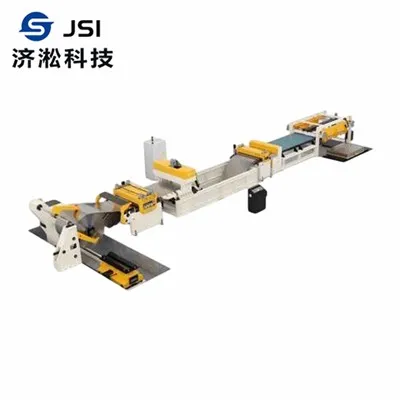
As a seasoned supplier in the field of decoilers, I've witnessed firsthand the rapid evolution of energy - saving initiatives in this industry. Energy efficiency isn't just a buzzword; it's a crucial aspect that benefits both the environment and our clients' bottom lines. In this blog, I'll delve into various energy - saving measures for decoilers, sharing insights from years of experience and industry best practices.
Understanding the Decoiler and Its Energy Consumption
Before we jump into the energy - saving measures, let's briefly understand what a decoiler is. A decoiler is a vital piece of equipment used in metal processing industries. It unwinds coils of materials such as steel, aluminum, and copper, making them ready for further processing like stamping, cutting, or forming.
Decoilers come in different types, including Motorized Decoiler and Hydraulic Decoiler Machine. The energy consumption of a decoiler mainly comes from its motor (in motorized decoilers) or the hydraulic system (in hydraulic decoilers). The motor needs to provide enough torque to unwind the heavy coils, and the hydraulic system requires power to operate the cylinders and pumps.
Energy - Saving Measure 1: High - Efficiency Motors
One of the most effective ways to save energy in a decoiler is by using high - efficiency motors. Traditional motors often have lower efficiency, which means they convert a significant portion of the electrical energy into heat instead of mechanical energy. High - efficiency motors, on the other hand, are designed to minimize these losses.
For instance, an IE3 - class motor can have an efficiency of up to 96%, compared to around 90% for a standard motor. This seemingly small difference can lead to substantial energy savings over time, especially when the decoiler is in continuous operation. When selecting a motor for a decoiler, it's essential to consider factors such as the load requirements, speed control, and duty cycle. A well - matched high - efficiency motor can not only save energy but also reduce maintenance costs and extend the lifespan of the decoiler.
Energy - Saving Measure 2: Variable Frequency Drives (VFDs)
Variable Frequency Drives are another powerful tool for energy conservation in decoilers. A VFD allows the motor to operate at different speeds according to the actual load requirements. In a decoiler, the load varies depending on the diameter of the coil. When the coil diameter is large, the motor needs to provide more torque to unwind the material. As the coil diameter decreases, the load on the motor also reduces.
Without a VFD, the motor would run at a constant speed, consuming more energy than necessary. With a VFD, the motor speed can be adjusted in real - time, matching the load precisely. This results in significant energy savings, especially in applications where the decoiler operates with coils of different sizes. Additionally, VFDs can also provide soft - start and soft - stop functions, which reduce mechanical stress on the decoiler components and further enhance energy efficiency.
Energy - Saving Measure 3: Hydraulic System Optimization
For Hydraulic Decoiler Machine, optimizing the hydraulic system is crucial for energy savings. One of the main energy losses in a hydraulic system comes from the pressure drop across valves and pipes. By using high - quality valves with low pressure drops and properly sized pipes, we can reduce these losses.
Another important aspect is the use of variable - displacement pumps. Unlike fixed - displacement pumps that operate at a constant flow rate, variable - displacement pumps can adjust the flow rate according to the system's demand. This means that when the decoiler doesn't require a large amount of hydraulic fluid, the pump can reduce its output, saving energy. Regular maintenance of the hydraulic system, including checking for leaks and ensuring proper oil levels, is also essential to maintain its energy efficiency.
Energy - Saving Measure 4: Intelligent Control Systems
Intelligent control systems can play a significant role in energy management for decoilers. These systems use sensors and algorithms to monitor various parameters such as coil diameter, material tension, and motor load. Based on this information, the control system can automatically adjust the decoiler's operation to optimize energy consumption.
For example, an intelligent control system can detect when the decoiler is idle and put it into a low - power standby mode. It can also adjust the speed and torque of the motor or the flow rate of the hydraulic system in real - time to match the actual processing requirements. By integrating an intelligent control system with the decoiler, we can achieve a high level of energy efficiency and process automation.
Energy - Saving Measure 5: Coil Design and Handling
The design and handling of the coils themselves can also have an impact on the energy consumption of the decoiler. Coils with a more uniform diameter and better - wound structure require less energy to unwind. When loading the coils onto the decoiler, it's important to ensure proper alignment and tension adjustment.
If the coil is misaligned or has excessive tension, the decoiler will have to work harder to unwind the material, consuming more energy. Additionally, using proper coil supports and guides can reduce friction and make the unwinding process smoother, further saving energy.
Energy - Saving Measure 6: System Integration and Energy Recovery
In some industrial settings, decoilers are part of a larger production line. By integrating the decoiler with other equipment in the line, we can achieve better energy management. For example, the energy generated during the deceleration of the decoiler motor can be recovered and reused in other parts of the production process.
Some advanced systems use regenerative braking technology to convert the kinetic energy of the motor into electrical energy, which can then be fed back into the power grid or used to power other equipment. This not only saves energy but also reduces the overall energy demand of the production line.


Conclusion and Call to Action
In conclusion, there are numerous energy - saving measures available for decoilers, ranging from high - efficiency motors and VFDs to intelligent control systems and coil design optimization. By implementing these measures, our clients can significantly reduce their energy costs, improve the environmental performance of their operations, and enhance the overall efficiency of their production lines.
As a leading decoiler supplier, we are committed to providing our clients with the most energy - efficient solutions. Our Motorized Decoiler and Hydraulic Decoiler Machine are designed with the latest energy - saving technologies. We also offer Recoiler Machine that can be integrated into your production line for seamless operation.
If you're interested in learning more about our energy - efficient decoilers or need advice on energy - saving measures for your existing equipment, please don't hesitate to contact us. We look forward to discussing your requirements and helping you achieve your energy - saving goals.
References
- "Energy - Efficient Motor Systems: A Guide for Industry", International Energy Agency
- "Hydraulic System Design and Optimization", Fluid Power Journal
- "Intelligent Control Systems in Manufacturing", IEEE Transactions on Industrial Electronics