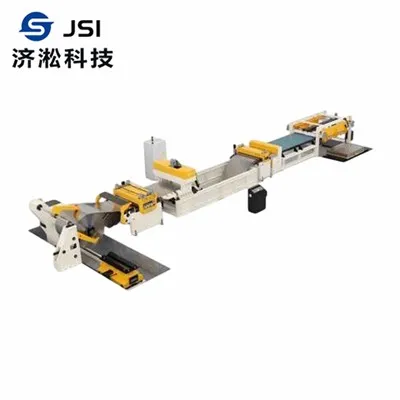
Yo! As a supplier of thin sheet straighteners, I often get asked about the difference between a thin sheet straightener and a regular straightener. So, I thought I'd write this blog to clear things up.
Let's start with the basics. A straightener, in general, is a machine used to flatten and straighten metal sheets or strips that have become bent, warped, or curled during manufacturing, storage, or transportation. It's a crucial piece of equipment in industries like automotive, aerospace, and metal fabrication.
What is a Regular Straightener?
A regular straightener is a versatile machine designed to handle a wide range of sheet thicknesses. It's typically used for medium to thick metal sheets. These machines usually have larger rollers and more robust construction to handle the higher forces required to straighten thicker materials.
Regular straighteners are great for heavy-duty applications. They can straighten sheets that are too thick for a thin sheet straightener to handle. For example, in the construction industry, regular straighteners are used to straighten thick steel plates that will be used in building structures.


One of the key features of a regular straightener is its ability to apply high pressure to the metal sheets. This is achieved through a series of rollers that are arranged in a specific pattern. The rollers exert pressure on the sheet from different angles, gradually straightening it out.
However, regular straighteners also have their limitations. They are often large and heavy, which means they require a significant amount of space and can be difficult to move around. They also consume more energy compared to thin sheet straighteners.
What is a Thin Sheet Straightener?
Now, let's talk about thin sheet straighteners. As the name suggests, these machines are specifically designed to straighten thin metal sheets. They are commonly used in industries where precision is key, such as electronics, jewelry making, and the production of small metal components.
Thin sheet straighteners have smaller rollers and a more delicate design compared to regular straighteners. This allows them to handle thin sheets without causing damage. They can straighten sheets as thin as a few millimeters, which is something that a regular straightener might struggle with.
One of the main advantages of a thin sheet straightener is its precision. These machines are able to straighten thin sheets with a high degree of accuracy, ensuring that the final product meets the required specifications. They also have a faster processing speed, which makes them ideal for high-volume production.
Another benefit of thin sheet straighteners is their energy efficiency. Since they are designed to handle thinner materials, they require less power to operate compared to regular straighteners. This can result in significant cost savings over time.
Key Differences
Now that we've covered the basics of both types of straighteners, let's take a closer look at the key differences between them.
1. Sheet Thickness
The most obvious difference is the thickness of the sheets they can handle. Regular straighteners are designed for medium to thick sheets, while thin sheet straighteners are optimized for thin sheets. If you try to use a regular straightener on a thin sheet, there's a high risk of damaging the sheet. On the other hand, a thin sheet straightener won't be able to handle thick sheets due to its limited power and roller size.
2. Roller Size and Design
Regular straighteners have larger rollers to accommodate the thicker sheets. These rollers are also more robustly built to withstand the higher forces required for straightening thick materials. In contrast, thin sheet straighteners have smaller rollers that are designed to be more gentle on the thin sheets. The roller design in thin sheet straighteners is also more precise to ensure accurate straightening.
3. Precision
Thin sheet straighteners offer a higher level of precision compared to regular straighteners. This is because they are specifically engineered to handle thin sheets, which require a more delicate touch. In industries where precision is crucial, such as electronics manufacturing, a thin sheet straightener is the obvious choice.
4. Energy Consumption
As mentioned earlier, thin sheet straighteners are more energy-efficient than regular straighteners. This is because they require less power to operate due to the thinner materials they handle. For businesses looking to reduce their energy costs, a thin sheet straightener can be a great investment.
5. Size and Portability
Regular straighteners are generally larger and heavier than thin sheet straighteners. This makes them more difficult to move around and requires more space in the workshop. Thin sheet straighteners, on the other hand, are more compact and portable, making them a good option for smaller workshops or businesses that need to move the machine around.
Other Types of Straighteners
In addition to thin sheet straighteners and regular straighteners, there are other types of straighteners available in the market. For example, the Thick Sheet Straightener is specifically designed to handle extremely thick metal sheets. It has a more powerful motor and larger rollers to handle the high forces required for straightening thick materials.
The Coil Stock Straightener is used to straighten coiled metal strips. It can handle both thin and thick coils and is commonly used in industries such as automotive and construction.
The S Type Straightener is a specialized straightener that uses an S-shaped roller arrangement to straighten the metal sheets. This type of straightener is known for its high precision and efficiency.
Conclusion
So, to sum it up, the main difference between a thin sheet straightener and a regular straightener lies in the thickness of the sheets they can handle, their roller size and design, precision, energy consumption, and size and portability. Depending on your specific needs, you can choose the right type of straightener for your business.
If you're in the market for a thin sheet straightener, I'd love to have a chat with you. We offer high-quality thin sheet straighteners that are designed to meet the needs of various industries. Whether you're a small business or a large corporation, we can provide you with the right solution. So, don't hesitate to reach out and start a conversation about your procurement needs.
References
- Metal Forming Handbook: A Practical Guide for Designers and Engineers
- Industrial Machinery and Equipment: An Overview of Types and Applications