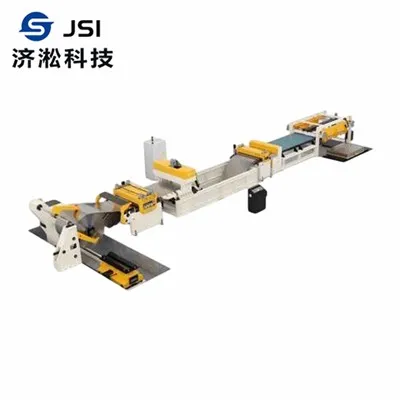
Hey there! As a supplier of tandem press lines, I've seen firsthand how crucial safety guards are in these setups. Tandem press lines are powerful machines used in various industries, from automotive to manufacturing, to shape and form metal parts efficiently. But with great power comes great responsibility, and that's where safety guards come into play. In this blog, I'll walk you through the essential safety guards required for a tandem press line.
1. Physical Barriers
Physical barriers are the first line of defense in a tandem press line. These are typically made of metal, plastic, or wire mesh and are designed to prevent operators from getting too close to the moving parts of the press. There are different types of physical barriers, and each serves a specific purpose.
Fixed Guards
Fixed guards are permanently attached to the press and are designed to cover areas that are always dangerous, such as the flywheel, gears, and belts. They are usually made of heavy - duty metal and are bolted in place. Fixed guards are great because they provide a constant level of protection and are not easily removed. For example, on our High Speed Tandem Press Lines, we use high - quality fixed guards to ensure that the high - speed moving parts are always shielded.
Interlocked Guards
Interlocked guards are a bit more advanced. These guards are connected to the press's control system. When the guard is opened, the press automatically stops. This is super important because it prevents operators from accessing the dangerous parts of the press while it's in operation. For instance, in our Single Process Tandem Line, interlocked guards are used at the loading and unloading areas. If an operator tries to open the guard during the pressing cycle, the press will immediately halt, preventing any potential accidents.


2. Light Curtains
Light curtains are another vital safety feature. They use a series of infrared light beams to create an invisible barrier. If an object, like an operator's hand, breaks the light beam, the press stops immediately. Light curtains are great because they provide a non - physical barrier, which means they don't restrict the operator's movement as much as physical barriers do.
They are often used at the entry and exit points of the press line, where parts are loaded and unloaded. This allows for a more efficient workflow while still maintaining a high level of safety. On our Automation Of Tandem Lines, light curtains are integrated into the automated loading and unloading systems. This ensures that even with the high - speed automation, the safety of the operators is not compromised.
3. Pressure Sensitive Mats
Pressure sensitive mats are placed on the floor around the press. When an operator steps on the mat, it sends a signal to the press to stop. These mats are useful in areas where operators need to be close to the press but not directly in front of it. For example, if an operator is standing near the side of the press to monitor the process, the pressure - sensitive mat will detect their presence and ensure the press stops if necessary.
4. Safety Interlocks on Tools and Dies
In a tandem press line, different tools and dies are used to create various parts. These tools and dies can also be dangerous, especially when they are being changed or adjusted. Safety interlocks on tools and dies ensure that the press cannot be operated until the tool or die is properly installed and secured.
This is important because a loose or improperly installed tool can cause serious accidents, such as flying debris or misaligned parts. On our tandem press lines, we have a system in place that checks the status of the tools and dies before allowing the press to start.
5. Emergency Stop Buttons
Emergency stop buttons are a must - have in any industrial setting, and tandem press lines are no exception. These buttons are strategically placed around the press line so that they are easily accessible to operators. In case of an emergency, an operator can quickly press the button, and the press will come to an immediate stop.
It's important to test these buttons regularly to make sure they are working properly. We always recommend that our customers perform routine checks on the emergency stop buttons to ensure the safety of their operators.
6. Safety Labels and Signage
Safety labels and signage are often overlooked, but they are an important part of the safety system. These labels provide clear instructions and warnings to operators. For example, a label might indicate the maximum operating speed of the press, the proper way to use a safety guard, or the location of the emergency stop button.
We make sure to include clear and visible safety labels on all our tandem press lines. This helps operators understand the potential hazards and how to avoid them.
Why These Safety Guards Matter
The safety guards I've mentioned above are not just optional add - ons. They are essential for protecting the operators and ensuring the smooth operation of the tandem press line. Without proper safety guards, the risk of accidents is significantly higher.
Accidents in a tandem press line can be extremely serious, ranging from minor injuries to life - threatening situations. By investing in high - quality safety guards, companies can not only protect their employees but also avoid costly downtime due to accidents.
Contact Us for Your Tandem Press Line Needs
If you're in the market for a tandem press line or need to upgrade the safety features of your existing one, we're here to help. We've been in the business for years, and we know what it takes to provide a safe and efficient tandem press line. Our team of experts can work with you to understand your specific requirements and recommend the best safety guards for your setup.
Don't hesitate to reach out to us for a consultation. We're committed to providing top - notch products and services to ensure your operations are safe and productive.
References
- Occupational Safety and Health Administration (OSHA) guidelines on press safety.
- Industry standards for tandem press line safety.