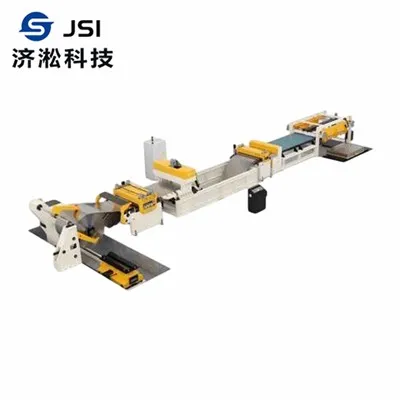
As a supplier of NC Feeder Machines, I am delighted to share insights into the main components that make these machines so efficient and reliable in the metal stamping and processing industry. NC Feeder Machines are essential for accurately feeding metal sheets or coils into stamping presses, ensuring high - precision and high - speed production. Let's delve into the key components that constitute an NC Feeder Machine.
1. Drive System
The drive system is the heart of an NC Feeder Machine. It is responsible for providing the power and motion required to move the material through the feeder. There are two main types of drive systems commonly used in NC Feeders: servo - motor drives and mechanical drives.
Servo - motor drives have become increasingly popular in modern NC Feeder Machines. These drives offer precise control over the feeding speed, distance, and acceleration. A servo - motor is connected to a ball screw or a timing belt, which converts the rotational motion of the motor into linear motion. This allows for highly accurate and repeatable feeding operations. For example, in a high - precision stamping process where small and intricate parts are being produced, a servo - motor drive can ensure that the material is fed with an accuracy of up to ±0.01mm.
Mechanical drives, on the other hand, are more traditional and rely on a series of gears, belts, and pulleys to transfer power from the motor to the feeding rollers. While they may not offer the same level of precision as servo - motor drives, they are often more robust and can handle heavier loads. Mechanical drives are suitable for applications where high - speed and high - volume production are required, such as in the automotive industry for stamping large body panels.
2. Feeding Rollers
Feeding rollers are another crucial component of an NC Feeder Machine. They are responsible for gripping the material and moving it through the feeder. The design and quality of the feeding rollers can significantly affect the feeding accuracy and the quality of the stamped parts.
The feeding rollers are typically made of high - quality steel or alloy materials to ensure durability and resistance to wear. They are often coated with a special material, such as rubber or polyurethane, to provide better grip on the material. The surface of the rollers may also be textured to prevent the material from slipping during the feeding process.
There are different types of feeding rollers available, depending on the application. For example, in a Zigzag Feeder, the feeding rollers are designed to handle materials with irregular shapes or thicknesses. These rollers can adjust their position and pressure to ensure that the material is fed smoothly and accurately.
3. Control System
The control system is the brain of an NC Feeder Machine. It allows the operator to set the feeding parameters, such as the feeding length, speed, and number of strokes. The control system also monitors the operation of the machine and provides feedback to ensure that the feeding process is carried out accurately and efficiently.
Modern NC Feeder Machines are equipped with advanced control systems, such as programmable logic controllers (PLCs) and human - machine interfaces (HMIs). PLCs are used to control the various functions of the machine, such as the drive system, feeding rollers, and sensors. They can be programmed to perform complex feeding sequences and to adapt to different production requirements.
HMIs provide a user - friendly interface for the operator to interact with the machine. They allow the operator to input the feeding parameters, monitor the machine status, and troubleshoot any issues. Some HMIs also support touch - screen operation, making it easier for the operator to use the machine.
4. Material Guide System
The material guide system is designed to ensure that the material is fed into the feeder in a straight and stable manner. It consists of a series of guides, rollers, and sensors that help to align the material and prevent it from deviating during the feeding process.
The material guides are typically made of high - strength steel or aluminum alloy and are adjustable to accommodate different material widths and thicknesses. They are positioned on both sides of the feeding path to keep the material centered.
Rollers are also used in the material guide system to support the material and reduce friction. These rollers are usually made of low - friction materials, such as nylon or Teflon, to ensure smooth movement of the material.
Sensors are installed in the material guide system to detect the position and movement of the material. They can send signals to the control system to adjust the feeding speed or direction if the material is not being fed correctly.
5. Coil Decoiler (Optional)
In many applications, an NC Feeder Machine is used in conjunction with a coil decoiler. The coil decoiler is responsible for unwinding the metal coil and feeding it into the feeder. It helps to ensure a continuous supply of material and reduces the need for manual handling.
There are different types of coil decoilers available, such as passive decoilers and active decoilers. Passive decoilers rely on the pulling force of the feeder to unwind the coil, while active decoilers are equipped with a motor to actively unwind the coil. Active decoilers are more suitable for applications where high - speed and high - tension feeding are required.
For example, in a Thick Sheet NC Servo Feeder, a heavy - duty coil decoiler may be used to handle thick and heavy metal coils. The decoiler can be adjusted to control the tension of the coil and ensure a smooth feeding process.
6. Lubrication System
The lubrication system is an important component of an NC Feeder Machine, especially for the moving parts such as the feeding rollers, drive system, and bearings. Proper lubrication helps to reduce friction, wear, and heat generation, which can extend the service life of the machine and improve its performance.
There are different types of lubrication systems available, such as manual lubrication and automatic lubrication. Manual lubrication requires the operator to apply lubricant to the moving parts at regular intervals. While it is a simple and cost - effective method, it may not be as accurate or consistent as automatic lubrication.
Automatic lubrication systems, on the other hand, use a pump and a series of pipes to deliver lubricant to the moving parts at a controlled rate. They can be programmed to lubricate the parts at specific intervals or based on the operating conditions of the machine. Automatic lubrication systems are more reliable and can ensure that the machine is properly lubricated at all times.
7. Safety System
Safety is of utmost importance in any industrial machine, and an NC Feeder Machine is no exception. The safety system is designed to protect the operator and the machine from potential hazards.
It typically includes a series of safety sensors, guards, and emergency stop buttons. Safety sensors are installed on the machine to detect any abnormal conditions, such as the presence of a foreign object or an over - temperature situation. When a safety sensor is triggered, the machine will automatically stop to prevent any accidents.
Guards are used to enclose the moving parts of the machine and prevent the operator from coming into contact with them. They are usually made of transparent materials, such as polycarbonate, to allow the operator to monitor the operation of the machine while ensuring safety.
Emergency stop buttons are located in easily accessible positions on the machine. In case of an emergency, the operator can press the emergency stop button to immediately stop the machine.
In conclusion, an NC Feeder Machine is a complex and sophisticated piece of equipment that consists of several key components. Each component plays a vital role in ensuring the accurate, efficient, and safe operation of the machine. As a supplier of NC Feeder Machines, we are committed to providing high - quality machines that meet the diverse needs of our customers. If you are interested in our NC Feeder Machines or have any questions about the components and their functions, please feel free to contact us for more information and to discuss your specific requirements. We look forward to the opportunity to work with you and contribute to the success of your production operations.


References
- Metal Stamping Handbook, Second Edition
- Industrial Automation and Control Systems: Principles and Applications