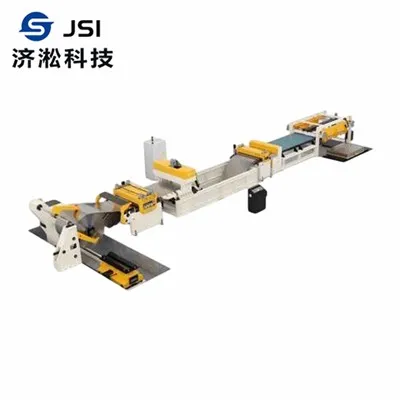
Hey there! As a supplier of NC Feeder Machines, I'm stoked to share some insights on how to program these bad boys. Whether you're a newbie in the manufacturing game or a seasoned pro looking to brush up on your skills, this guide is for you.
Understanding the Basics of an NC Feeder Machine
First things first, let's get a clear idea of what an NC Feeder Machine is. It's a crucial piece of equipment in the metal stamping and forming industry. It precisely feeds materials like metal sheets or coils into stamping presses or other processing machines. This precision is key to getting high - quality finished products.
There are different types of NC Feeder Machines out there. For instance, the NC Servo Roll Feeder is a popular choice. It uses servo motors to control the feeding process, which gives it excellent accuracy and flexibility. Then we have the Thick Sheet NC Servo Feeder, designed specifically for handling thicker metal sheets. And if you're looking for speed, the High Speed NC Servo Roll Feeder is the way to go.
Pre - Programming Preparations
Before you start programming your NC Feeder Machine, you need to do some prep work.
1. Machine Inspection
Check the machine for any signs of damage or wear. Make sure all the mechanical parts are in good condition, the belts are tight, and the rollers are clean. A well - maintained machine will perform better and give you more accurate results.
2. Material Selection
Understand the properties of the material you'll be feeding. Different materials have different characteristics, such as thickness, hardness, and surface finish. These properties can affect the feeding process, so you need to adjust the programming accordingly.
3. Tooling Setup
Ensure that the tooling on the stamping press or other processing machine is properly installed and aligned. The NC Feeder Machine needs to work in harmony with the tooling to achieve the desired results.
The Programming Process
Now, let's dive into the actual programming of the NC Feeder Machine.
1. Power On and Initialization
Turn on the power of the NC Feeder Machine. Once it's up and running, you'll need to initialize the system. This usually involves setting the machine to its default values, such as the zero position of the feed axis.
2. Inputting Basic Parameters
- Feed Length: This is the distance the material will be fed each time. You can set this value based on the requirements of your stamping or forming operation. For example, if you're making small parts, you'll need a shorter feed length.
- Feed Speed: Decide how fast you want the material to be fed. The speed should be balanced with the accuracy and the capabilities of the machine. A higher speed might be faster, but it could also lead to less accurate feeding.
- Number of Feeds: Determine how many times the material will be fed. This depends on the number of parts you're producing in a single cycle.
3. Setting Up the Feeding Mode
There are different feeding modes available on NC Feeder Machines.
- Continuous Feeding: In this mode, the material is fed continuously without any stops. It's suitable for long - run production where you need a constant supply of material.
- Step - by - Step Feeding: Here, the material is fed in discrete steps. You can control the distance and the time between each step. This mode is useful when you need more precise control over the feeding process, such as when making complex parts.
4. Synchronization with the Processing Machine
The NC Feeder Machine needs to be synchronized with the stamping press or other processing machine. You'll need to set up the timing so that the material is fed at the right moment. This usually involves setting the phase angle or the trigger signal between the two machines.
5. Testing the Program
Once you've entered all the parameters and set up the feeding mode, it's time to test the program. Start with a small test run. Observe the feeding process carefully. Check if the feed length, speed, and synchronization are correct. If there are any issues, make the necessary adjustments to the program.
Troubleshooting and Optimization
Even with careful programming, you might encounter some problems during the operation of the NC Feeder Machine.
1. Feeding Inaccuracy
If the material is not being fed accurately, it could be due to several reasons.
- Mechanical Issues: Check if there are any loose belts, misaligned rollers, or other mechanical problems. Tighten the belts and realign the rollers if necessary.
- Programming Errors: Review your input parameters. Make sure the feed length, speed, and other values are correct.
- Material Problems: The material itself could be causing the issue. Check for any irregularities in the material, such as uneven thickness or surface defects.
2. Low Feed Speed
If the feed speed is lower than expected, you can try the following:
- Check the Motor: Make sure the servo motor is functioning properly. Look for any error codes on the motor controller.
- Adjust the Parameters: You can increase the feed speed in the program, but be careful not to exceed the capabilities of the machine.
3. Optimization
Once you've resolved any issues, you can optimize the program for better performance. Try different combinations of feed length, speed, and feeding mode to find the most efficient setup for your production.


Safety Considerations
When programming and operating an NC Feeder Machine, safety should always be your top priority.
- Wear Protective Gear: Always wear safety glasses, gloves, and other appropriate protective equipment.
- Keep the Work Area Clean: A cluttered work area can lead to accidents. Make sure there are no loose materials or tools around the machine.
- Follow the Manufacturer's Instructions: Read and follow the user manual of the NC Feeder Machine carefully. It contains important safety information and operating procedures.
Conclusion
Programming an NC Feeder Machine might seem a bit daunting at first, but with the right knowledge and a bit of practice, you'll be able to do it like a pro. Remember to do your pre - programming preparations, follow the programming steps carefully, and be ready to troubleshoot any issues that come up.
If you're in the market for an NC Feeder Machine or need more information on programming and operation, we're here to help. We're a reliable supplier of high - quality NC Feeder Machines, and we can offer you the best solutions for your manufacturing needs. Reach out to us, and let's start a conversation about how we can improve your production process.
References
- "NC Feeder Machine Operation Manuals"
- Industry - specific manufacturing guides on metal stamping and forming.