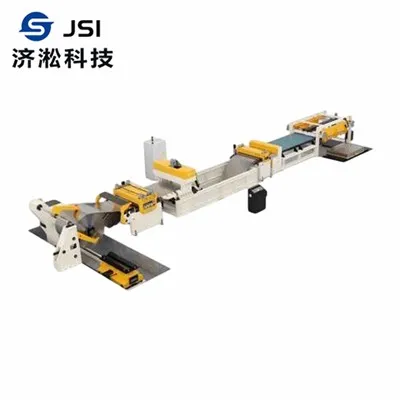
How to improve the throughput of a Laser Blanking Line
As a dedicated supplier of Laser Blanking Line solutions, I've witnessed firsthand the challenges faced by manufacturers in maximizing throughput. Throughput, in the context of a Laser Blanking Line, refers to the amount of work that can be processed and completed within a given time frame. Increasing throughput is crucial for businesses as it directly impacts productivity, cost - efficiency, and competitiveness. In this blog, I'll share some key strategies and considerations to enhance the throughput of a Laser Blanking Line.
1. Optimize the Laser Cutting Process
The heart of a Laser Blanking Line is the laser cutting system. One of the most effective ways to improve throughput is by optimizing the cutting parameters. This includes adjusting the laser power, cutting speed, and focal point. Higher laser power can often lead to faster cutting, but it must be balanced with the material properties. For example, when cutting thick or highly reflective materials, a higher power might be necessary, but it also requires careful control to avoid excessive heat - affected zones.
Advanced control systems can play a vital role in this optimization. These systems can automatically adjust the cutting parameters based on the material type, thickness, and the shape of the part being cut. By using real - time monitoring and feedback, the laser can operate at its optimal performance throughout the cutting process.
Another aspect of laser cutting optimization is the use of intelligent nesting software. Nesting refers to the process of arranging parts on the raw material sheet in the most efficient way possible. By minimizing the amount of wasted material between parts, more parts can be cut from a single sheet, thus increasing the overall throughput. Modern nesting software can take into account various factors such as part shape, orientation, and cutting sequence to generate the most efficient nesting patterns.
2. Enhance Material Handling
Efficient material handling is a critical factor in improving the throughput of a Laser Blanking Line. The time spent loading and unloading raw materials and finished parts can significantly impact the overall productivity. To address this, automated material handling systems can be implemented.
Automated loading systems can quickly and accurately place raw material sheets onto the cutting table. These systems can be integrated with the Laser Blanking Line's control system, allowing for seamless operation. For example, a robotic arm can be programmed to pick up sheets from a stack and position them precisely on the cutting area, reducing the time and potential errors associated with manual loading.
Similarly, automated unloading systems can remove the finished parts from the cutting table and transfer them to the next stage of the production process. This not only saves time but also reduces the risk of damage to the parts during handling. Conveyor belts, robotic grippers, and sorting systems can be used in combination to create an efficient unloading process.
In addition to automation, proper storage and organization of materials are also important. Having a well - designed storage area for raw materials and finished parts can minimize the time spent searching for and retrieving the necessary items. This can further streamline the material handling process and increase throughput.
3. Implement Predictive Maintenance
Unplanned downtime due to equipment failures can have a significant negative impact on the throughput of a Laser Blanking Line. Predictive maintenance is a proactive approach that uses data and analytics to predict when equipment is likely to fail. By identifying potential issues before they occur, maintenance can be scheduled during planned downtime, minimizing the disruption to production.
Sensors can be installed on key components of the Laser Blanking Line, such as the laser source, motors, and cutting heads. These sensors can collect data on factors like temperature, vibration, and performance metrics. The data is then analyzed using advanced algorithms to detect any signs of abnormal behavior. For example, an increase in vibration levels in a motor might indicate a problem with the bearings.
Once a potential issue is detected, maintenance technicians can be alerted, and the necessary repairs or replacements can be carried out. This approach not only reduces the risk of unexpected breakdowns but also extends the lifespan of the equipment, ensuring that the Laser Blanking Line operates at peak performance for longer periods.


4. Upgrade and Expand the System
As technology advances, upgrading the existing Laser Blanking Line can be an effective way to improve throughput. Newer laser cutting systems often offer higher cutting speeds, better precision, and more advanced features. For example, some modern lasers can use multiple cutting heads simultaneously, allowing for the cutting of multiple parts at the same time.
In addition to upgrading the laser cutting system, expanding the overall capacity of the Laser Blanking Line might also be necessary. This could involve adding more cutting tables, increasing the size of the material handling equipment, or improving the control system. By scaling up the system, more work can be processed simultaneously, leading to a significant increase in throughput.
Our company offers a range of advanced Laser Blanking Line solutions, including the Zigzag Blanking Line, Multi Cut Precison Blanking Line, and High Speed Blanking Line. These systems are designed with the latest technology to provide high throughput and excellent performance.
5. Train the Operators
Well - trained operators are essential for maximizing the throughput of a Laser Blanking Line. They need to have a thorough understanding of the equipment, the cutting process, and the material handling procedures. Providing comprehensive training programs can ensure that the operators are able to operate the system efficiently and effectively.
Training should cover topics such as laser safety, equipment operation, maintenance procedures, and troubleshooting. Operators should also be trained on how to use the nesting software and other control systems to optimize the cutting process. By empowering the operators with the necessary knowledge and skills, they can make quick decisions and adjustments during the production process, minimizing downtime and improving throughput.
6. Streamline the Production Process
The overall production process should be streamlined to eliminate any bottlenecks or inefficiencies. This involves analyzing the entire workflow, from raw material intake to the delivery of finished parts. By identifying and eliminating non - value - added steps, the production process can be made more efficient.
For example, reducing the number of intermediate storage points can minimize the time spent on material transfer. Implementing a just - in - time (JIT) inventory system can ensure that raw materials are delivered exactly when they are needed, reducing the inventory holding costs and the time spent on material handling.
In addition, improving the communication and coordination between different departments involved in the production process can also enhance throughput. For instance, the sales department should provide accurate forecasts to the production department, allowing for better planning and scheduling of the Laser Blanking Line operations.
Conclusion
Improving the throughput of a Laser Blanking Line requires a comprehensive approach that addresses various aspects of the system, including the cutting process, material handling, maintenance, technology upgrades, operator training, and process optimization. By implementing these strategies, manufacturers can significantly increase their productivity, reduce costs, and gain a competitive edge in the market.
If you're interested in learning more about how our Laser Blanking Line solutions can help you improve throughput or if you have any specific requirements, we encourage you to reach out for a procurement discussion. Our team of experts is ready to assist you in finding the best solution for your business needs.
References
- "Advanced Laser Cutting Technologies" - Industry Research Report
- "Automated Material Handling in Manufacturing" - Journal of Manufacturing Science
- "Predictive Maintenance Strategies for Industrial Equipment" - International Journal of Maintenance Engineering