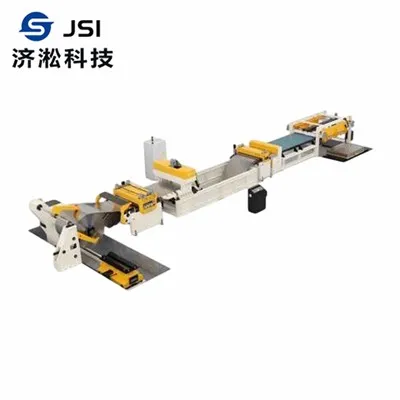
Hey there! As a supplier of thick sheet straighteners, I've seen firsthand how crucial it is to detect early - stage problems in these machines. A thick sheet straightener is a workhorse in many industries, from metal fabrication to automotive manufacturing. Catching issues early can save you a ton of time, money, and headaches down the road. So, let's dive into how you can spot those early - stage problems.
Visual Inspection
The first and simplest way to detect problems is through a visual inspection. It might sound basic, but it's incredibly effective. Start by looking at the overall condition of the straightener. Check for any signs of wear and tear on the rollers. If you notice uneven wear, it could be a sign of misalignment or excessive pressure on certain parts of the machine.
Look for any cracks or dents in the frame. A damaged frame can compromise the stability of the entire straightener. Also, pay attention to the belts and chains. Loose or frayed belts can cause slipping, which affects the straightening process. And if the chains are rusty or have missing links, it's a clear indication that maintenance is needed.
Listen to the Machine
Your ears can be a powerful tool when it comes to detecting problems. A well - functioning thick sheet straightener should operate relatively quietly. Unusual noises like grinding, squealing, or rattling are red flags. Grinding noises might suggest that there's friction between moving parts, perhaps due to a lack of lubrication. Squealing could be a sign of a loose belt or a problem with the bearings.
Rattling noises can be more difficult to pinpoint, but they often indicate that something is loose inside the machine. It could be a bolt that has come loose or a component that's vibrating out of place. If you hear any of these noises, it's important to stop the machine and investigate further.
Check the Straightening Quality
One of the most obvious signs of a problem is a decline in the quality of the straightened sheets. If you start noticing that the sheets aren't coming out as flat as they used to, or if there are waves or bends in the sheets, there's definitely an issue. This could be due to a misaligned roller, incorrect pressure settings, or a problem with the leveling mechanism.
Take a close look at the edges of the sheets. If they're being trimmed unevenly or if there are signs of tearing, it could mean that the cutting or guiding components are not working properly. And if the sheets are getting scratched during the straightening process, it could be because of a dirty or damaged roller surface.
Monitor the Pressure and Tension
Proper pressure and tension are essential for the smooth operation of a thick sheet straightener. Most modern straighteners have pressure gauges that allow you to monitor the force being applied to the sheets. If the pressure is too high, it can cause excessive wear on the rollers and may even damage the sheets. On the other hand, if the pressure is too low, the sheets won't be straightened effectively.
Similarly, the tension in the belts and chains needs to be just right. You can use a tension gauge to measure the tension accurately. If the tension is off, it can lead to slipping, misalignment, and other problems. Make sure to check these readings regularly and adjust them as needed.


Analyze the Electrical System
In today's high - tech thick sheet straighteners, the electrical system plays a crucial role. A malfunction in the electrical components can cause all sorts of problems, from the machine not starting to erratic operation. Check the wiring for any signs of damage, such as frayed wires or loose connections.
Look at the control panel for any error messages. Modern straighteners often have diagnostic systems that can display error codes, which can give you a clue about what's going wrong. If you're not familiar with electrical systems, it's a good idea to have a qualified electrician check the machine periodically.
Compare with Similar Machines
If you have multiple thick sheet straighteners in your facility, comparing their performance can be a great way to detect early - stage problems. Notice if one machine is using more energy than the others, or if it's taking longer to straighten the same number of sheets. These differences could indicate that there's an issue with that particular machine.
You can also compare the noise levels, straightening quality, and other performance indicators between the machines. If one stands out as being different from the rest, it's worth investigating further.
Keep a Maintenance Log
Maintaining a detailed maintenance log is a must. Record every inspection, repair, and maintenance task you perform on the straightener. This log can help you track the machine's performance over time and identify patterns. For example, if you notice that a particular component needs to be replaced more frequently than others, it could be a sign of a design flaw or a problem with the way the machine is being used.
The log can also be useful for predicting when maintenance is due. By looking at the history of the machine, you can estimate how long certain parts will last and plan for their replacement in advance.
Consider Different Types of Straighteners
We offer a variety of straighteners, such as the S Type Straightener, Middle Sheet Straightener, and Thin Sheet Straightener. Each type has its own unique characteristics and potential problems. For example, the S Type Straightener is known for its flexibility in handling different sheet thicknesses, but it may require more precise alignment to ensure optimal performance.
The Middle Sheet Straightener is designed for sheets of a specific thickness range, and issues with this type of straightener might be related to its ability to handle sheets at the edges of that range. The Thin Sheet Straightener, on the other hand, needs to be carefully calibrated to avoid over - straightening or damaging the thin sheets.
Conclusion
Detecting early - stage problems in a thick sheet straightener is all about being vigilant and proactive. By using a combination of visual inspections, listening to the machine, checking the straightening quality, monitoring pressure and tension, analyzing the electrical system, comparing with similar machines, and keeping a maintenance log, you can catch problems before they turn into major disasters.
If you're in the market for a thick sheet straightener or need more information about maintaining the ones you have, don't hesitate to reach out. We're here to help you keep your operations running smoothly. Whether you're a small - scale workshop or a large - scale manufacturing plant, our team of experts can provide you with the support and advice you need. Contact us today to start a conversation about your straightening needs.
References
- Industrial Machinery Maintenance Handbook
- Metal Fabrication Best Practices Guide
- Straightening Machine Manufacturer's Manuals