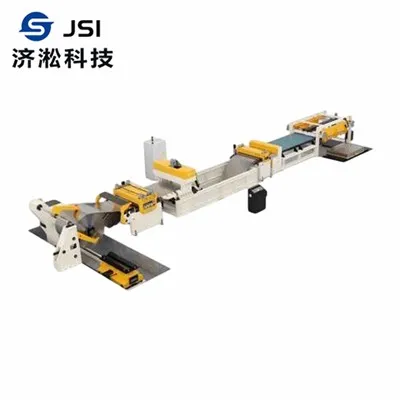
Balancing the workload in a tandem press line is crucial for optimizing productivity, ensuring product quality, and reducing operational costs. As a supplier of tandem press lines, I've witnessed firsthand the challenges that manufacturers face in achieving this balance. In this blog post, I'll share some insights and strategies on how to effectively balance the workload in a tandem press line.
Understanding the Tandem Press Line
Before delving into workload balancing, it's essential to understand the basic components and operation of a tandem press line. A tandem press line consists of multiple presses arranged in a series, with each press performing a specific operation on the workpiece. The presses are connected by a transfer system that moves the workpiece from one press to the next.
There are different types of tandem press lines available, each designed to meet specific production requirements. For example, the Single Process Tandem Line is suitable for simple operations, while the High Speed Tandem Press Lines are designed for high-volume production. The Manipulator Conveys Tandem Line offers greater flexibility in handling complex workpieces.
Challenges in Workload Balancing
Balancing the workload in a tandem press line is not without its challenges. One of the primary challenges is the difference in processing times between the presses. Each press may have a different cycle time, depending on the operation it performs. If the workload is not balanced properly, some presses may be idle while others are overloaded, leading to inefficiencies and reduced productivity.
Another challenge is the variability in workpiece characteristics. Workpieces may have different shapes, sizes, and materials, which can affect the processing time and the load on each press. Additionally, changes in production volume and product mix can also impact the workload distribution.
Strategies for Workload Balancing
1. Analyze the Process
The first step in workload balancing is to analyze the tandem press line process. This involves identifying the operations performed by each press, the cycle times, and the workload distribution. By understanding the process flow, you can identify bottlenecks and areas where the workload can be optimized.
Use data collection and analysis tools to gather information about the press operations. This can include monitoring the cycle times, downtime, and production rates of each press. Analyze the data to identify trends and patterns, and use this information to make informed decisions about workload balancing.
2. Optimize Press Sequencing
Press sequencing plays a crucial role in workload balancing. By arranging the presses in the most efficient order, you can minimize the idle time and ensure a smooth flow of workpieces through the line. Consider the processing times of each press and the requirements of the workpiece when determining the press sequence.
For example, if a particular operation requires a longer cycle time, it may be beneficial to place it earlier in the sequence to allow the subsequent presses to operate continuously. Additionally, try to group similar operations together to reduce the setup time between presses.
3. Adjust Press Parameters
Another strategy for workload balancing is to adjust the press parameters. This can include adjusting the speed, force, and stroke of the presses to optimize the processing time. By fine-tuning the press parameters, you can reduce the cycle time of some presses and increase the overall productivity of the line.
However, it's important to note that adjusting the press parameters should be done carefully to ensure the quality of the finished product. Conduct thorough testing and validation to ensure that the adjusted parameters do not compromise the product quality or the safety of the equipment.
4. Implement Automation and Robotics
Automation and robotics can play a significant role in workload balancing. By using automated transfer systems and robotic manipulators, you can improve the efficiency of the workpiece transfer between presses. This can reduce the idle time and increase the overall throughput of the line.
Automation can also help to reduce the variability in workpiece handling. Robotic systems can be programmed to perform precise movements and operations, ensuring consistent quality and reducing the risk of errors. Additionally, automation can free up human operators to focus on more complex tasks, such as quality control and maintenance.


5. Train and Empower Employees
Employees play a vital role in workload balancing. Provide comprehensive training to your employees on the operation of the tandem press line and the importance of workload balancing. Train them on how to identify and address bottlenecks, adjust press parameters, and troubleshoot common issues.
Empower your employees to make decisions and take ownership of the production process. Encourage them to provide feedback and suggestions for improving the workload balance. By involving your employees in the process, you can tap into their knowledge and expertise and improve the overall efficiency of the line.
Monitoring and Continuous Improvement
Workload balancing is not a one-time task but an ongoing process. It's important to monitor the performance of the tandem press line regularly and make adjustments as needed. Set up key performance indicators (KPIs) to measure the productivity, quality, and efficiency of the line. Regularly review the KPIs and use the data to identify areas for improvement.
Implement a continuous improvement program to address any issues or inefficiencies in the workload balance. This can include conducting root cause analysis, implementing corrective actions, and benchmarking against industry best practices. By continuously improving the workload balance, you can ensure the long-term success of your tandem press line.
Conclusion
Balancing the workload in a tandem press line is essential for achieving optimal productivity, quality, and cost-effectiveness. By understanding the challenges and implementing the strategies outlined in this blog post, you can effectively balance the workload and improve the performance of your tandem press line.
If you're interested in learning more about our tandem press lines or need assistance with workload balancing, we'd be happy to help. Contact us to discuss your specific requirements and explore how our solutions can meet your needs.
References
- [List of relevant industry publications, research papers, or books related to tandem press lines and workload balancing]